
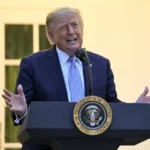







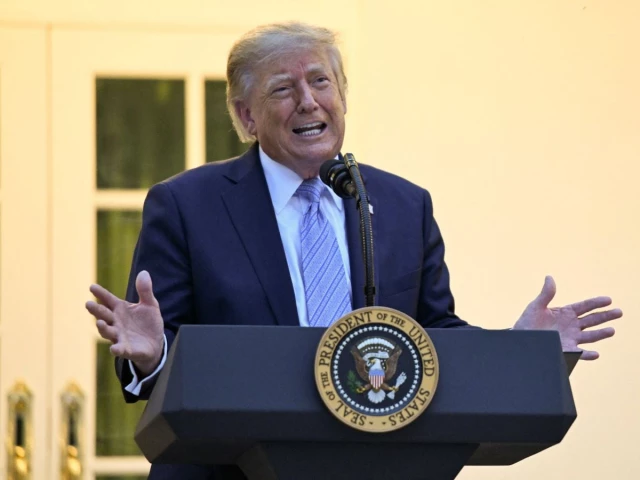
US President Donald Trump speaks as he hosts a dinner at the White House in Washington, DC, US, September 17, 2026. REUTERS
WASHINGTON:
US President Donald Trump has taken a less combative approach than usual ahead of his meeting with Chinese President Xi Jinping this week – a sign of Beijing’s growing power thanks to critical minerals, China experts said.
The Trump administration has so far not threatened to slap steep tariffs on Chinese imports or to ban exports of US technology, in contrast to the aggressive stances that preceded previous summits.
The reason, experts said, is largely due to China’s near-total control of rare earth minerals, a key input for tech and auto manufacturing. Last year, in retaliation against Trump’s tariffs, China curbed rare earth exports and sent shockwaves through world markets.
The move effectively imposed a limit on how much Washington can threaten Beijing, empowering China in its years-long tech war with the United States, experts said.
“The US and the Trump administration are just fundamentally in a different position with China where they can’t use that overly coercive, over-reaching approach, knowing that they are going to walk some stuff back, because of everything that happened last summer and because of the rare-earth export controls,” said Emily Kilcrease, a former trade official now at the Center for a New American Security think tank.
The White House, the Commerce Department, United States Trade Representative and the Chinese Embassy in Washington did not immediately respond to requests for comment.
China controls up to 70% of global rare-earth mining, 85% of refining capacity, and about 90% of rare-earth metal alloy and magnet production, according to consultancy AlixPartners.
Rare earths, such as yttrium and dysprosium, underpin strategic industries such as automakers, chipmakers and defense contractors, representing a critical chokepoint in supply chains.