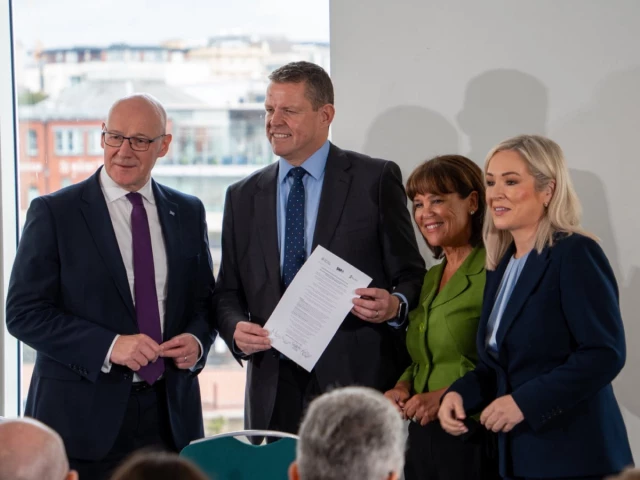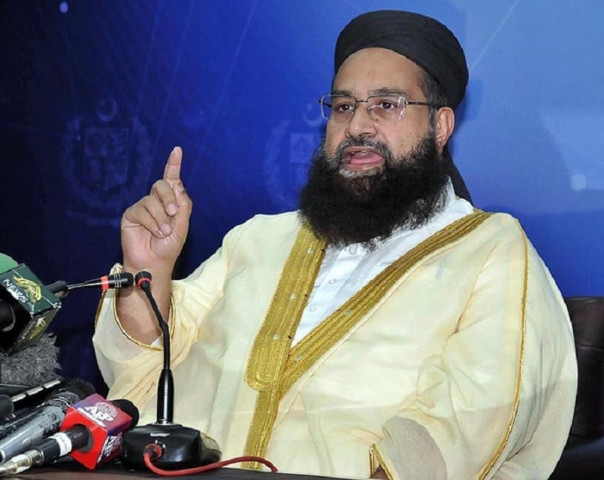



It is 2026. In a country of over 250 million, with at least half of them women, a conference is organised at an academic institution. The title is "Re-imagining Political Science for Pakistan and Its People". The topic seems both intellectually interesting and relevant given the recent conversations on new provinces and federation. Our demographics and socio-economic challenges demand serious conversations that uplift everyone in the near and distant future. But something is off. In addition to the chief guest, a high-profile minister, there are 12 different panellists. There is not a single woman among those! 13-0.
There can be two possible explanations here. First, the topic is so niche that the organisers invited experts who were serious scholars of the subject, and it turned out that none of these experts happened to be women. But that is not quite the case. If we look at the list of speakers, we find mainly journalists and politicians. The choice is not based on scholarly credentials, field research or major publications. There are plenty of well- respected women journalists and politicians in the country. This leads to a plausible second explanation i.e. the organisers do not think that for a topic that concerns all of the country, having the perspective of women journalists or political scientists or politicians is something they care about. Some other colleagues have also pointed that while the supposed topic was about the whole country, the panellists were overwhelmingly from Punjab.
The representation of women on important topics that concern them just as much as men has been a problem for long. There was a period, not too long ago, when there were some murmurs about doing better, but perhaps that was for tokenism and was never a serious reflection, so it never took root.
It is also concerning (or perhaps telling) that this happened at an academic institution. Academic institutions should know, better than others, the talent pool of the country. In Pakistan, girls outperform boys in national exams every year. This year was no exception. For example, Federal Board HSSC results announced earlier this month showed that out of the top 15 positions (in all five groups), 11 went to girls. Also, a significantly higher percentage of girls (90% in HSSC-II) passed the exam compared to boys (79%).
It would be wrong to assume that the issue here is related only to one particular conference or venue. It would also be naïve to suggest that the issue is only in conferences and seminars. This is a much deeper problem that deals with our own stubborn biases. Ask around what we consider as a voice of authority on any subject, and most likely you are going to get the name of a man, even when a woman may have contributed more in terms of scholarship.
Some of those who defend the status quo point to the lack of formal participation of women in the professional sectors. It is indeed true that far fewer women are present in the workforce or professional sectors than men, but no one seems to be interested in asking the next obvious question. Why is that? Who gets to decide for a large number of women that they should stay at home, give up their education, or choose a tiny fraction of available careers with little possibility to professionally develop? The surveys showing that young women in medical schools never practice professionally rarely ask whether they had the full support of their fathers and husbands in pursuing a career, and chose to give that up themselves? Maybe the surveys do not need to ask those questions – we know the answers already.
The change, should we want one, ultimately has to come from within. Several panellists at the recent conference I mentioned above often talk about their belief in a more equitable society. I hope that before they accept the invitation for the next conference that is going to discuss the future of anything in the country, they will look around and ask themselves whether the conference represents the values they claim to espouse.
Source link