Highly contagious haemorrhagic fever is already present in three eastern DRC provinces and in neighbouring Uganda
BUNIA:
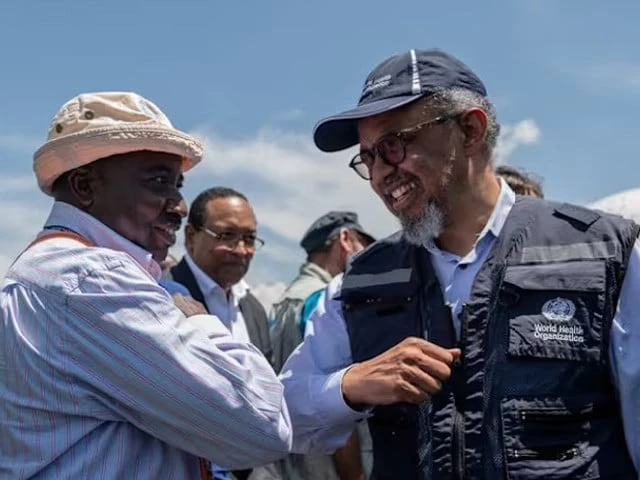
UN health chief Tedros Adhanom Ghebreyesus called Saturday for more international help to combat the spread of the deadly Ebola virus in Democratic Republic of Congo as he arrived in the eastern province worst-hit by a severe outbreak.
The World Health Organization director general told reporters in Bunia, capital of Ituri province, that the international community was helping the DRC government cope with the outbreak.
But he added that “community ownership” was also needed – including overcoming “mistrust” and false information – and an increase in financial support from other countries.
“We are here to discuss with the community, to see how the response is running and if there are challenges to help,” he said.
“You’re not alone in this. We’re here, we’re with you, and we will see this through together,” he told people in Ituri at a press conference later.
The highly contagious haemorrhagic fever is already present in three eastern DRC provinces and in neighbouring Uganda.
There have been at least 1,077 suspected cases of Ebola in the DRC since the outbreak was declared on May 15, including 246 deaths, the Africa Centres for Disease Control and Prevention said on Thursday. There have been nine confirmed infections in Uganda, including one death.
The true reach of the outbreak in the DRC, which is thought to have been circulating before it was detected, is likely to be much wider, the WHO has warned.
The vast impoverished central African country – whose mineral-rich east has been plagued by three decades of conflict – has limited capacity to conduct laboratory tests to confirm cases.
Uganda closed its border with the DRC this week and ordered a 21-day quarantine for anyone arriving from that country.
On Friday, the WHO announced that a patient had recovered on Wednesday, left hospital and was discharged into the community after two negative tests. WHO’s Anais Legand said it marked a “first” among patients who had been confirmed Ebola carriers in the current outbreak.
Source link