
Donlad Trump wants to permanently raise the fee from between $2,000 and $5,000 to more than $100,000
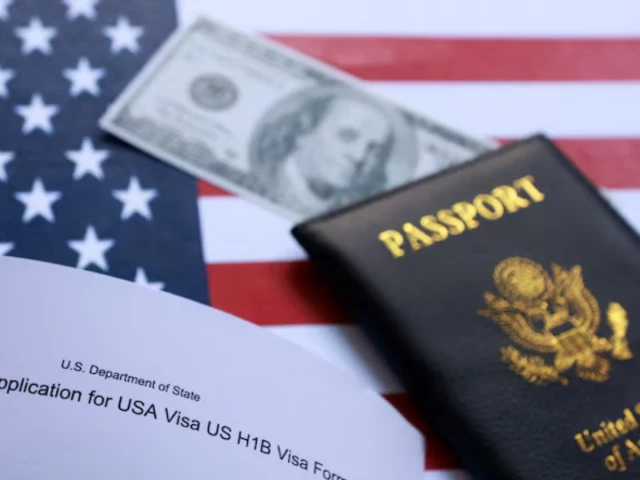
US flag, mock passport and dollar banknote, and H-1B visa application form are seen in this illustration taken September 26, 2025. PHOTO: REUTERS
US employers seeking to hire skilled foreign workers can use the federal government’s H-1B visa program for a fee, allowing tech and other professionals from abroad to work in the United States for a few years.
US President Donald Trump, who has pursued a broad immigration crackdown since taking office last year, has lambasted the program and wants to permanently raise the fee from between $2,000 and $5,000 to more than $100,000
Despite criticism that some companies use the visas to hire lower-paid foreign workers instead of Americans, business groups and companies say they help recruit highly skilled professionals and address a lack of qualified US workers in some industries.
The visas, established by Congress in 1990, are especially critical for tech companies seeking to recruit from India and China. Consultancy companies such as Deloitte, PwC and Ernst & Young, as well as outsourcing giants such as Tata Consultancy Services, Infosys, HCL Tech and LTIMindtree, are also top H1-B sponsors.
Here are more details about the program and what changes are happening under the Trump administration:
Who is fighting over the fees?
Trump last year dramatically raised the cost of H-1B visas to $100,000, prompting several lawsuits.
While his initial fee increase is set to expire in September, the Department of Homeland Security this week proposed raising it to a permanent $103,265.
A group representing India’s technology companies has said it is engaging with US stakeholders over the proposed increase, and urged the administration to consider the benefits it offers companies seeking to temporarily address worker shortages.
Read: Trump administration moves to impose more than $100,000 fee for H-1B worker visas
Tesla, Amazon, OpenAI and other companies have all faced questions over their H-1B visa use, especially amid US layoffs and a tighter job market facing American workers.
Could existing lawsuits challenge the new rule?
A Boston-based appeals court is reviewing a June decision by a federal judge who ruled that the fee was illegal and blocked the Trump administration from collecting it.
Another court is also considering whether a judge properly rejected a challenge to the fee by the US Chamber of Commerce, the largest US business lobbying group.
Democratic-led states as well as a coalition of unions and employers have also filed lawsuits.
The pending legal cases could be amended to challenge this week’s proposed rule after it is finalised.
How is enhanced vetting hitting employers?
Changes to how potential visa holders are scrutinised and processed have impacted companies’ hiring and expansion plans, with some top H-1B users, such as Google, moving to increase operations in India.
Trump’s administration in December said it would increase its vetting of H-1B applicants with a particular focus on what it deemed censorship and free speech.
Read More: Trump criticises Canada over tariffs amid ongoing trade dispute
The State Department ordered US consulates to scrutinise the applicants’ LinkedIn profiles and resumes as well as those of any accompanying family members for all visa applicants but particularly those with technology backgrounds seeking H-1Bs who may have been “involved in the suppression of protected expression.”
How are registration numbers being impacted?
The H-1B program offers 65,000 visas annually, with another 20,000 for workers with advanced degrees, typically granted for three years and renewable to six.
As of late February, about 70 employers had paid the $100,000 fee on a total of 85 visa applications, court filings show.
Employers last year registered for about 344,000 H-1B visas, down more than 25% from 2024 and fewer than half of the 759,000 visas sought in 2023, from US Citizenship and Immigration Services shows.

