
Sticky inflation, cooling labour market leave Fed facing choice between fighting prices and risking sharper slowdown
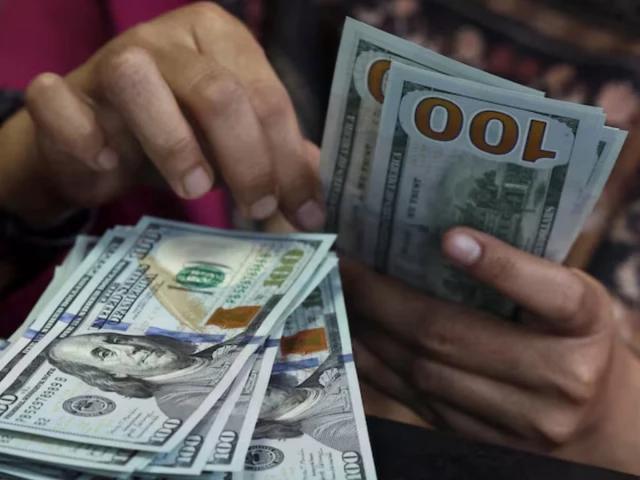
A teller counts US dollar bank notes at a money changer in Jakarta, Indonesia. Photo: REUTERS/file
US interest rates are likely to remain elevated for longer as stubborn inflation and signs of a weakening labour market complicate the Federal Reserve’s next move, leaving consumers facing continued pressure from borrowing costs even as economic growth loses momentum.
A Reuters poll of economists showed that 90% expect the Fed to leave its benchmark interest rate unchanged at 3.50%-3.75% at its September 15-16 meeting. Nearly 80% also expect rates to remain unchanged through the end of the year, while economists forecasting at least one rate increase this year far outnumber those expecting a cut.
The outlook reflects a difficult policy dilemma. Inflation remains well above the Fed’s 2% target, while recent employment data have shown an abrupt cooling in the labour market. Cutting rates too soon could revive inflationary pressure, while raising them further could deepen an economic slowdown and increase recession risks.
US consumer prices rose 3.4% in July from a year earlier, while core inflation, which excludes food and energy, increased 2.5%. Although the annual increases eased slightly, both measures resumed monthly growth.
Producer prices offered a less encouraging signal. The Producer Price Index rose 4.7% year-on-year in July, underscoring continued price pressure further up the supply chain.
Read: Is US drifting towards ‘silent default’?
At the same time, the labour market has weakened sharply. US nonfarm payrolls unexpectedly fell by 23,000 in July, compared with market expectations for an increase of more than 80,000. Employment figures for May and June were also revised down by a combined 103,000 jobs.
The combination leaves policymakers with little room for an easy choice.
“The debate clearly is about the possibility of rate hikes,” said Ryan Wang, US economist at HSBC, according to Reuters. He said recent inflation data were broadly neutral while economic activity showed signs of softening, potentially pushing more Fed officials towards a wait-and-see approach.
Some economists, however, continue to argue that another rate increase may be necessary.
Stephen Stanley, chief US economist at Santander US Capital Markets, said the Fed’s September debate would depend largely on the inflation outlook. He expects core personal consumption expenditures inflation to remain close to 3% on an annualised basis.
“Not good enough,” Stanley said, according to Reuters, adding that he still expected the Fed to tighten policy next month.
Economists expect PCE inflation, the Fed’s preferred gauge, to average 3.5% this year and remain above the central bank’s 2% target until at least 2028.
The Fed will receive another crucial inflation reading and a fresh employment report before its September meeting. The data could determine whether officials maintain their current stance or move towards another rate increase.
For ordinary Americans, an extended period of high interest rates means borrowing is likely to remain expensive.
When the Fed raises its benchmark rate, the cost of borrowing generally increases across the economy. Consumers can face higher interest charges on credit cards, car loans, personal loans and other forms of short-term debt.
Also Read: US buys yen in a first over a decade
Credit card and other consumer borrowing rates are particularly sensitive because they are generally linked to the prime rate, which typically moves in tandem with the federal funds rate.
Mortgage borrowers can also feel the impact, although fixed mortgage rates are influenced more by longer-term Treasury yields and inflation expectations than directly by the Fed’s overnight rate.
Higher mortgage rates make home purchases more expensive and can keep would-be buyers out of the housing market. For households already carrying debt, higher rates can also mean larger monthly payments and less disposable income.
“Consumers, households and individuals haven’t gotten the break from inflation they’ve been seeking,” economic analyst Mark Hamrick said, according to CNBC.
Some households, he added, have increasingly relied on borrowing to bridge the gap between high prices and their available financial resources.
The squeeze is particularly significant because Americans are already dealing with elevated living costs. Persistently high food and other everyday expenses have become a major affordability concern, while higher interest rates make it more difficult for households to offset those costs through borrowing.
There is, however, a countervailing benefit. Higher rates can restrain consumer spending and investment by making credit more expensive, helping cool demand and eventually easing inflation.
That is precisely the trade-off confronting the Fed: keeping rates high enough for long enough to bring inflation back towards 2%, without weakening the labour market and broader economy so severely that monetary tightening triggers a recession.
For now, economists largely expect the central bank to stay its course. With inflation still elevated and policymakers unwilling to declare victory, the era of high US interest rates may last considerably longer than borrowers had hoped.

