
A logo of ADNOC is displayed at the Make it in the Emirates (MIITE) conference, in Abu Dhabi, United Arab Emirates, May 4, 2026.PHOTO: REUTERS
The United Arab Emirates will accelerate construction of a new oil pipeline to double its export capacity via the port of Fujairah by 2027, the government’s Abu Dhabi Media Office (ADMO) said on Friday, vastly expanding its ability to bypass the Strait of Hormuz.
Abu Dhabi Crown Prince Sheikh Khaled bin Mohamed bin Zayed directed the Abu Dhabi National Oil Company (ADNOC) to fast-track the West-East Pipeline project during an executive committee meeting, ADMO said, adding the pipeline is under construction and expected to start operating next year.
خالد بن محمد بن زايد يترأس اجتماع اللجنة التنفيذية لمجلس إدارة “أدنوك”، وسموّه يستعرض أداء الشركة ويطّلع على مستجدات مشروع خط أنابيب “غرب–شرق 1” الجديد، الذي من المخطط أن يسهم في مضاعفة السعة التصديرية لشركة “أدنوك” عبر إمارة الفجيرة. pic.twitter.com/Zj7eaPtf77
— مكتب أبوظبي الإعلامي (@ADMediaOffice) May 15, 2026
Since the outbreak of the Iran war, Tehran has significantly expanded its definition of the strait and, consequently, the maritime area it claims control over.
The Islamic Revolutionary Guard Corps (IRGC) Navy published a map on May 4 showing a new zone of control encompassing much of the UAE’s Gulf of Oman coastline. That move coincided with a drone attack on an ADNOC tanker and a barrage on Fujairah’s oil zone, which the UAE’s foreign ministry called an “unacceptable transgression” and “economic blackmail”.
Read More: India signs agreements with UAE on defence, energy during Modi visit
On Tuesday, the IRGC announced a further expansion, redefining the strait as a “vast operational area” stretching up to 300 miles (482.8 km) wide.
Bypassing the Strait
Tehran has effectively shut the maritime chokepoint since the US and Israel attacked Iran on February 28, disrupting about a fifth of global oil supplies. Energy prices have surged due to the disruption, prompting fuel rationing in some countries and fears of an economic downturn as inflation builds.
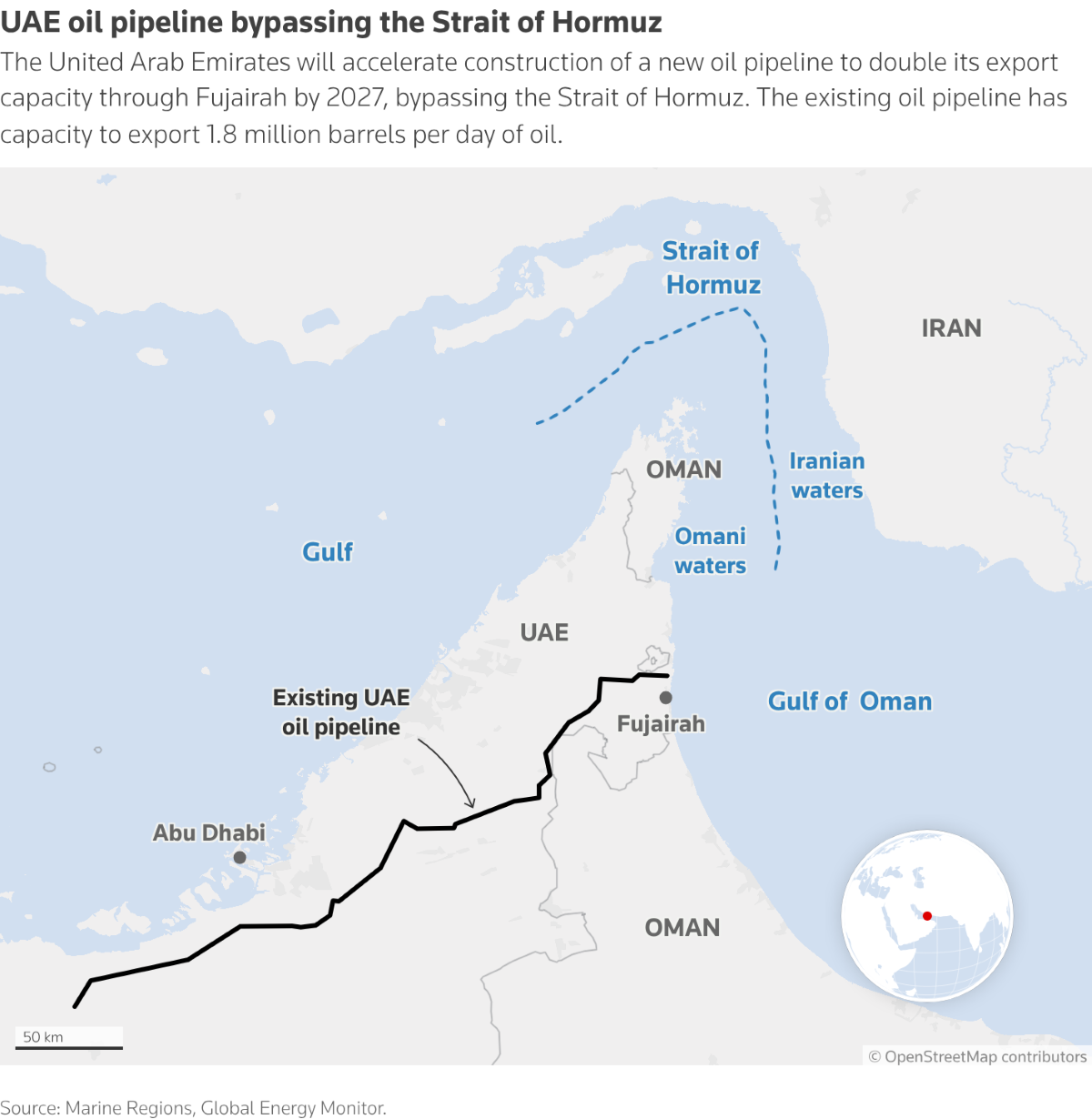
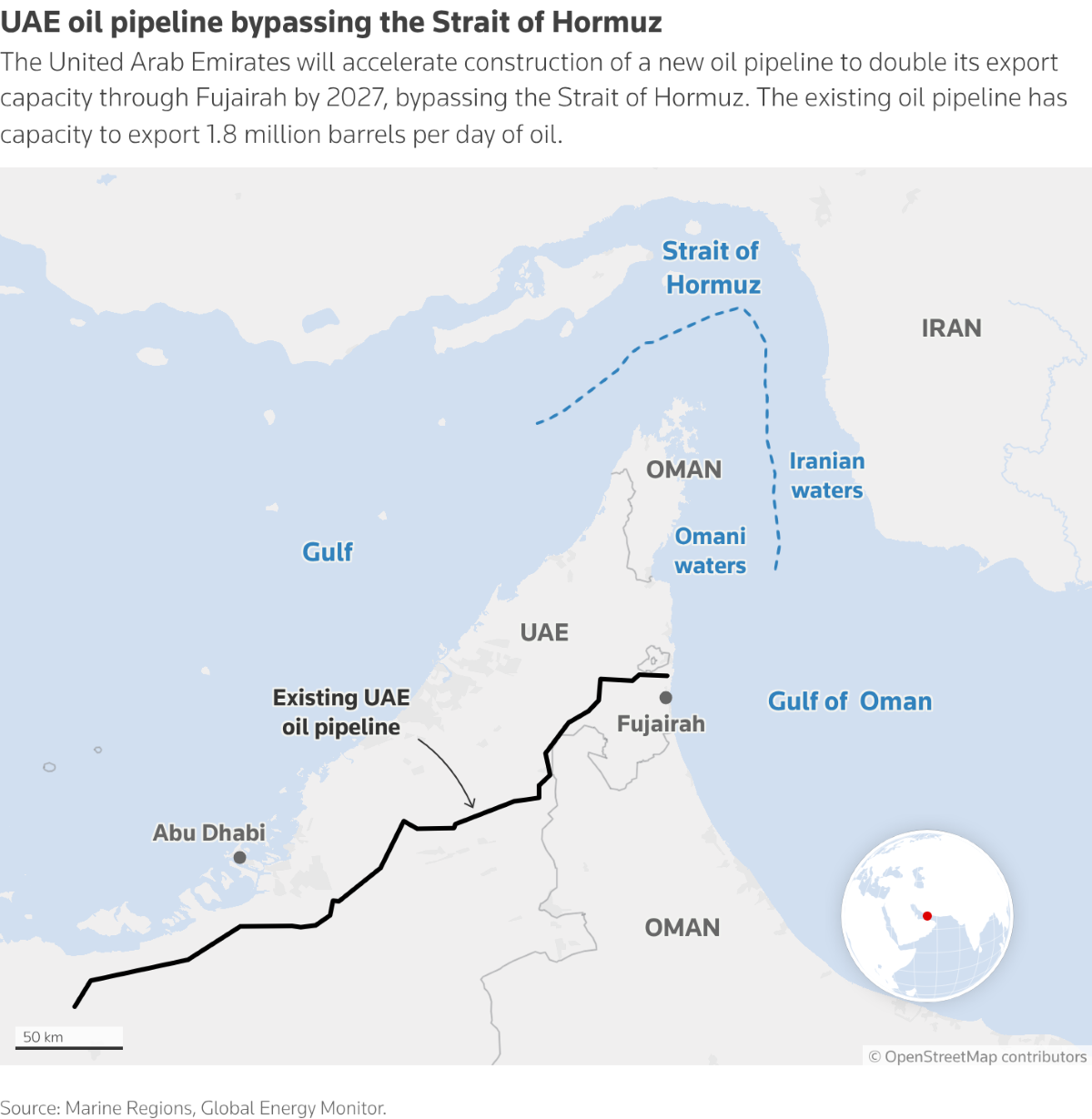
A map showing the existing UAE oil pipeline that bypasses the Strait of Hormuz PHOTO: REUTERS
ADMO did not disclose the original timeline for the project.
The existing Abu Dhabi Crude Oil Pipeline (ADCOP), also known as the Habshan-Fujairah pipeline, can carry up to 1.8 million barrels per day and has proved crucial as the UAE seeks to maximise exports from the Gulf of Oman coast, just outside the strait.
The UAE and Saudi Arabia are the only Gulf producers with pipelines that export crude outside the strait. Oman has a long coastline on the Gulf of Oman, while Kuwait, Iraq, Qatar and Bahrain are almost wholly reliant on the waterway for shipments.
The new UAE pipeline is not to be confused with Saudi Arabia’s East-West pipeline, which state oil giant Aramco’s Chief Executive Amin Nasser has called a “critical lifeline”.
Aramco ramped up the pipeline’s capacity to 7m bpd in eight days, he said, keeping about 60% of the kingdom’s pre-war exports flowing.
Free from quotas
Two weeks ago, the UAE exited the Organisation of the Petroleum Exporting Countries, which is de facto led by Saudi Arabia, freeing it of oil output quotas. It could boost output capacity to 6m bpd if necessary, its energy minister told Reuters last year.
ADNOC is targeting 5m bpd of capacity by next year, a goal brought forward by three years. It said in May 2024 that capacity had reached 4.85m bpd and has not provided an update since.
ADNOC Drilling, one of the group’s six listed subsidiaries, is ready to deliver whatever capacity expansion ADNOC needs, its finance chief told Reuters this week.
The UAE produced just under 3.4m bpd in January before the war, but output more than halved after the effective closure of the Strait of Hormuz forced ADNOC to shut in some production, Reuters reported in March.
Fujairah and the nearby port of Khor Fakkan have emerged as lifelines, including for non-oil trade, as the UAE relies heavily on food imports. Fujairah has been the target of several attacks, which the UAE has blamed on Iran, that forced temporary halts to oil loadings in April. Saudi Arabia’s Red Sea port of Yanbu, where the East-West pipeline terminates, was also attacked.
The UAE and its oil buyers recently sailed several tankers through the strait with location trackers switched off to avoid Iranian attacks, in a bid to move oil trapped in the Gulf, Reuters reported.

