








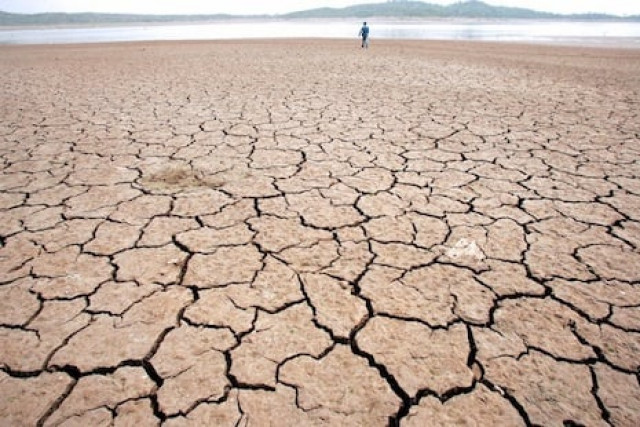
Prolonged dry spells since mid-2014, linked to the El Niño weather phenomenon, have battered subsistence farmers in Central America’s "dry corridor" running through Guatemala, El Salvador and Honduras.
PHOTO: AFP
GENEVA:
The United Nations weather agency warned on Friday that the current strong El Nino is expected to intensify from August, raising the
likelihood of above-normal global temperatures and major shifts in rainfall patterns in the months ahead.
The World Meteorological Organization (WMO) said El Nino – the periodic warming of sea surface temperatures in the central and eastern Pacific Ocean – is forecast to strengthen steadily during the August to October period, developing into a strong climate event with widespread impacts.
The phenomenon is expected to influence weather patterns across the Northern Hemisphere as many regions enter the agricultural harvest season, increasing concerns over its potential effects on food production and water resources.
The WMO also forecast the development of a positive Indian Ocean Dipole (IOD), a climate pattern in which the western Indian Ocean becomes warmer than average while the eastern Indian Ocean turns cooler.
The agency said the combination of a strengthening El Nino and a positive IOD could amplify regional climate impacts, including droughts, floods and an increased risk of wildfires, particularly in countries surrounding the Indian Ocean basin.
The WMO said it is stepping up the provision of climate information and support services to help governments anticipate the impacts of the evolving weather patterns and strengthen preparedness measures.
UN Secretary-General Antonio Guterres warned that the strengthening El Nino would intensify the effects of an already worsening climate crisis. “El Nino is strengthening – adding fuel to a planet already on fire with scorching heat domes, apocalyptic wildfires and record hot seas. Fossil fuels are fanning the flames of this crisis,” Guterres said.