






Saudi Arabia blamed Iraqi militia for drone attacks that forced a pipeline shutdown and halted Yanbu crude loadings
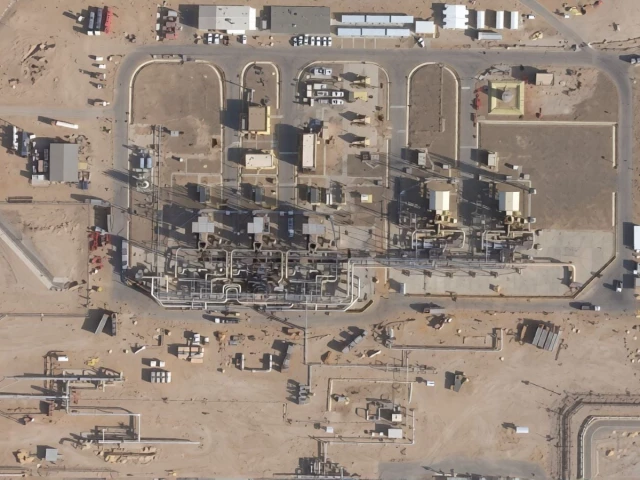
A satellite image shows damage at a Saudi oil facility serving the East-West Pipeline, in the Riyadh region, Saudi Arabia, September 16, 2026, following a reported attack on September 11. 2026. PHOTO: REUTERS
Saudi Arabia has restarted operations at its East-West Pipeline and could resume exports from the Red Sea port of Yanbu later on Tuesday, three sources briefed on the matter said, as signs mounted of an increase in Middle Eastern oil flows.
The resumption of supplies on Tuesday helped to drive selling on global oil markets. Global oil benchmark Brent crude fell by more than $2 a barrel towards $97, its lowest since September 8.
Drone attacks, which Saudi Arabia has blamed on an Iraqi militia, forced the kingdom to shut the pipeline on September 11, halting crude loadings at the kingdom’s Yanbu port.
Since the U.S.-Israeli war on Iran disrupted oil flows from Saudi Arabia and its Gulf neighbours through the Strait of Hormuz, Riyadh has been using the pipeline to reroute around 4 million barrels per day — around 4% of global supply — to Yanbu.
State oil firm Saudi Aramco did not immediately respond to a request for comment.
Full resumption could take weeks, sources say
The pipeline was pumping at a low rate after its restart, two of the sources said.
Read More: G7 leaders condemn Houthi strikes on Saudi Arabia
Aramco was seeking to get the pumping rate back to four million bpd, one of the sources said. The pipeline has a capacity of 7m bpd.
Reaching a rate of 40% of capacity will take a couple of days and a full restart will take six to eight weeks, a security source said. A separate oil industry source said a return to full pumping rates would take up to six weeks.
Three pumping stations serving the pipeline were damaged in the drone attack, according to satellite imagery and industry sources. The line is serviced by 11 pumping stations and two separate pressure relief stations, according to industry assessments.
The pipeline will resume crude supply to Aramco refineries located on the Red Sea coast, one of the sources said, adding that one cargo was scheduled to load at Yanbu later on Tuesday. The person said it would be bound for China.
Traders were getting ready for Saudi oil loadings by moving tankers to Egypt’s Mediterranean Port Said for ship-to-ship transfers and also to Sidi Kerir, another two trading sources said.
Oil prices have also dropped this week after Iran said it could reopen the Strait of Hormuz within seven days and because Saudi Arabia has loaded more ships at its Ras Tanura port, raising expectations of increased exports through the Strait.