








Trade bodies demand relief instead of restrictions, threaten province-wide protests
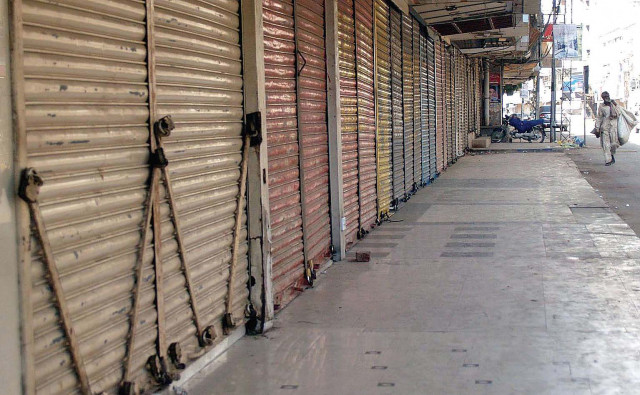
Shutter down. PHOTO: INP/FILE
RAWALPINDI:
Traders’ organisations across the Rawalpindi Division have threatened a complete shutter-down strike after the Punjab Food Authority (PFA) launched a data collection exercise aimed at compiling commercial information from wholesale and retail businesses following the implementation of the federal and Punjab governments’ new tax regime for the 202627 financial year.
According to traders’ representatives, PFA teams have begun visiting markets throughout the division to distribute data collection forms seeking details of businesses’ stock levels, daily sales, shop rents, number of employees, utility bills and licensing records. The information-gathering exercise is expected to precede the implementation of the new taxation mechanism, with collections scheduled to begin during the first week of August.
The move has drawn strong opposition from the Kiryana Merchant Association, central traders’ organisations and wholesale dealers, all of whom have rejected the exercise and warned that no shopkeeper would provide the requested information.
The organisations have also threatened protests across Rawalpindi Division and throughout Punjab if businesses are compelled to comply, warning that the option of a province-wide shutter-down strike remains under consideration.
Kiryana Merchant Association Patron-in-Chief Saleem Parvez Butt, President Arif Gujjar and Secretary Sheikh Rizwan Shaukat said the traders would not accept the fixed tax scheme under any circumstances, describing it as an additional burden on both small and large businesses.
They argued that commercial activity had already suffered considerably and urged the government to refrain from introducing further measures that could adversely affect traders.
They alleged that the PFA had once again entered markets to collect commercial information, including details of stock, daily sales, employees, rents and utility bills.
According to the association, the information collected through the survey would be used to issue new business licences to shopkeepers. The office-bearers maintained that the government should facilitate businesses rather than impose additional regulatory requirements, adding that traders were already contributing to the national exchequer through taxation.