
Says Pakistan has also returned to global capital markets after 4 years through Eurobond, Panda Bond issuances
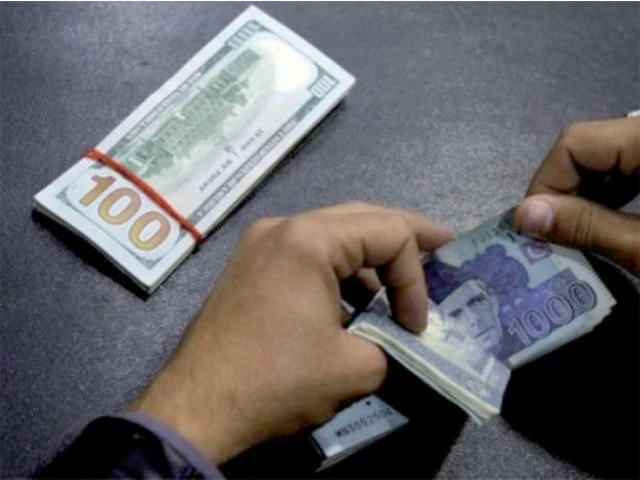
ASSURANCES: The finance ministry estimates it will issue new guarantees of Rs683 billion from April 2026 to June 2027 against various projects and government-owned entities. The existing stock of sovereign guarantees is Rs4.4 trillion, projected to cross Rs5 trillion by June next year. PHOTO:FILE
Advisor to the Finance Minister Khurram Schehzad said Pakistan’s debt profile had undergone a material shift, with debt growing at its slowest pace in two decades, debt-to-GDP declining, external exposure at a nine-year low and servicing costs falling.
“Pakistan’s debt profile has undergone a material shift — debt is growing at its slowest pace in 2 decades, Debt-to-GDP is declining, external exposure is at a 9-year low, servicing costs are down, maturities are lengthening, and reserve buffers have strengthened,” said Schehzad in a post on X.
While sharing the data, he said that “just 7.7% in FY26 — lowest in 20 years — versus 16% average in last 20 years”, while FY19 had recorded the highest debt growth at 31%.
“Debt-to-GDP” had fallen “to 68%, from 75% in FY23 and highs of 86%-88% in FY19-FY21 period,” he said.
Schehzad also highlighted an increase in foreign exchange reserves held by the State Bank of Pakistan (SBP), saying they had risen more than sixfold in three-and-a-half years.
“SBP reserves increased from $2.9 billion in mid-fiscal 2022-23, equivalent to about 2.4 weeks of imports, to $18.4 billion in fiscal 2025-26, equivalent to roughly three months of imports, he said.
On the debt mix, Schehzad said foreign debt had fallen “to around 31% of total public debt in FY26, from 37%-38% during FY19-FY23 — back to levels last seen in FY16/17”.
“For perspective, Pakistan’s domestic-to-foreign public debt mix was nearly 50:50 in FY09, improved to 70:30 by FY15, before foreign exposure climbed again to 37%-38% during FY19-FY23. Today, the mix is back to 69:31, significantly reducing foreign-currency and exchange-rate risk,” he stated.
🇵🇰 𝗣𝗮𝗸𝗶𝘀𝘁𝗮𝗻’𝘀 𝗗𝗲𝗯𝘁 𝗚𝗿𝗼𝘄𝘁𝗵 𝗙𝗮𝗹𝗹𝘀 𝘁𝗼 𝟮𝟬-𝗬𝗲𝗮𝗿 𝗟𝗼𝘄, 𝗘𝘅𝘁𝗲𝗿𝗻𝗮𝗹 𝗗𝗲𝗯𝘁 𝗮𝘁 𝟵-𝗬𝗲𝗮𝗿 𝗟𝗼𝘄
Pakistan’s debt profile has undergone a material shift — debt is growing at its slowest pace in 2 decades, Debt-to-GDP is declining, external… pic.twitter.com/HbmBCrdUCh
— Khurram Schehzad (@kschehzad) August 12, 2026
“Combined with External Debt-to-GDP falling to a 9-year low of 21.5%, Pakistan’s public debt is now materially less exposed to external risk,” Schehzad said.
On debt management, he said that Rs4.72tn of debt had been retired before maturity, while average domestic debt maturity had increased from around 2.8 to 3.8+ years in FY26 — reducing rollover and refinancing risk.
According to Schehzad, interest expense had fallen “from around Rs8.9tn to Rs6.9tn — nearly Rs2tn lower in one year”. More importantly, interest payments had “significantly dropped from 61% of total revenues (federal + provincial) in FY24, to 35% in FY26”.
“Put simply: Rs61 out of every Rs100 of total revenue going to interest has fallen to around Rs35,” he said.
On fiscal capacity, Schehzad said Pakistan had delivered “3 consecutive primary surpluses”, while tax revenues had grown “11% in FY26 versus debt growth of 7.7% — revenues are now growing faster than debt”.
Pakistan had also “returned to global capital markets after 4 years through Eurobond and Panda Bond issuances, drawing a strong investor response — with the Panda Bond 5x oversubscribed”, he said.
Read: Federal debt hits Rs83.6tr
Schehzad further added that Roshan Digital Account and Naya Pakistan Certificates had also been broadened, “opening access to overseas companies and non-Pakistanis, adding AED & SAR options for GCC investors, and revising rates to strengthen their investment appeal”.
On external validation, he said, “In July 2026, S&P Global Ratings upgraded Pakistan from B- to B with a Stable Outlook — its strongest S&P sovereign rating in around 9 years.”
S&P had specifically cited “faster fiscal consolidation, stronger revenue mobilisation, rebuilding of FX reserves, implementation of reforms and declining government Debt-to-GDP”, he said.
“Such significant external validation matters because these are precisely the indicators by which sovereign debt sustainability is judged,” Schehzad said.
𝟵/ 𝗣𝗿𝗼𝗴𝗿𝗲𝘀𝘀 𝗘𝘅𝘁𝗲𝗿𝗻𝗮𝗹𝗹𝘆 𝗩𝗮𝗹𝗶𝗱𝗮𝘁𝗲𝗱: 𝗦&𝗣 𝗥𝗮𝘁𝗶𝗻𝗴 𝗨𝗽𝗴𝗿𝗮𝗱𝗲
✅ In July 2026, 𝗦&𝗣 𝗚𝗹𝗼𝗯𝗮𝗹 𝗥𝗮𝘁𝗶𝗻𝗴𝘀 𝘂𝗽𝗴𝗿𝗮𝗱𝗲𝗱 𝗣𝗮𝗸𝗶𝘀𝘁𝗮𝗻 𝗳𝗿𝗼𝗺 𝗕- 𝘁𝗼 𝗕 𝘄𝗶𝘁𝗵 𝗮 𝗦𝘁𝗮𝗯𝗹𝗲 𝗢𝘂𝘁𝗹𝗼𝗼𝗸 — its strongest S&P sovereign rating…
— Khurram Schehzad (@kschehzad) August 12, 2026
He also shared the bottomline for debt profile which showed “debt growth at a 20-year low, Debt-to-GDP down to 68%, External Debt-to-GDP at a 9-year low, Foreign debt share down to 31% of public debt from 37%-38%, FX reserves up ~6x from crisis levels, most through non-debt sources, Rs4.72tn debt retired early, an Interest burden: 61% → ~35% of revenues, Longer debt maturity & lower refinancing risk, Three consecutive primary surpluses and a Sovereign rating upgraded by S&P”.
“The real measure of debt management is whether a country’s capacity to carry and service its debt is strengthening,” Schehzad said.
Debt, liabilities near Rs100tr
Pakistan’s total debt and liabilities mounted to nearly Rs100 trillion by June 2026, eating up Rs12 trillion in servicing costs in the last fiscal year, amid signs of reversal of high indebtedness due to an improvement compared to the size of the economy.
The State Bank of Pakistan (SBP) reported on Wednesday that the nation’s total debt and liabilities, 87% of which was public debt, increased to Rs99.6 trillion during fiscal year 2025-26. The debt bulletin showed that within one year the debt burden grew Rs5.2 trillion, or 5.5%.
The country’s total debt includes the federal government and the central bank’s direct and indirect obligations, which are serviced by the central bank and taxpayers through the Ministry of Finance.
In terms of the size of the economy, the total debt and liabilities contracted to 78.5% of gross domestic product, marking an improvement of 4.2% within a year. However, it was still far higher than the level considered viable for a developing country like Pakistan that has the least resources to sustain such a heavy burden.
The central bank reported that the total debt, excluding liabilities, stood at Rs97.9 trillion by the end of the last fiscal year, showing an increase of Rs6.3 trillion. The International Monetary Fund’s (IMF) debt surged 17% to Rs3.1 trillion.
The global lender has disbursed two loan tranches of $2.2 billion under the three-year Extended Fund Facility. About $450 million has also been released as part of the IMF’s climate support loan.
Pakistan spent Rs12 trillion in servicing the debt and liabilities during the last fiscal year. In dollar terms, it was equal to $43 billion. However, the amount was Rs1.2 trillion, or 9%, less than the preceding fiscal year due to a reduction in interest rates. Data showed that Pakistan repaid Rs4.5 trillion of principal debt by acquiring fresh debt, reflecting an increase of 29% in a year.
But interest expense went down from Rs9.5 trillion to Rs7.3 trillion, a reduction of nearly one-fourth. It is the largest expenditure in the budget, which is projected to consume Rs8 trillion in the current fiscal year.
Read more: Debt, liabilities near Rs100tr
Gross public debt, which is the responsibility of the federal government, increased to Rs86.7 trillion in the last fiscal year. It was higher by Rs6.2 trillion, or 7.7%. However, in terms of the size of the economy, the gross public debt decreased from 70.6% to 68.3% of GDP.
Under the IMF programme, Pakistan ran a third consecutive year of primary budget surplus that helped contain the growth in public debt. The primary surplus is calculated after excluding the cost of interest payments. However, the surplus was primarily achieved on the back of higher taxes coupled with some budget tightening through subsidy cuts.
It was rare that the primary budget surplus was recorded for three consecutive years. Had the surplus not been achieved, the country’s debt would have shot up much beyond Rs100 trillion and its debt-to-GDP ratio would have been higher than the current levels.
Prime Minister Shehbaz Sharif has not permitted the finance secretary to avail of a foreign appointment because of his better handling of the IMF programme and keeping a tight check on fiscal targets.
In dollar terms, Pakistan’s external debt and liabilities rose to $138.6 billion, which were $3.3 billion higher than the preceding fiscal year. However, the external-debt growth was far slower than the prior years due to the less availability of foreign credit and the central bank’s decision to rely on local purchases of foreign currency.
State Bank of Pakistan Governor Jameel Ahmad said last month that the central bank cumulatively bought $28 billion from the local market, including $9 billion in fiscal year 2025-26 alone.
Meanwhile, the US State Department has released a report on budget transparency in Pakistan. The government made only limited information on debt obligations, including the major state-owned enterprise debt, publicly available, said the State Department. It added that publicly available budget documents provided a substantially complete picture of most of the government’s planned expenditures and revenues, including natural resource revenues.
But the military and intelligence budgets were not subject to adequate parliamentary or civilian public oversight, said the State Department. The report says Pakistan made its enacted budget and end-of-year report widely and easily accessible to the public, including online.
The government did not publish its executive budget proposal within a reasonable period, according to the US State Department. It recommended steps that Pakistan could take to improve fiscal transparency, including making its executive budget proposal publicly available within a reasonable period; disclosing detailed information on government debt obligations, including for state-owned enterprises; and subjecting the military and intelligence agencies’ budgets to parliamentary or civilian public oversight.

