




Dar and Prince Faisal underscore diplomacy and peace as regional tensions continue to rise
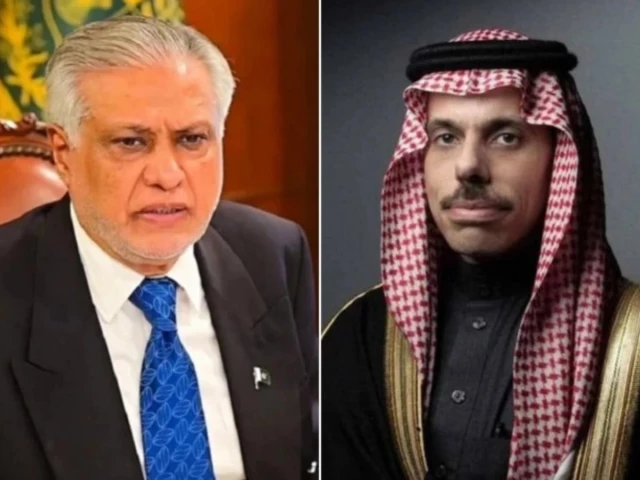
Foreign Minister Ishaq Dar (L) and Saudi FM Prince Faisal bin Farhan Al Saud. Photos: File
Pakistan and Saudi Arabia on Saturday reaffirmed their “close and brotherly ties” while underscoring the importance of diplomacy amid escalating tensions in the Middle East involving the United States, Iran and Yemen’s Houthi movement.
The development came as Yemen’s Houthis launched attacks on Saudi oil installations at two Red Sea ports on Saturday, raising concerns that the conflict disrupting energy supplies from the Gulf could spread to another major shipping route and further intensify Yemen’s long-running conflict.
According to a statement issued by the Ministry of Foreign Affairs, Deputy Prime Minister and Foreign Minister Senator Mohammad Ishaq Dar spoke with Saudi Foreign Minister Prince Faisal bin Farhan Al Saud.
Deputy Prime Minister/Foreign Minister Senator Mohammad Ishaq Dar @MIshaqDar50 spoke with the Foreign Minister of Saudi Arabia, His Highness Prince Faisal bin Farhan Al Saud @FaisalbinFarhan.
The two leaders exchanged views on the latest regional developments and reaffirmed the… pic.twitter.com/MOSvnhktyl
— Ministry of Foreign Affairs – Pakistan (@ForeignOfficePk) July 25, 2026
“The two leaders exchanged views on the latest regional developments and reaffirmed the close and brotherly ties between Pakistan and Saudi Arabia,” the statement said.
It added that both leaders underscored the importance of continued diplomacy and shared their commitment to promoting constructive engagement, peace and stability in the region.
The Middle East crisis, which has continued for nearly six months, has affected regional stability and disrupted energy supplies, with concerns extending beyond the region.
Read: Iran’s security chief vows to continue operations until enemy ‘fully surrenders’
The situation appeared to enter a different phase as the United States refrained from launching air strikes on Iran for the first night in two weeks. Washington did not immediately explain halting a series of escalating strikes after an interim deal to end hostilities collapsed following Iranian attacks on shipping in the Strait of Hormuz.
After the relative calm in Iran, there were also no immediate reports on Saturday of attacks by Iran on its Gulf neighbours, which had taken place daily in response to US strikes.
However, tensions remained high as Iran-aligned Houthis entered the conflict by targeting energy facilities in the Middle East.
Earlier today, the Houthis fired on Saudi oil installations at two Red Sea ports, while Saudi-backed forces carried out strikes against the Houthis, extending the Gulf conflict to another front.
In Yanbu, two ballistic missiles targeting oil installations were intercepted by a US-made Patriot battery operated in Saudi Arabia by the Greek military under an agreement with Riyadh, Greek security sources said.
Yanbu is Saudi Arabia’s main Red Sea oil port, where millions of barrels of oil are loaded daily and which has become an important route for Saudi exports avoiding the Strait of Hormuz, which has been blockaded by Iran. Jizan, located on the Red Sea near the Yemeni border, is home to a refinery with a capacity of 400,000 barrels per day.
Saudi Arabia has led an Arab coalition fighting the Houthis for more than a decade after the Iran-aligned group captured Yemen’s capital Sanaa and large parts of the north and west, including the Red Sea coast.
The Houthis declared a naval blockade of Saudi Arabia over the past week, with Houthi leader Abdul Malik al-Houthi warning that all Saudi oil facilities would become targets if Riyadh escalated its involvement in the conflict.
Also Read: Houthis fire on Saudi oil sites; no US strike on Iran for first time in two weeks
The move threatens to widen disruptions to global oil supplies caused by the Iran conflict and has contributed to a sharp rise in global oil prices, with Brent crude rising above $100 a barrel for the first time since May.
Amid the escalating tensions, US President Donald Trump on Friday vowed “major military punishment” for Tehran and the Houthis after the group claimed responsibility for striking two Saudi tankers in the Red Sea on Thursday.
The Saudi-led coalition said it would continue taking necessary measures to protect its ships and Saudi Arabia’s interests, warning it would respond “uncompromisingly” if the Houthis continued hostile actions.