
Illegal practice narrows key drain from 350 feet to nearly 50 feet ahead of monsoon
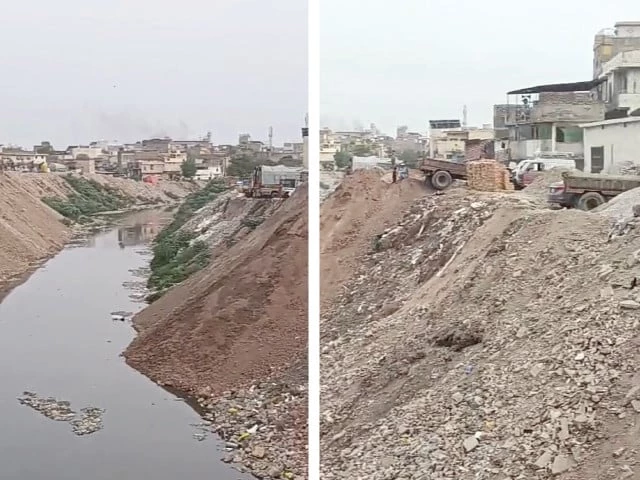
Persistent dumping of construction material, garbage, soil, and scrap waste into Nullah Leh raises serious questions over the authorities’ ability to enforce restrictions imposed under Section 144. PHOTOS: EXPRESS
RAWALPINDI:
With the arrival of the monsoon flood season drawing near, the relevant departments have so far failed to ensure the removal of silt, garbage and building material from Nullah Leh and 15 storm water drains flowing across the city.
Due to negligence and alleged connivance of the authorities and police, heavy trolleys, trailers and trucks are continuously dumping tons of soil, building debris and garbage into Nullah Leh near the dangerous Ganjmandi bridge despite an official ban.
As a result, heaps of soil, garbage and construction material have accumulated on both sides of the drain and the width of Nullah Leh, once measuring between 300 and 350 feet, has shrunk to nearly 50 feet, creating fears of devastating floods during this year’s monsoon.
The automatic flood warning system installed at Nullah Leh is also non-functional and has yet to be restored. Under Section 144, dumping building material, garbage and waste into Nullah Leh and storm water drains is prohibited. However, despite the ban, trolleys loaded with construction debris and city waste continue dumping material into the drain near the historic Ganjmandi bridge.
Every day, dozens of trolleys dump garbage, debris and scrap material into Nullah Leh and other storm drains near Ganjmandi bridge, Dhoke Ratta, City Saddar Road and Gawalmandi bridge. Later, millions of rupees are sought to remove the same debris and waste material.
This year too, a total of Rs150 million has been requested for the desilting and cleaning of Nullah Leh and 15 storm drains.
WASA sought Rs80 million for Nullah Leh while Rs70 million were requested for 15 storm drains. The Punjab government had been requested to release the funds on an emergency basis, after which announcements were made that desilting work would begin from May 1.
However, as of May 15, dumping of soil, construction debris and garbage continues in Nullah Leh near Ganjmandi bridge adjacent to Ganjmandi police station in the densely populated central area of the city. The waste and debris are rapidly consuming the drain’s width, reducing it to nearly 50 feet, a situation that could trigger severe flooding during pre-monsoon and heavy monsoon rains.
Traders of Ganjmandi market and nearby residents have announced a protest demonstration on Friday against the situation.
Shopkeepers and residents Faiz Ahmed, Rashid Khan and Haji Banaras said tons of building material and soil were being dumped into Nullah Leh despite the presence of a nearby police station and legal restrictions.
They said the flood season had already started and this was the time for cleaning the drain of silt and garbage, but instead piles of debris, waste soil and building material had formed at various points in the drain.
They warned that poor planning, narrowing of the drain and large encroachments along its banks had created serious flood risks this year.
They further alleged that despite a court stay order, a double-storey market had been constructed on government land near Ganjmandi bridge, while sewerage lines were also being laid there and in adjoining shops, which could trigger another flood disaster and further narrow the drain.

