Power minister says protected consumers will continue receiving subsidies amid reforms and tariff cuts
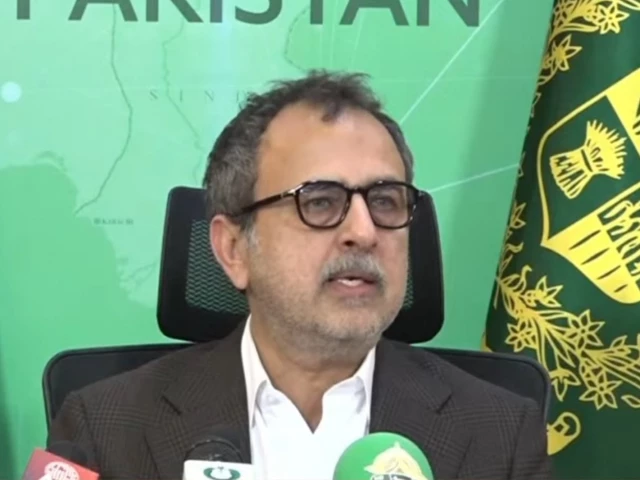
Minister for Power Sardar Ayaz Leghari addresses a press conference. SCREENGRAB/ File
Power Minister Awais Ahmed Khan Leghari on Sunday rejected reports suggesting that electricity subsidies for protected consumers were being withdrawn, describing such claims as inaccurate and misleading.
Leghari’s remarks come against the backdrop of reports last month that Pakistan had committed to the International Monetary Fund (IMF) to gradually end untargeted electricity subsidies for residential consumers and provide future support through the Benazir Income Support Programme (BISP) as part of conditions attached to a $1.2 billion climate support loan.
Addressing a press conference about the government’s power sector reforms, Leghari said the number of protected consumers had increased from 9.5 million to 21.5 million over the past four years.
“The government is not withdrawing electricity subsidies for protected consumers,” he said, adding that around 29.57 million domestic consumers — representing 86 per cent of the total — were currently receiving subsidised electricity.
Federal Minister for Energy Owais Leghari has clarified that the government is not withdrawing electricity subsidies for protected consumers, dismissing reports suggesting otherwise as inaccurate and misleading.
More Details:https://t.co/tvvQc8BSB6 pic.twitter.com/BvYv0aJSzF— APP (@appcsocialmedia) May 31, 2026
The minister said the volume of electricity subsidies had increased from Rs199 billion to Rs423b, while total subsidies worth Rs527b were being provided to the agricultural and domestic sectors.
“Eligible consumers will continue to receive uninterrupted subsidies through the QR code-based system,” he said.
Leghari said the government had introduced a registration mechanism to ensure that subsidies were directed only to deserving consumers, adding that more than two million single-phase consumers had already completed the registration process.
He maintained that reports regarding the discontinuation of subsidies were contrary to facts, while government claims about reductions in electricity prices were accurate.
Read More: Pakistan assures IMF to withdraw untargeted power subsidies in January
Highlighting developments in the power sector, the minister said the review of agreements with Independent Power Producers (IPPs) had generated savings of Rs3.5 trillion.
He said reductions in losses incurred by power distribution companies (DISCOs) had resulted in savings of Rs193b, while circular debt had declined by Rs780b during fiscal year 2024-25.
According to Leghari, the sale of surplus machinery of JNCs had generated savings of Rs47b. He said ongoing reforms had significantly reduced electricity generation and distribution costs, with positive results becoming increasingly visible across the energy sector.
The minister said the reforms had provided direct relief to consumers, while lower subsidy allocations in the budget had eased pressure on the national exchequer. He added that the burden of cross-subsidies on industrial consumers had also been reduced.
Providing details of tariff reductions, Leghari said electricity prices had declined across all consumer categories between March 2024 and May 2026.
“Tariffs for protected consumers have fallen by 31pc, while domestic consumers have benefited from a 16pc reduction,” he said.
He added that industrial electricity rates had declined by 33pc, commercial tariffs by 8pc, and agricultural tariffs by 14pc. Consumers in Azad Jammu and Kashmir had seen electricity rates decline by 45pc, while tariffs for bulk consumers had been reduced by 13pc.
According to the minister, the average electricity tariff nationwide had fallen by 20pc, which he attributed to reforms and greater reliance on domestic energy resources.
Discussing the country’s energy transition, Leghari said the share of clean energy in Pakistan’s power mix was expected to rise from the current 55pc to 90pc by 2035.
During the same period, electricity generation from local resources was projected to increase from 74pc to 96pc, while renewable energy currently accounted for 57pc of the country’s energy mix, he said.
Comparing regional trends, the minister said India’s renewable energy share stood at around 48pc. He stressed that the government was not discouraging solar energy adoption but was introducing measures aimed at improving transparency and efficiency.
“The government is not discouraging solar energy adoption,” he said.
Also Read: Fake electricity subsidy links spread online
Leghari said the National Energy Plan included 8 gigawatts of distributed solar energy and that the recently introduced net billing policy would not affect 90 per cent of domestic consumers.
“No major changes have been made for single-phase residential solar users,” he said.
The minister also highlighted solarisation projects in Gilgit-Baltistan and Gwadar and announced that licensing requirements for solar projects of 25 kilowatts or below had been abolished to encourage wider adoption of renewable energy.
According to Leghari, the National Electric Power Regulatory Authority (NEPRA) had approved additional facilities for small-scale solar projects at the request of the Power Division, while transparency had been enhanced through the digitisation of the net billing system.
Read More: IMF allows Rs830b power subsidies
He also clarified that net metering had not been abolished.
“Reforms have been introduced to improve billing procedures and create a balanced framework that protects the interests of both solar consumers and other electricity users,” he said.
Reaffirming the government’s position, the minister said subsidies for protected consumers would continue and were not being eliminated.