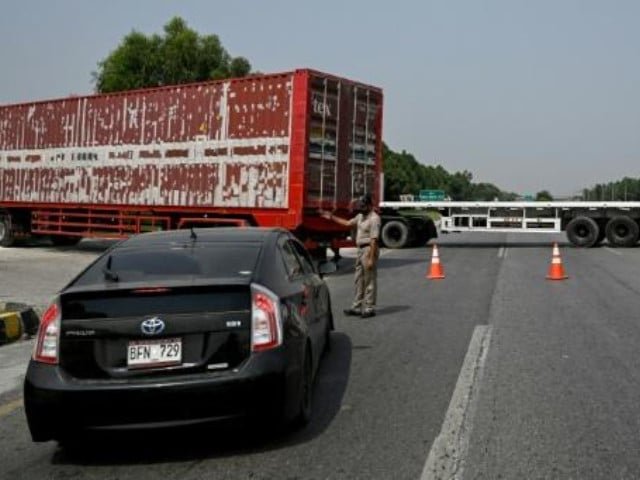










A proposed Rs64 billion road corridor for heavy freight between Karachi Port and Qayyumabad has revived a long-running question: should the city keep expanding roads for port traffic or invest more heavily in rail and sea transport?
The Sindh government plans to develop the 16.5-kilometre Karachi Port–Qayyumabad Corridor Project (KPQCP) under a public-private partnership. But experts and officials say the project may provide only a short-term answer to Karachi’s growing freight movement, while greater use of rail, sea routes and existing port land could offer longer-term benefits.
Around 80 per cent of Pakistan’s freight is currently transported by road and only 20 per cent by rail. Experts say the heavy dependence on roads increases fuel consumption, infrastructure and maintenance costs, while adding to congestion and pollution.
At a recent Sindh Environmental Protection Agency hearing on the project’s environmental impact, residents of Defence, Clifton and Qayyumabad and representatives of social and environmental organisations raised concerns over the proposed corridor. Environmental experts suggested using the railway network and Northern Bypass to move Karachi Port freight instead.
Several Karachi Port Trust (KPT) officials, speaking on condition of anonymity, said another option was available within the port itself. According to the officials, KPT owns hundreds of acres of vacant land in Mai Kolachi and other areas that could be developed into low-cost container storage and terminal facilities.
The officials noted that such facilities could reduce storage and handling costs for importers and exporters and eventually lower the prices of imported food, machinery, computers, vehicles and other goods.
The officials said KPT had previously proposed using its vacant land for container storage, but the plan was not approved. They alleged that housing schemes and commercial projects were given priority instead.
They also raised concerns about private off-dock facilities. According to the officials, shipping companies have obtained KPT land on leases ranging from 30 to 50 years at relatively low rates, while charging importers and exporters higher daily storage fees.
Read More: Aurangzeb highlights Pakistan's climate vulnerability, calls for faster climate financing at UNGA
Exporters pay until containers are loaded onto ships, while importers continue paying until they are moved by truck or train, creating pressure for quick clearance and adding to congestion. Heavy freight vehicles are generally restricted to 11pm-6am, yet congestion remains common on Shahrah-e-Pakistan, Clifton and Defence.
Rail could ease the pressure, but Pakistan Railways lacks the infrastructure to handle large container volumes. Only 52 commercial freight trains operate annually from Karachi Port, according to the report.
The proposed Pipri Marshalling Yard would store containers before they are sent to other cities, but KPT officials said importers and exporters have concerns because it is about 50 kilometres from the port. They said 47 per cent of Karachi Port’s commercial activity is linked to Karachi, meaning transport to Pipri could increase costs for local businesses.
A Pakistan Railways officer said the Pipri project dates back to the British era and remains necessary. He believed modernising the East and West Wharf stations could also allow direct freight movement to industrial areas such as S.I.T.E.
The Pakistan Railways spokesperson added that the Pipri project had not been cancelled but incorporated into ML-1, for which an international advertisement has been issued.
Dr Muhammad Ahmed of NED University opined that Karachi’s ports needed both road and rail links, but in a balanced manner. He described the KPQCP, which will connect with Shahrah-e-Bhutto and the M-9, as a short-term measure that could ease congestion but would not meet future growth in port traffic.
"Railway infrastructure should be upgraded because rail requires less fuel and generally has lower construction and maintenance costs, while reducing the number of heavy vehicles on city roads," explained Dr Ahmed, who further endorsed greater use of rail for Karachi Port and Port Qasim freight and the development of dry ports at suitable locations.
Railway Workers Union central chairman Manzoor Zia called for early completion of ML-1 and the Pipri Marshalling Yard. He urged that the Karachi-Lahore railway track should be upgraded even before ML-1 so both passenger and freight trains could operate at higher speeds.
Climate Action Center Director Yasir Hussain believed Karachi needed an integrated freight system, with sea, rail and road networks used according to their strengths. “Greater reliance should be placed on sea and rail for freight transportation,” he opined.
Hussain suggested using small vessels to move containers between Karachi Port, Port Qasim and other locations. Strengthening the railway system, he added, could reduce pollution and traffic congestion while saving fuel.
The KPT spokesperson was contacted several times for their comments, but they failed to respond.
Source link