

Iran raised the diplomatic initiative at the United Nations General Assembly in New York
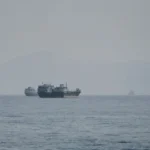
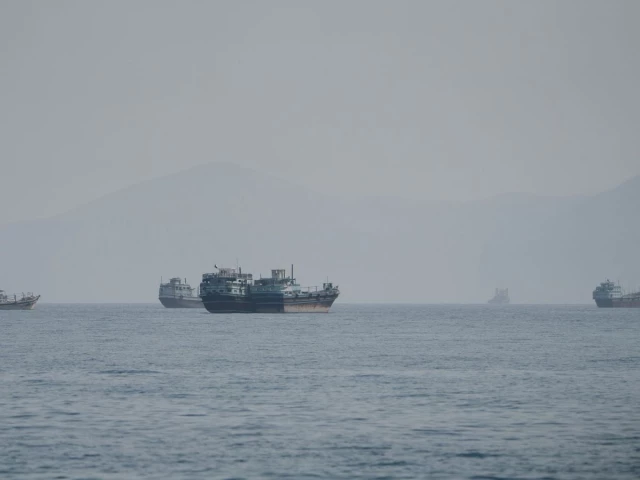
Vessels near the Strait of Hormuz, as seen from Musandam, Oman, August 24, 2026. PHOTO: REUTERS
Iran on Saturday awaited an official US response to its proposal to reopen the Strait of Hormuz and end fighting in the wider Middle East war after the Wall Street Journal reported that US President Donald Trump had rejected the deal.
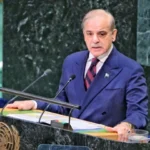
Iran raised the diplomatic initiative at the United Nations General Assembly in New York, saying it had been transmitted to the Americans via Qatari mediators and could reopen the strategic waterway and put an end to hostilities in the region within seven days.
The Iranians also engaged their Saudi rivals regarding the strait, underscoring the stakes of a seven-month-old conflict that has disrupted oil flows through one of the world’s most critical shipping lanes and taken a toll on the global economy.
Iranian Foreign Minister Abbas Araghchi told reporters at the United Nations on Friday the deal would trigger a seven-day countdown to reopening the strait and a pause in regional fighting.
Read: UN Security Council condemns Houthi attacks on Saudi Arabia
“If there is seriousness on the US side to come to a deal and reopen the Strait of Hormuz, everything is now prepared,” Araghchi said.
If the US were to agree, the warring parties could start wider talks “on mutually agreed subjects,” Araghchi said.
That could potentially include discussions of Iran’s nuclear program. Trump has vowed that Tehran will never acquire a nuclear bomb, while a senior Iranian official told Reuters that Iran will show no flexibility over its nuclear program even if the United States accepts its peace deal.
Iran would grant no concessions over its rights, including enriching uranium or shipping its highly enriched uranium out of the country, the official said.
Even so, Iran had put forward a plan that would halt hostilities on all fronts, including Lebanon. The plan in turn would require the United States to lift its blockade on Iranian ports, release Iran’s frozen funds, and waive its oil sanctions, Araghchi said.
A US official, speaking on condition of anonymity, had previously called discussions through mediators “positive and constructive.”
But Trump was privately sceptical that Iran would meet his demands, the Journal report said, and he told his staff that he sees a renewed bombing campaign as likely.
Reuters could not immediately confirm the Journal report.
Saudi allies unite
Previous attempts at diplomacy have failed to end the war, which began on February 28 with US and Israeli attacks.
Since then, the war has alternated between pauses and renewed strikes, killing thousands while degrading Iran’s conventional forces and damaging Iran’s already ailing economy.
Iran and its allies have retaliated by extending the conflict throughout the region. Iran, which controls the strait along with Oman, has struck US allies in the Gulf with drones and missiles while its Houthi allies in Yemen have targeted Saudi interests. Iranian-aligned militias in Iraq were blamed for a pipeline attack that temporarily took more Saudi oil off the market. All the while, Iranian-backed Hezbollah has been engaged with Israeli forces in Lebanon.
Araghchi briefed his Saudi counterpart Prince Faisal bin Farhan on the understanding between Iran and Oman regarding safe shipping routes in the Strait of Hormuz, Iran’s foreign ministry said early Saturday.
Read more: Tehran will make no nuclear concessions, Iranian official says
The war’s widening toll has also united Saudi Arabia’s allies to shore up the kingdom’s defences.
The Saudi-backed, internationally recognised Yemeni government has come under assault from Houthi fighters, with Houthi missiles striking inside the kingdom.
Yemen’s Saudi-led coalition said early Saturday it intercepted two drones launched by the Houthis towards the Saudi capital Riyadh in addition to intercepting a ballistic missile launched by the Houthis toward Khamis Mushait.
The Houthis, who control the most populous parts of Yemen and much of the north, have launched attacks against Saudi Arabia since declaring a naval blockade against Riyadh in July, with strikes targeting Saudi vessels in the Red Sea.
The attacks have targeted Saudi cities, energy infrastructure and shipping, adding to pressures on global oil supplies caused by the US-Israeli war on Iran and putting at risk the main alternative Red Sea route for Gulf exports while traffic through the Strait of Hormuz remains largely blocked.
Defence officials of Turkey and Pakistan, both partners in a joint defence pact with Saudi Arabia, met in Riyadh on Friday to review the security situation and discuss intelligence cooperation, military coordination, and integrating forces, the Saudi defence ministry said in a statement.
The statement came a day after Saudi, Pakistani and Turkish foreign ministers met within the framework of the Makkah Joint Defence Agreement.
Also read: FM Dar reviews Makkah pact implementation with Saudi, Turkish counterparts
The violence in Yemen has prompted a new humanitarian crisis, the United Nations children’s agency said on Friday, reporting a rise in acute malnutrition among children.
Pezeshkian says Iran wants peace, ‘distrust’ of US remains
Iranian President Masoud Pezeshkian said on Friday that Tehran remains open to resolving the dispute with Washington, but stressed that trust must first be rebuilt, as he arrived in New York for the 81st session of the UN General Assembly.
In an interview with CBS News, Pezeshkian said the two sides need to “abide by what we have written down,” and that the US “needs to show that it does not intend to overthrow our government or our administration.”
Also read: Iran seeks deal with US, not war: Pezeshkian
Asking Americans to consider Iran’s perspective, he said: “Put yourself in our position. Imagine someone came and martyred your supreme leader. And then, not abide by everything you had agreed upon. What would be your reaction? It’s not something that can be resolved that simply.”
He questioned whether Washington was genuinely seeking a settlement. “America’s intention is to overthrow our administration,” he said, noting that “Israel says it in their own speech; what they’re doing is neutralising the government, not negotiating.”
Pezeshkian asked: “Do you think the United States of America is genuinely interested in solving problems with us? Why, then, does it bomb us in the middle of negotiations? Why does it come and kill our scientists, officials and people?”
“As long as they don’t cease doing what they’re imposing on us every day, it’s difficult to trust them,” he said, citing daily sanctions, threats and strikes. He argued that Washington does “not honour what they have put in writing,” asking: “So if they engage in talks, will they actually follow through?”
The Iranian president still voiced hope for peace to be “established in the region,” calling on the US to halt support for Israel, which he indicated “is carrying out what we consider genocide,” and to “act on the basis of justice and fairness” rather than displacing “people from their homes,” killing “innocent people,” or targeting “children, hospitals, and scientists.”
Yemeni forces strike Houthi positions, supply lines in Taiz
Yemeni government forces said on Friday they struck Houthi positions and supply lines in the southwestern province of Taiz.
Military spokesman Majid Abdullah al-Nazili published footage on US social media platform X that he said showed strikes on Houthi fighters and supply routes in Dhubab and other parts of Taiz.
Dhubab is a coastal town in the Bab el-Mandeb district overlooking the Red Sea near the northern entrance to the strategic strait.
Al-Nazili did not provide details on casualties or damage.
Houthi military spokesman Yahya Saree separately claimed Saudi warplanes carried out 14 airstrikes and a missile attack in the previous 24 hours in the Taiz, Amran, Marib and Saada provinces.
Yemen has been engulfed in conflict since the Houthi group seized the national capital Sanaa and several provinces in 2014. That prompted a Saudi-led Arab coalition to intervene in 2015 in support of the internationally recognised government.
Renewed fighting began in July, when the group declared a maritime blockade on Riyadh.
Houthis recently claimed advances along the Red Sea Coast and Bab el-Mandab Strait, and have also targeted the oil infrastructure of Saudi Arabia.
Iran will make no nuclear concessions, Iranian official says
Iran will show no flexibility over its nuclear program even if the United States accepts its proposal to reopen the Strait of Hormuz, which calls for steps including the lifting of a US naval blockade on Iranian ports, a senior Iranian official told Reuters on Friday.
The official, speaking on condition of anonymity, said the waterway would remain closed until “all of Iran’s conditions are met” by the United States.
Under Iran’s proposal, Tehran has offered to reopen the strategically vital Strait of Hormuz. Within seven days, hostilities would end on all fronts, including Lebanon; the United States would lift its blockade on Iranian ports, release Iran’s frozen funds and waive its oil sanctions, Iran’s Foreign Minister Abbas Araqchi said on Thursday.
The proposal follows a sharp escalation in Middle East tensions after seven months of war between Iran and the United States, with Iran-backed Houthi militias in Yemen launching missiles and drones at Saudi Arabia.
The strait has become the central bargaining chip in efforts to end the US-Iran conflict, with Iran seeking relief from the US blockade that is choking its economy and Washington seeking free passage for ships on the global oil supply route now blocked by Tehran.
In a meeting with journalists on Thursday on the sidelines of the United Nations General Assembly, Pezeshkian said he hoped to reach a deal with Washington to end hostilities before the US midterm elections on November 3.
Tehran said it would be prepared to engage in detailed negotiations over its nuclear program only after its conditions are met by the US.
But the official said Iran would give no concessions over its rights, including enriching uranium or shipping its highly enriched uranium out of the country, one of the main US demands.
Israel, the United States and other Western states have long accused Iran of seeking nuclear weapons, including pointing to its move to enrich uranium to 60%, far higher than needed for civilian uses and closer to the 90% needed for a weapon. Iran denies seeking nuclear weapons.
The International Atomic Energy Agency estimates that Iran had 440.9 kg of uranium enriched to 60% when Israel and the US attacked Iranian nuclear facilities in June 2025. How much of that has survived is unclear.
Iranian authorities have said that Iran could agree to dilute its most highly enriched uranium.
In May, Reuters reported that Iran’s Supreme Leader Mojtaba Khamenei has issued a directive that the country’s HEU should not be sent abroad, according to two senior Iranian sources.