



ISLAMABAD:
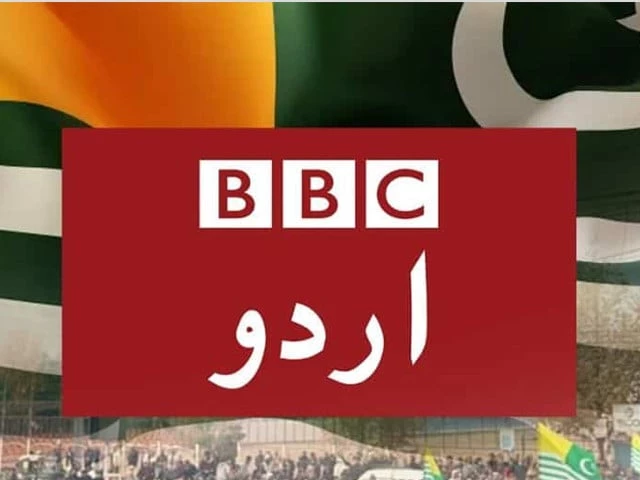
The Ministry of Information and Broadcasting has lodged a strong official protest and formal complaint with BBC Urdu over the publication of “fake news regarding Azad Jammu and Kashmir”, accusing the broadcaster of relying on unverified allegations while ignoring official facts and on-record statements.
In a post on X, the ministry said the report was based on unverified and uncorroborated claims and failed to reflect the official position.
“Unfortunately, this is not the first instance of such reporting,” it said. “The repeated publication of unverified claims has become a trend, and corrective measures must be taken.”
Separately, the ministry and the Azad Jammu and Kashmir (AJK) government issued detailed fact-checks rejecting BBC Urdu’s report alleging that police had blocked the movement of food, medicines and fuel during the ongoing unrest in the region.
Both dismissed the report as “factually incorrect” and maintained that there was no truth to allegations of road closures or restrictions on the movement of vehicles.
According to the Ministry of Information and Broadcasting’s fact-check, building a news report around the statement of an anonymous source without credible verification gives the impression of advancing a particular narrative.
The AJK government’s fact-check specifically rejected BBC Urdu’s claim that police had stopped civilians transporting food, medicines and fuel, describing it as contrary to the facts.
It said the report’s headline and central allegation were based entirely on an anonymous source and that it contained neither video evidence nor any independent witness account or official statement to substantiate the claim.
The AJK government further maintained that there was no truth to claims regarding road blockades or restrictions on vehicular movement, adding that highways across the region remained open for traffic.
It also pointed out that during a joint press conference held on June 23, the AJK chief secretary and inspector general of police had categorically denied allegations regarding road closures.
According to the fact-check, any disruption witnessed on roads was caused by protesters belonging to the banned Action Committee, who allegedly attempted to stop and loot vehicles carrying essential goods.
It said law enforcement agencies acted promptly to protect the vehicles and their cargo while ensuring that roads remained open and traffic continued.
The federal ministry and the AJK government urged international media organisations to uphold professional journalistic standards and refrain from publishing unverified, misleading and baseless reports.
In a related development, AJK police chief warned citizens at home and abroad against disinformation and AI-generated content, urging them to rely on official sources for information amid a “hybrid warfare” environment.
Addressing a news conference, Inspector General of Police Captain (retd) Liaqat Ali Malik said all entry points into AJK remained open to all types of traffic, including vehicles carrying essential commodities, and rejected reports suggesting otherwise.
He urged overseas Pakistanis, particularly members of the Kashmiri diaspora in the United Kingdom and Europe, to verify information through authentic government media and social media platforms.
“All major entry points into the territory, including Kohala, Azad Pattan and Bararkot, are open for all types of traffic without any intervention, except routine security checks within police protocols,” he said.
Malik alleged that activists of the proscribed Joint Awami Action Committee (JAAC) had erected barriers at some locations and attacked or snatched goods-laden trucks, adding that law enforcement agencies were regularly clearing roads and facilitating commuters.
Referring to a recent BBC Urdu report, Malik claimed that the report was based on unverified allegations and published without seeking the government’s version, despite the availability of official contact channels.
“We can say that this article is far away from reality [ ],” he said.