



ISLAMABAD:
At a time when tensions between Iran and the US continue to cast a long shadow over regional stability, Pakistan on Thursday struck a cautiously optimistic tone, insisting that diplomatic efforts remain alive and active.
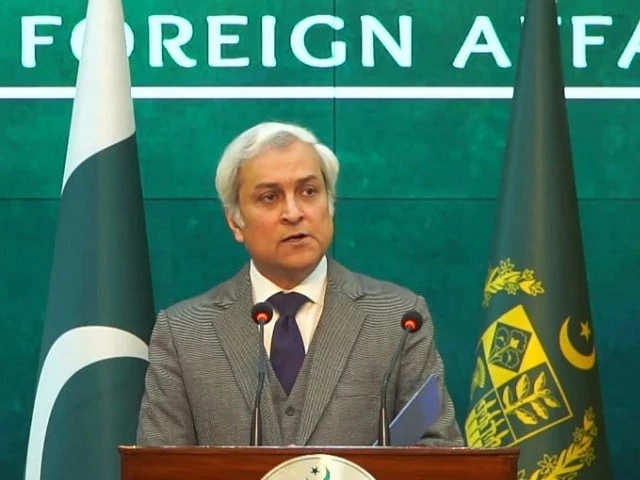
“The clock on diplomacy has not stopped,” Foreign Office spokesperson Tahir Andrabi said during his weekly briefing, signaling that despite setbacks, space for negotiations still exists.
He underscored that the current diplomatic process was made possible only after Pakistan’s call for a ceasefire, an initiative led by Prime Minister Shehbaz Sharif and accepted by both sides.
“Let me underscore that these talks started after the call for a ceasefire by Pakistan. The ceasefire basically opened a window for substantive diplomacy, including dialogue between the two sides,” Andrabi said.
According to the spokesperson, the ceasefire halted active hostilities in the Gulf region, preventing missile exchanges and broader military escalation.
“It ceased hostilities, arms attacks, missiles to and from in the Gulf region stopped. Many lives were saved. Damage to infrastructure was averted. So, this paved the way for the talks,” he added.
Following the ceasefire, Islamabad hosted talks between the two adversaries, after which communication channels remained open.
“Subsequently, after these talks, the diplomatic exchanges, channels of communications, remained open. The process of facilitation of talks continued,” Andrabi noted.
He emphasized that Pakistan remains directly engaged with both Washington and Tehran in pursuit of a negotiated settlement.
“As such the status of talks now is that we remain actively engaged with both sides to achieve a resolution of this issue. We remain hopeful of a negotiated settlement of this issue, and we will continue our sincere efforts for the cause of peace and prosperity in the region and beyond.”
The spokesperson also linked the recent high-level diplomatic visits to this ongoing effort, particularly the visit of Iran’s foreign minister.
“The visit of the Iranian Foreign Minister was in the same vein. He held important discussions here in both legs of his visit before leaving for Oman and then returning from Oman,” Andrabi said, reiterating that “the clock on diplomacy is ticking, functioning, and ongoing.”
Addressing concerns over the Strait of Hormuz, Andrabi described the situation as globally consequential. “The Strait of Hormuz is an important international shipping route for goods and energy. Pakistan has called for security of ships and crew members and the swift and safe passage of civilian ships and restoration of normal passage through the Strait,” he said.
He warned that disruptions were already affecting economies worldwide, including Pakistan. “Current situation is adversely impacting countries around the world, including the region, including Pakistan. Its consequence for global regional and global economy are significant.”
Pakistan, he said, supports the legitimate interests of Gulf countries and stressed that any final arrangement must take them into account.
On the question of fresh proposals, Andrabi remained cautious but confirmed that diplomatic activity continues behind the scenes.
“I’ll not talk on any specifics, but I can say that the proposals old, new, not so new, not so old, are on the table,” he said, noting that internal deliberations are underway in both the United States and Iran.
“We hope that peace will prevail. We hope for stable relations between Iran and the United States.”
He reiterated Pakistan’s sustained diplomatic engagement over the past two weeks.
“Pakistan’s constructive diplomatic engagement in supporting de-escalation, ceasefire efforts, and the broader pursuit of stability between the United States and Iran continue. Our sustained interaction with both Washington and Tehran was maintained in the last two weeks.”
Framing Islamabad’s approach as principled and dialogue-driven, Andrabi said Pakistan remains committed to navigating complex geopolitical challenges through diplomacy.
“In this context, under the leadership of Prime Minister Mohammad Shahbaz Sharif, with the active involvement of Deputy Prime Minister and Foreign Minister Ishaq Dar, as well as Chief of Army Staff Field Marshal Asim Munir, Pakistan has maintained open channels of communication with the concerned parties.”