ISLAMABAD:
Deputy Prime Minister and Foreign Minister Ishaq Dar on Friday warned India that any attempt to deprive Pakistan of waters allocated under the Indus Waters Treaty (IWT) could have “profound consequences” for regional peace and security, while calling for the decades-old agreement to be respected and implemented.
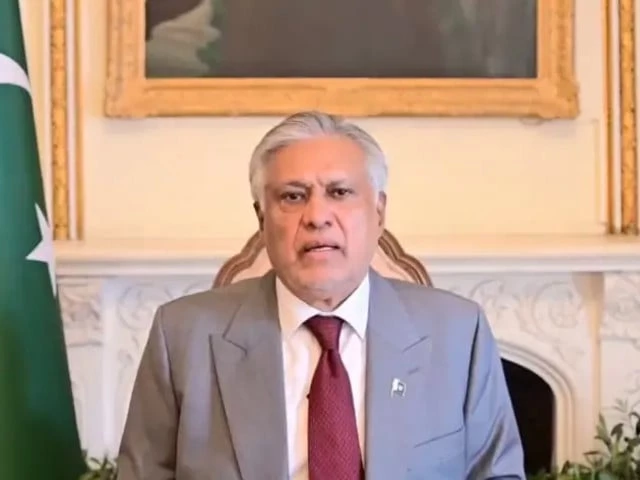
Addressing a virtual seminar in Washington on “The Indus Waters Treaty: South Asian Security at the Crossroads”, Dar said the 1960 treaty remained “valid, binding and fully operative” despite India’s unilateral decision in April 2025 to place its obligations under the agreement in abeyance.
The foreign minister said the treaty had survived wars, military crises, diplomatic breakdowns and prolonged political tensions for more than six decades because both countries recognised that water on which hundreds of millions depended was too fundamental to be subjected to political fluctuations.
Dar said Pakistan had consistently sought to resolve differences through dialogue, diplomacy and mechanisms provided under the treaty. He pointed to continuing treaty-based proceedings concerning Indian hydroelectric projects, particularly Kishenganga and Ratle, as evidence that the agreed legal framework remained relevant.
The deputy prime minister stressed that approaching the Permanent Indus Commission, a neutral expert or the Court of Arbitration was not an act of confrontation but implementation of mechanisms agreed by both countries.
Separately, speaking in London at the conclusion of his August 24-28 visit, Dar said British officials had praised Pakistan’s mediation efforts between the United States and Iran during his visit to the UK, particularly the leadership of Prime Minister Shehbaz Sharif and Army Chief Field Marshal Asim Munir.
Dar described the trip as “extremely useful” and said that he had held comprehensive talks with British Foreign Secretary Ed Miliband on bilateral relations and counter-terrorism cooperation. He added his discussions with Commonwealth Secretary-General Shirley Ayorkor Botchwey focused on reforms and youth initiatives, while he also highlighted Pakistan’s vulnerability to climate change.
Dar said he had held detailed meetings over 10 Pakistani nationals held hostage aboard the MT Honour 25 by Somali pirates, stressing that international maritime rules prohibited ransom payments because they could encourage piracy.
On the economy, Dar said Pakistan had moved beyond concerns over default, with inflation now in single digits and policy rates having almost halved. He said the government’s focus was now on economic growth, development and raising per-capita income.
He also held telephone conversations with Saudi Foreign Minister Prince Faisal bin Farhan and Turkish Foreign Minister Hakan Fidan on regional developments and preparations for an upcoming meeting of Pakistan, Saudi Arabia, Turkiye and Egypt.
Dar said Pakistan would continue pursuing engagement, diplomacy and peaceful settlement, presenting the country’s diplomatic approach as one centred on stability and cooperation in both South Asia and the wider region.
Source link