






PSM incurs Rs57b in interest over 3 years; pays Rs3.9b in salaries, Rs9.1b in bills
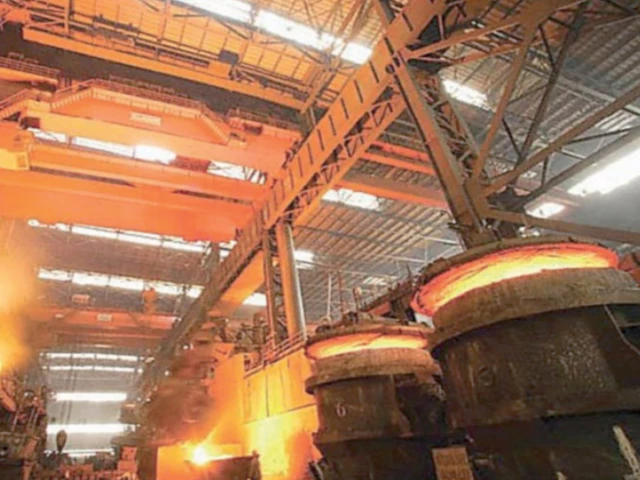
According to the Central Monitoring Unit, without reforms in subsidy governance, debt management, and operational modernisation, Pakistan’s trading SOEs and PSM will remain persistent fiscal liabilities. PHOTO: FILE
ISLAMABAD:
The closed Pakistan Steel Mills (PSM) cumulatively caused a whopping loss of over Rs79 billion in the past three fiscal years, of which Rs57.5 billion was booked in interest expenses, as the finance ministry ignored advice to restructure the debt of the closed unit.
According to statistics provided by the Ministry of Industries, a loss of Rs24 billion was booked in the last fiscal year 2025-26 alone, despite the fact that the factory had been shut down by the government of Pakistan Muslim League-Nawaz in June 2015.
Details revealed that employees were still getting salaries; there were also expenses on fuel, electricity, water and gas and above all, the government was paying a huge interest on past loans.
From fiscal year 2023-24 to fiscal year 2025-26, the PSM caused Rs79.3 billion losses, which was the period when Shehbaz Sharif was the prime minister, except for a brief period of eight months for the caretaker setup, according to the official statistics.
Out of these losses, Rs57.4 billion, or 72%, was because of interest costs of past loans. The statistics further disclosed that the annual cost on interest payments was Rs17.7 billion in the last fiscal year, which was about Rs1.3 billion less than the preceding year due to low interest rates.
Out of the Rs17.7 billion, Rs11.8 billion was paid in interest on the government loan. Another Rs5.2 billion was paid as interest cost on commercial banks’ loans.
In the Review TV programme – Pakistan’s only prime time show on the economy – it had been highlighted that in the first half of the last fiscal year, the closed mill caused a loss of nearly Rs13 billion.
More alarming was that the federal government did not restructure the PSM debt, which was mainly in the shape of a cash development loan by the finance ministry and the National Bank of Pakistan. The finance ministry ignored the advice of its own Central Monitoring Unit (CMU), which traces the progress of state-owned companies.
As of fiscal year 2024-25, the cash development loan for PSM stood at Rs108 billion, on which the finance ministry was charging around Rs11.5 billion in annual interest cost, according to the CMU. It also reported over Rs40 billion in bank loans, mainly from the government-owned NBP.
The Express Tribune had reported in 2016, a year after the closure of PSM, that the government and NBP were in negotiations for the settlement of PSM loans. However, after the lapse of a decade, the government was still paying interest on those loans.
The CMU report on the performance of state-owned enterprises for fiscal year 2024-25 revealed that the unit had recommended debt restructuring for PSM. “Debt restructuring, including debt-to-equity swaps and negotiated write-downs, is essential to reduce the liabilities blocking potential strategic investment (in PSM),” reported the CMU, but it was never implemented.
There was also heavy debt on the balance sheet – contingent liabilities like fuel, utilities and pensions. The PSM plant was obsolete. The CMU had advised that a government-led debt cleanup exercise should be undertaken and liabilities should be carved out into a holding company.
The CMU further said that interest was accruing despite zero operations and legacy debt accumulating purely as a fiscal deadweight. It added that Rs40 billion guarantees were required to prevent default, but the entity remains non-operational.
The CMU said that PSM was saddled by unsustainable debt and liabilities accrued over decades of non-operational status, creating an ongoing fiscal drain through wage subsidies and debt servicing. Technological obsolescence, absence of modernisation, and the lack of production capacity have rendered PSM uncompetitive against imported steel, leading to a complete loss of domestic market share.
It recommended that forming joint ventures with global steel manufacturers could bring technical expertise, foreign capital, and access to the export market as well as facilitate integration into regional value chains.
Without reforms in subsidy governance, debt management, and operational modernisation, Pakistan’s trading SOEs and PSM will remain persistent fiscal liabilities, according to the CMU.
The Ministry of Industries’ statistics showed that in the past three fiscal years, Rs3.9 billion was paid in salaries to employees of the closed mill. But compared to the preceding year, there was a 50% reduction in salary payments in fiscal year 2025-26.
Moreover, in the past three years, Rs9.1 billion was paid on account of fuel, power, water and gas charges of a closed factory. But compared to the preceding year, there was a one-third reduction in these charges in the last fiscal year.