KARACHI:
The catastrophe unfolding in Nepal, where a glacial and bedrock collapse unleashed devastating floods through the Himalayas, is not remote news for Pakistan. At the time of writing, Nepal had reported more than 500 deaths and nearly 1,000 people missing.
The same mountain system feeds Pakistan’s rivers, supports its hydropower and connects it with China. A glacial lake outburst, landslide or earthquake can, God forbid, simultaneously destroy lives, highways, power plants, tourism and trade connectivity.
Pakistan has already received repeated warnings. The 2005 earthquake killed approximately 73,000 people and imposed costs of around $5.2 billion. The 2022 floods affected 33 million people, caused $14.9 billion in physical damage and $15.2 billion in economic losses, while requiring at least $16.3 billion for reconstruction. They may also have pushed up to nine million additional people below the poverty line. These figures show that natural disasters are no longer humanitarian events alone. They are sovereign fiscal shocks.
Pakistan’s fragile tax base, large informal economy, low insurance penetration and limited fiscal space make post-disaster borrowing exceptionally costly. Waiting for foreign pledges forces the country to appeal for assistance precisely when roads, crops, exports and revenues have collapsed.
Nepal’s 2015 earthquake required reconstruction equivalent to nearly 30% of GDP, while Mozambique’s 2019 cyclones caused approximately $3.2 billion in damage. Poorer countries do not lack resilience or compassion. They lack immediately available, pre-arranged capital.
Climate change is multiplying this risk. The World Meteorological Organisation estimates that 2025 was approximately 1.44-degree Celsius warmer than the pre-industrial average, while 2023 to 2025 were the three warmest years recorded. ICIMOD warns that the Hindu Kush Himalayan region could lose up to 80% of its present glacier volume by 2100 under current emission trajectories.
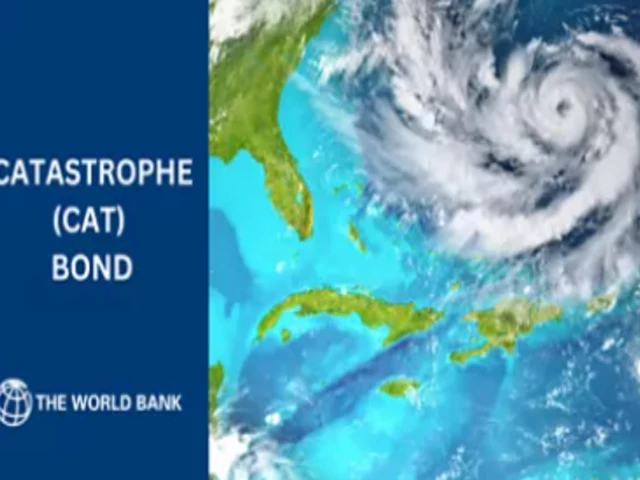
Policymakers should further equip the National Disaster Management Authority with innovative insurance policy. A domestic reserve should absorb frequent, smaller disasters. Parametric insurance should cover medium-severity floods, droughts, earthquakes and glacial outbursts. A World Bank-supported catastrophe bond of initially $500 million, eventually rising towards $1 billion, should transfer rare but devastating risks to international investors.
Under such a bond, Pakistan would pay an annual premium rather than borrow after a disaster. The World Bank could issue capital-at-risk notes to investors. If independently measured rainfall, river levels, earthquake intensity or glacial-flood parameters cross agreed thresholds, investor capital would finance Pakistan’s payout. The government would receive liquidity rapidly without waiting for damage surveys or adding emergency debt. Poorly designed triggers can create basis risk, so modelling must be transparent and accompanied by the domestic reserve.
The model is proven. The Philippines obtained $225 million of earthquake and cyclone protection. Mexico has repeatedly transferred earthquake and hurricane risks through the World Bank catastrophe bonds. Jamaica’s $150 million bond was paid out in full after Hurricane Melissa in 2025, and it was replaced by an oversubscribed $200 million bond in 2026. Aon Securities and Swiss Re Capital Markets structured that transaction, with Moody’s RMS providing risk modelling. Pakistan can invite these firms, alongside Munich Re and Guy Carpenter, into a competitive market-sounding process.
The annual cost needs not fall on ordinary households. The FY 2026-27 federal budget already projects Rs50 billion from the Climate Support Levy and Rs1.676 trillion from the petroleum levy. Ring-fencing the Rs50 billion climate levy and redirecting only 1% of petroleum levy would provide approximately Rs66.8 billion annually before any new taxation. This could be supplemented by 5% of super tax receipts and targeted resilience surcharges on HOBC, vehicles above 1,800cc, mobile phones costing over $1,000, business-class air travel and second high-value urban properties.
Pakistan should not discourage insurance penetration or cleaner technology through blanket levies on insurance premiums, EVs or plug-in hybrids. An expensive vehicle may face a technology-neutral luxury surcharge, but mass-market EVs and PHEVs should remain incentivised.
Separately, the SECP could establish a catastrophe insurance pool under which insurers provide standardised earthquake and flood cover, Pakistan Reinsurance Company retains part of the risk and global reinsurers cover the larger layer. Low-income households and farmers should receive subsidised microinsurance.
Provincial contributions should be incorporated consensually into the next NFC Award, rather than deducted unilaterally. Contributions could be based on modelled hazard exposure, vulnerable population and provincial revenue capacity. Payouts should then flow automatically through the BISP’s National Socio-Economic Registry and verified bank accounts or digital wallets, providing emergency grants within 72 hours, particularly to women-led households. Every trigger, premium and payment should appear on a public dashboard.
Insurance cannot substitute prevention. Diamer-Bhasha, Mohmand and Dasu dams, motorways, railways and CPEC routes require climate stress testing, redundant access roads and alternative power and communication links. Pakistan should prohibit rebuilding in repeatedly flooded zones, gradually relocate the most exposed settlements and direct new housing and industrial estates towards mapped lower-risk areas.
Finally, financial resilience must accompany decarbonisation. Pakistan needs cleaner Euro-compliant fuels, vehicle inspection, gradual retirement of polluting diesel engines, cash for clunker schemes, mass transit, EVs, solar, nuclear and hydropower backed by stronger grids. Crop residue should be converted into biomass, compost or biochar instead of being burnt, while municipal waste must be recycled and landfill methane captured. The World Bank estimates that air pollution alone may cost Pakistan around 6.5% of GDP annually.
The choice is straightforward. Pakistan can continue borrowing and appealing for aid after every catastrophe, or it can price disaster risk before it arrives. A funded reserve, provincial risk sharing, BISP-linked protection, parametric insurance and a sovereign catastrophe bond would represent something Pakistan urgently needs: economic independence through preparedness.
The writer is an independent economic analyst
Source link