
PUBLISHED
May 24, 2026
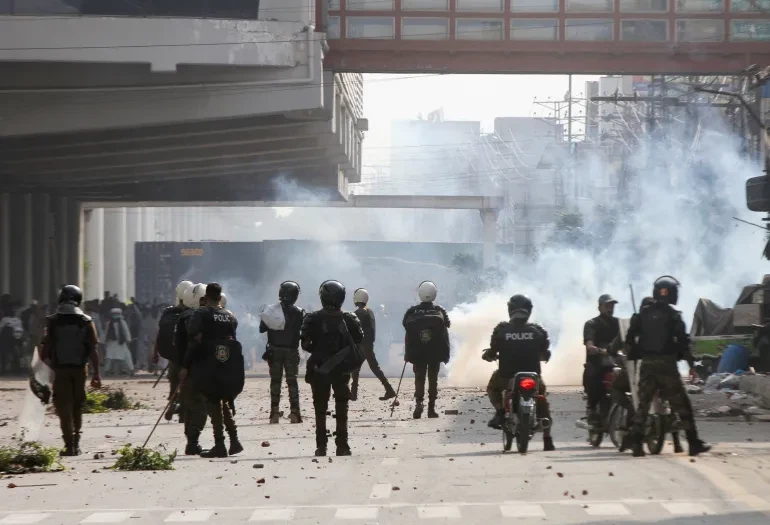
In Pakistan’s policing lexicon, few words carry as much controversy as “encounter.” While official accounts describe armed exchanges and the neutralisation of hardened criminals, grieving families speak of sons taken into custody and returned as bodies. Between these competing narratives lies a widening fault line in the country’s criminal justice system.
Over the past two years, reported police encounters have risen sharply across Punjab, Khyber-Pakhtunkhwa (K-P), and Sindh. Provincial authorities framed this as a necessary response to organised gangs, kidnapping networks, contract killings, and street crime. Officers argued that heavily armed suspects leave them little choice but to respond with force.
Human rights advocates, however, warned that a pattern of custodial deaths and unusually high fatality rates signals a deeper problem. For instance, Advocate Shabbir Hussain Gigyani of the Peshawar High Court felt that the state cannot outsource justice to the police.
“If crimes can be reduced through encounters, then we should shut down the courts and let individuals decide punishment themselves,” implored Gigyani. “The police fail to present strong evidence or credible witnesses in court, which results in the accused being released. The solution is not extrajudicial killing but improving the quality of investigation.”
Punjab’s Crime Control Department (CCD), established in 2025, epitomised this shift toward aggressive, intelligence-led policing. As a specialised wing of the Punjab Police, it was tasked with dismantling inter-district gangs and confronting serious organised crime. Armed with modern weapons, surveillance technology, and specially trained personnel, it is credited by authorities with reducing robbery, vehicle theft, and highway crime in multiple districts.
The government emphasised that the CCD’s formation was a response to a growing perception of lawlessness. According to official accounts, entire urban districts had been operating under the influence of violent criminal networks, with kidnappings for ransom, contract killings, and large-scale robberies becoming increasingly audacious. Citizens frequently complained of police inaction or inefficiency, creating both political pressure and a sense of urgency to demonstrate results.
Yet the surge in encounter killings has drawn scrutiny from the Human Rights Commission of Pakistan, the judiciary, and legal experts nationwide. From Jamrud Bazaar in Peshawar to Sharaqpur in Punjab and Karachi’s urban sprawl, disputed operations are no longer isolated events. They form part of a broader national debate over power, accountability, and the limits of state force.
The rise of encounter policing
Across the provinces, the operational logic behind encounters is strikingly similar. Police describe intelligence-led raids on dangerous suspects who allegedly open fire when cornered. Officers respond in self-defence and the weapons are recovered. Later, the FIRs document a familiar sequence of events.
In Punjab, over 600 encounters have reportedly taken place since the CCD’s formation, resulting in more than 900 alleged criminals killed. Authorities argue that these figures reflect the dismantling of entrenched criminal networks in Lahore, Gujranwala, Faisalabad, and South Punjab. Apparently, arrests of proclaimed offenders have strengthened public safety and restored confidence in law enforcement. Press briefings and media coverage of seized weapons, narcotics, and gang busts reinforce the narrative of decisive policing.
On February 17, Sindh’s Counter Terrorism Department claimed to have killed several terrorists in a Karachi encounter. However, relatives, including Muhammad Ali, father of Hamdan (allegedly killed in the encounter), protested, claiming Hamdan was in police custody since December 29, 2023.
HRCP reported 52 political workers were extrajudicially killed in Sindh in 2019.
The 2024 report highlighted deaths in police custody, such as nationalist Sikandar Mallah, who died after being injured by police in July 2024. His widow committed suicide in protest. In September 2024, Dr Shahnawaz Kunbhar was allegedly killed in a fake encounter after his arrest in Karachi. In January 2018, Naqeebullah Mehsud was killed in a fake encounter, sparking nationwide protests, with police officer Rao Anwar accused of the killing.
In K-P, police leadership offers similar justifications. Officers point to gangs armed with automatic weapons and attacks on police parties during custody transfers. Officials claim most fatalities occur when suspects open fire, attempt escape, or when accomplices intervene.
Yet scepticism remains. Gigyani noted the imbalance between suspect and police casualties: “The number of police deaths is so low relative to suspects’ deaths that it raises serious questions. We cannot assume every encounter is genuine without forensic scrutiny and judicial oversight,” says Gigyani.
“We must carefully examine the patterns of FIRs,” adds advocate Dr Akhtar Ali Shah, former Inspector General of Police K-P. “If they follow a stereotypical or identical sequence, it may indicate that this method is being adopted as policy at senior levels. Repeated procedural similarities, if institutionalised, risk signalling a systemic approach rather than isolated operational decisions.”
Experts also highlight the psychological dimension. Encounters create both fear and perceived safety in communities. Many citizens, exhausted by years of street crime, view these operations as evidence of government action. Yet, as Gigyani explains, this apparent confidence is fragile: “If the law becomes associated with arbitrary killings, fear replaces trust, and that is a far greater social cost than the immediate decline in petty crime.”
Bypassing the courts
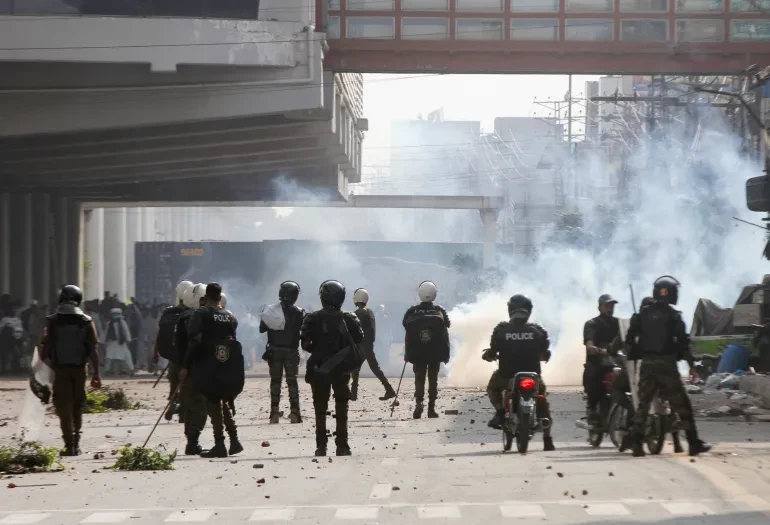
In the space between custody and courtroom, justice often becomes a matter of life and death. Suspects, once detained, are sometimes returned as corpses, leaving families to question: when does the state’s power to protect become the power to kill?
In Peshawar, the death of Nauman Afridi ignited public protest. Nauman’s parents alleged he had been taken from home days earlier and was later killed in what police described as an encounter. SP Cantt Abdullah Ahsan insisted that Nauman was a hardened criminal wanted in multiple districts. “He died when unknown armed men attacked the police during a crime scene visit,” said Ahsan. Yet, Nauman’s father asked a question that resonated nationally: “If he was under police protection, how could armed men reach him?”
Similarly, in Punjab’s Sharaqpur tehsil, five members of a single family were killed in separate alleged encounters. Relatives claim they were first detained and later presented as having died in shootouts. The Lahore High Court has sought reports from relevant authorities and the Federal Investigation Agency. Police maintain the deceased were part of a dangerous gang; petitioners allege illegal detention followed by staged killings.
In Karachi’s Shah Latif area, relatives of suspects killed in CTD operations protested outside the press club, alleging that some of the deceased had been taken from their homes weeks earlier. In Sindh, HRCP has repeatedly documented deaths in custody and disputed encounters involving political activists, workers, and ordinary citizens.
CCD officials, however, insisted that arrest remains the primary objective of every operation. Lethal force is described as a last resort, governed by legality, necessity, and proportionality. Post-operation procedures—including medico-legal reports, forensic examination, and magisterial inquiries—are presented as safeguards. The department has also launched internal accountability drives, vowing zero tolerance for torture, corruption, or fabrication of evidence.
On the other hand, legal experts stressed the constitutional dimension. “Under Pakistan’s legal framework, suspects must be arrested, produced before a court, and convicted on evidence,” said Dr Akhtar Ali Shah. “Article 4 guarantees that every individual shall be dealt with according to law. When lethal force replaces the judicial process, the state undermines its own legal authority.”
Gigyani echoed this point: “Frustration with acquittals cannot justify bypassing courts. Encounters that pre-empt judicial procedures erode confidence in the system and create a dangerous precedent. If officers are permitted to act as judge, jury, and executioner, it risks normalising lawlessness under the guise of law enforcement.”
The Sharaqpur and Peshawar cases illustrate the human cost of these practices. Families report fear, trauma, and social stigma, sometimes delaying complaints for months or avoiding public exposure altogether. These cases also highlight systemic failures in oversight, investigation, and protection of citizens’ legal rights.

Numbers and narratives
Statistics complicate official claims of success. In Peshawar, hundreds of encounters were recorded in 2025 alone, with dozens of suspects killed and many more injured. In Sindh, encounter incidents reportedly doubled in January year-on-year, with fatalities rising sharply. Yet in Karachi, overall crime—including motorcycle theft, car snatching, and mobile robbery—remains high.
Data obtained by The Express Tribune from Peshawar Police sources shows that in 2025, a total of 244 police encounters were reported in the city, resulting in 29 deaths and 251 injuries among suspects, alongside the arrest of 302 individuals involved in snatching and robbery cases. In 2026 so far, 41 encounters have been recorded, leaving 12 suspects dead and 38 injured, with 56 arrests made.
According to Sindh Police statistics, in January last year, 234 police encounters took place across the province, resulting in 17 suspects killed and 130 injured, while 13 police personnel were also injured. In January 2026, the number of encounters increased to 405, with 66 suspects killed and 264 injured. During these incidents, one police officer was martyred and 10 others injured.
In Karachi, overall crime has not significantly decreased. Data from the Citizen-Police Liaison Committee (CPLC) shows that 74,000 crimes were reported in Karachi in 2024. In the past six months alone, more than 35,000 incidents were registered, with District East and Central recording the highest numbers. Police argue that encounter operations have disrupted major gangs, yet structural drivers of crime remain unaddressed.
Experts continue to highlight discrepancies. Dr Akhtar Ali Shah observed, “Hundreds of alleged criminals are killed while police deaths remain minimal. While authorities cite superior tactics, the scale of fatalities warrants independent review. The social consequences of repeated violent encounters cannot be ignored.”
Concurring with Dr Shah, Gigyani added, “If encounters were truly effective, why do theft and extortion continue at this scale? Eliminating suspects does not address weak investigative systems. The public loses trust when law enforcement acts outside the courts. The message that due process can be bypassed undermines state legitimacy.”
Human rights organisations highlight that silence from families does not indicate approval. Fear, social pressure, and legal complexity often prevent complaints from reaching the public. Over time, accumulation of disputed cases erodes trust, casting suspicion even on legitimate operations.
The expansion of data also paints a more nuanced picture. While Punjab shows reduced robbery and vehicle theft in some districts, high-profile cases like Sharaqpur or Jamrud Bazaar reveal gaps in transparency. In Sindh, despite extensive encounter operations, crime rates remain stubbornly high, highlighting that enforcement alone does not dismantle systemic criminality.
Can bullets fix the system?
At its core, the encounter debate reflects systemic strain within Pakistan’s criminal justice system. Police confront armed suspects under immense public and political pressure, courts struggle with backlogs, investigations suffer from resource gaps, and witness protection is limited. In such an environment, encounter policing can appear expedient.
Yet expedience carries long-term costs. If state institutions assume the role of judge and executioner, the judiciary’s authority diminishes. If oversight mechanisms remain opaque, accountability becomes selective. If citizens believe that guilt or innocence is irrelevant to survival, fear replaces faith in law.
Dr Akhtar Ali Shah insisted that strengthening independent judicial inquiries into every custodial or encounter death was essential. “Investing in forensic science, professional investigation training, and protecting investigations from political interference can address the root causes of weak prosecutions. Otherwise, the cycle of violence continues.”
Gigyani shared the same view. “Eliminating suspects may offer short-term relief but it sets a dangerous precedent. Justice outside the law undermines the very system meant to protect citizens. Without systemic reform, policing itself risks losing legitimacy.”
Across Lahore, Peshawar, and Karachi, the details differ but the implications converge. Encounter killings act as constitutional stress tests, probing whether Pakistan’s commitment to the rule of law can endure amid insecurity, impatience, and political pressure.
The outcome will shape policing reforms such as the CCD and the broader relationship between citizens and the state. Justice delivered outside the law may promise immediacy, but it risks leaving a deeper, enduring deficit: public trust. The human cost of expedience may prove higher than the gains in perceived order, demanding both accountability and systemic reform.

