






PUBLISHED
June 14, 2026
Beneath the rugged plains of Balochistan lies a ‘sleeping giant’—an incredible belt of gold and copper reserves estimated at $8 trillion. Yet, for decades, this immense wealth has remained buried, not by geological mystery, but by the weight of systemic instability. From policy U-turns and political infighting to international legal battles, the story of Pakistan’s mineral sector is a cautionary tale of how vested interests and inconsistency can paralyze a nation’s path to economic recovery.
The tussle between federal and provincial governments is another factor that has derailed efforts to tap the potential of gold reserves in Pakistan.
The legal battle between the Pakistani government and investors in international courts had also shaken up the investors’ confidence. The investors coming to Pakistan had sought guarantees from the government that investors policies would not be changed with change of governments which had happened in the past.
The several investments had dragged the Pakistani government into international courts in cases like Reko Diq, IPPs and LPG terminal which had shaken the trust of world’s investors on the government policies.
During the past years, several companies had exited Pakistan due to inconsistencies in our policies. Now, the present government, especially the Special Investment Facilitation Council (SIFC) has taken a lead to exploit the full potential of gold reserves by thriving to revive the confidence.
Under the SIFC framework, civilian and military leadership hosted a major mineral conference last year. The event drew an encouraging response from the international investor community, marking the first time that companies from Saudi Arabia, the UAE, the US, China, and Japan have expressed a willingness to invest in Pakistan’s mineral sector.
This year, the mineral conference was scheduled to be held in April but has been rescheduled for November due to the Iran-US war. Additionally, Pakistan and China had also held the first ever conference on minerals which showed the interest of Chinese companies to invest in Pakistan’s mineral sector.
The sleeping giant
Pakistan sits atop a 300-to-600-kilometre-long gold and copper belt, an extension of the geological trend that traverses Turkiye and Iran before entering Balochistan and extending into Afghanistan. Despite its huge potential, the mineral sector currently contributes around 3.2 percent to the country’s GDP, with exports accounting for only 0.1 percent of the world’s total.
Pakistan’s mineral-rich landscape covers an outcrop area of approximately 600,000 square kilometres. With 92 known minerals, 52 of which are commercially exploited, Pakistan produces an estimated 68.52 million metric tonnes of minerals annually. The sector supports over 5,000 operational mines and 50,000 small and medium enterprises (SMEs), providing direct employment to 300,000 workers.
Some of the country’s most notable mineral reserves include the world’s second-largest salt mines, the fifth-largest copper and gold deposits, and significant coal reserves. The country also holds vast quantities of bauxite, gypsum, and precious stones such as ruby, topaz, and emerald, which offer considerable export potential.
Globally, mineral resources play a crucial role in economic development. Many developed countries, including China, Italy, Turkiye, Spain, and Brazil, have effectively leveraged their mineral wealth to fuel industrial growth, increase employment, and enhance per capita income.
Pakistan’s mineral sector holds similar promise. With strategic planning and investment, the country can improve trade, generate employment, and facilitate infrastructure development, ultimately accelerating economic progress.
Enhanced mineral exploration and value addition can significantly increase revenue. Many countries import raw minerals, refine them, and export value-added products. Pakistan has the potential to follow suit by establishing mineral processing and refining industries, leading to higher-value exports and reduced dependency on raw material exports.
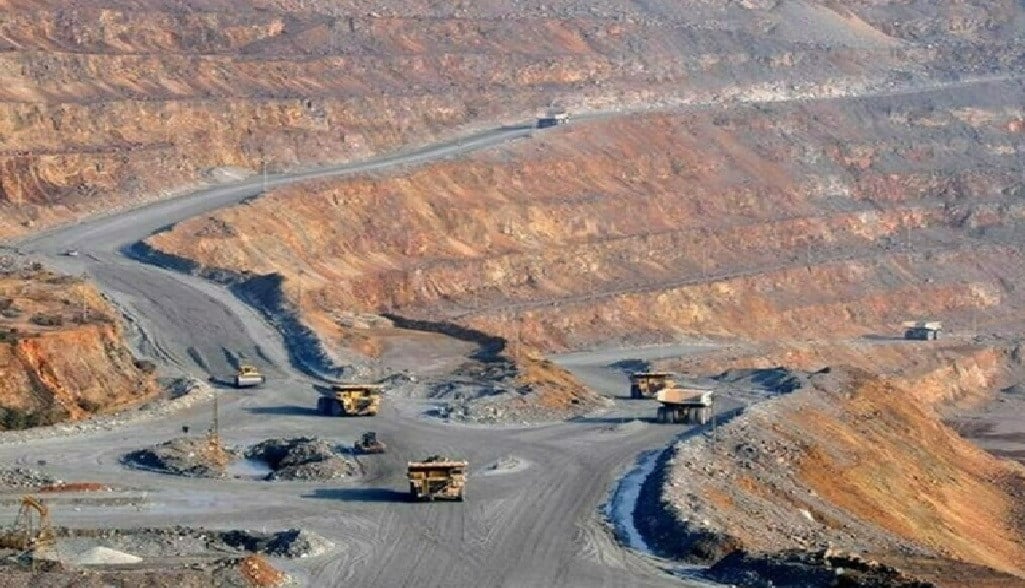
Pakistan’s mining sector is increasingly attracting foreign investment, with global firms eyeing the country’s untapped mineral reserves. The Reko Diq copper and gold project, located in Balochistan’s Chagai district, is the world’s largest untapped copper reserve and stands as a milestones for Pakistan’s mining ambitions.
According to initial commitment, the project, revived by Canada’s Barrick Gold, is expected to start producing copper and gold by 2028, with an initial investment of $5.5 billion. Barrick Gold, which owns a 50 percent stake in the project, the reserve is expected to generate approximately $74 billion in free cash flow over the next 37 years, based on consensus long-term prices.
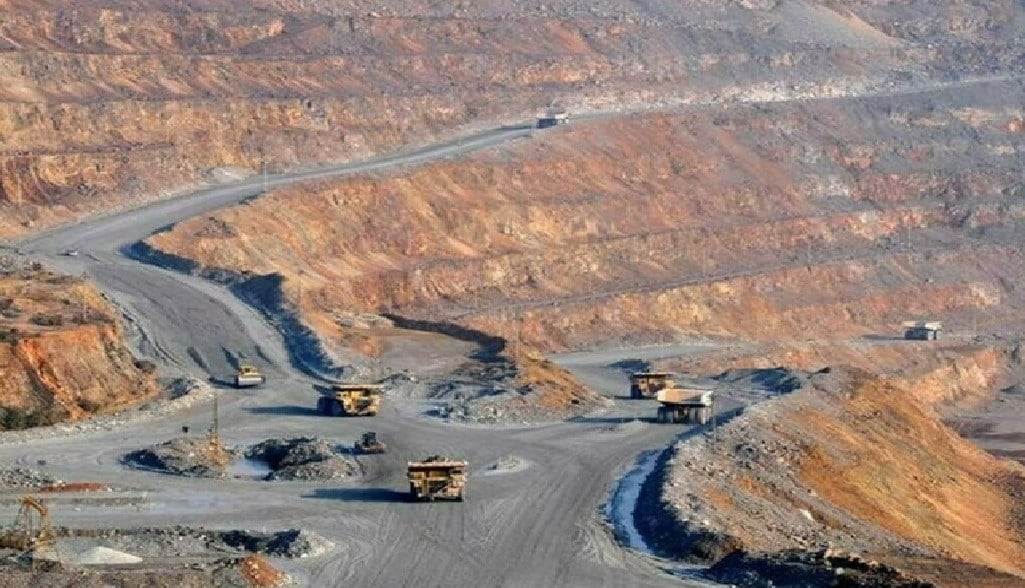
The mine is projected to generate $2.8 billion in annual exports, creating thousands of jobs and catalysing local economic growth. A planned expansion is set to boost copper production to 400,000 tonnes and gold output to 500,000 ounces annually, underpinned by an additional $3.5 billion investment.
Under an intergovernmental transaction agreement, the federal cabinet has approved the sale of a 15 percent stake in the Reko Diq project to Saudi Arabia. This underscores the region’s potential as a hub for foreign investments in the country’s mining sector. Saudi Arabian mining company, Manara Minerals will acquire a 15 percent stake in the mining project, potentially involving an investment of $1 billion.
Beyond Reko Diq, Balochistan harbours over 40 minerals, including oil, gas, uranium, and coal, with the potential to fuel Pakistan’s energy and industrial needs for a century. Efforts are also underway to establish refineries, which will allow Pakistan to move up the value chain and reduce reliance on raw material exports.
Pakistan’s mineral landscape remains a sleeping giant of immense economic potential. By prioritising strategic investment, infrastructure development, and local value addition, the mining sector can emerge as a primary engine of national economic growth.
A history of stalled ambitions
Reko Diq was a key project for Pakistan that could pave a way for exploiting the potential of other minerals. But the tussle between power corridors and change of governments had led to a delay over a decade in this project.
In 1993 under the caretaker government of Prime Minister Moeen Qureshi, the Balochistan Development Authority signed the Chagai Hills Exploration Joint Venture Agreement (CHEJVA) with Australia’s BHP Billion. The company was granted a dominant 75 percent stake.
Political and legal hurdles
In a 2000 addendum and a 2006 Novation Agreement, 75 percent exploration and mining rights were transferred to the Tethyan Copper Company (TCC), a joint venture between Barrick Gold and Antofagasta. However, these Musharraf-era concessions sparked intense domestic backlash after his departure from power.
On January 7, 2013, then Chief Justice Iftikhar Chaudhry authored the landmark ruling that completely tore up the deal. The Supreme Court declared the original 1993 CHEJVA agreement, the 2000 Musharraf-era addendum, and the 2006 Novation Agreement with TCC (Barrick Gold/Antofagasta) to be void and entirely unenforceable.
A tussle between Musharaff and then Chief Justice Iftikhar Chaudhry was what led to sabotaging the Reko Diq Deal. TCC went to international court and won the case. In a bid to avoid a $11 billion penalty, the government opted for an out-of-court settlement with Barrick Gold.
The China factor
In 2010, a controversy between TCC and the Balochistan government began when the Balochistan government refused to invest in line with its 25 percent shares in the Reko Diq project. TCC wanted the Balochistan government to invest 25 percent in the project but the Balochistan government was not ready. This deadlock fuelled tension.
On the other hand, the Pakistani ambassador to Chile alerted the government to concerns regarding the Metallurgical Corporation of China (MCC) and its potential move to control the Reko Diq project. Given that MCC had already been operating the Saindak project in Balochistan for two decades, the ambassador advised that the government allocate a different section of the Reko Diq belt to MCC to resolve the conflict. However, the subsequent cancellation of the deal by the Supreme Court triggered international arbitration, ultimately resulting in a costly legal defeat for Pakistan.
The government is now working on different initiatives to attract investment in Pakistan’s mineral sector, with a mineral act in the pipeline, aimed at streamlining the leasing of mines and to boost mineral activities. At present, the provinces have been giving away mining leases without a bidding process and even they were holding those leases without starting any mining activity. Apparently, KP is said to have awarded 2000 mines to local investors without a bidding process where work had not started yet.
In the new mineral act, the government will award mine leases through a bidding process. The lease will be cancelled after one year if the investor does not start work in the given time period. However, KP and Balochistan have opposed this mineral act and the federal government has not been able to proceed on it.
Iran-US war
The Iran US war has also led to an uncertain situation and Barrick Gold had announced plans to review the project. The security situation had deteriorated after Barrick Gold started work on the Reko Diq project with Pakistani partners companies such as OGDCL and GHPL.
Recently, Chairman Barrick Gold visited Pakistan along with a high level team and assured the Pakistani side that they would go ahead with the project. However, he said that they would like to review the cost of security elements in the project that could further increase.
The global scramble
Pakistan has received welcoming responses from different countries, including pledges of investment amounts up to $6 billion against the required amount of $3 billion. The US has entered a race for acquiring rear earth that is used in EVs and defense technology. It also wants to neutralise the influence of China in the mining industry. The US had announced a total outlay of around $10 billion investment in mineral sectors. Out of the total, it announced $1.25 billion for the Reko Diq project. This is a huge investment by the US for Pakistan’s mineral sector.
Earlier, the US had been pumping money into war operations in Afghanistan and there had been no major investment in the economic sector. Pakistan wants to use Gwadar port to transport raw material for the Reko Diq project. However, there are reports that Pakistan is conducting a survey in Balochistan to build one more port. Insiders say that the US does not want to use Gwadar port due to the Chinese presence and the new port will be used by the US.
Japan has also expressed a keen interest to invest in the Reko Diq project. Japanese officials had also visited the area of the Reko Diq project twice which showed their seriousness to invest in Pakistan’s minerals.
The stage is finally set for a transformation, with the SIFC and global stakeholders turning their gaze toward Pakistan’s untapped riches. Yet, the road ahead remains treacherous; long-term success depends on more than just signing agreements. It requires shielding the sector from the turbulence of the past — ensuring that policy stability, security, and transparency replace the cycles of doubt that have long stifled progress. If Pakistan can finally learn to manage its natural wealth with consistency, it may well find in these mountains the key to its own economic salvation.