




EIB returns to Pakistan after decade with €160m loans for housing, water projects
ISLAMABAD:
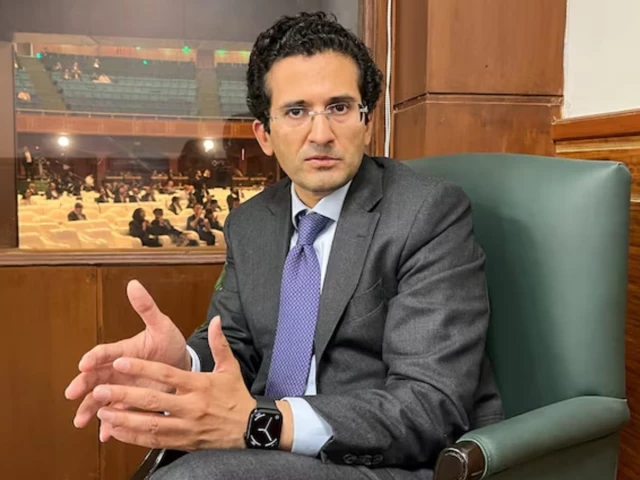
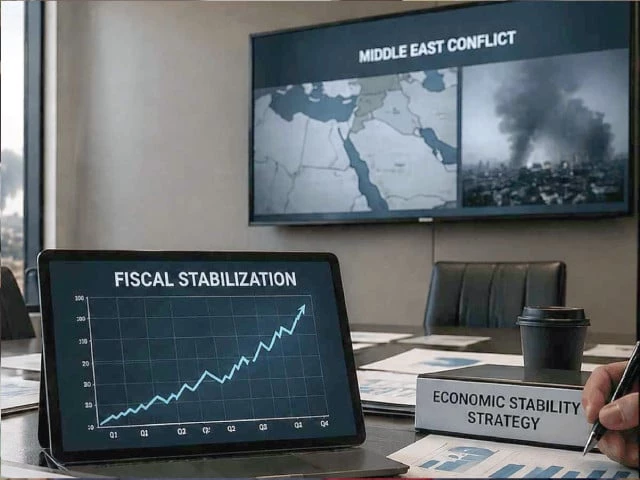
Finance Minister Muhammad Aurangzeb has said that the government would stay on the path of fiscal stabilisation and Pakistan’s economy is poised to grow 4% this fiscal year despite the ongoing Middle East conflict, as he urged Europeans to invest in the country.
Speaking at the first-ever EU-Pakistan Business Forum, Aurangzeb said Pakistan is in a relatively good position and its economy would grow by 4% this fiscal year despite the ongoing Middle East conflict. “Early this month, I was in Washington and the message was to stay on the course (of economic stabilisation), said the finance minister. The minister underlined that the government would keep pursuing the stabilisation path and undertake long-term reforms to address structural weaknesses.
The external sector was also stable despite the Middle East conflict, on the back of loans from a friendly country and a private placement by a foreign bank, said Aurangzeb. Pakistan paid a bilateral partner debt by taking a loan from another bilateral partner, he said, in reference to retiring $3.5 billion in UAE debt by taking a $3 billion Saudi loan. The minister said there was also a private placement of Eurobonds, and on the back of that, reserves are going to increase to $16 billion by the end of this month.
The stability of economic and fiscal policies is the prerequisite for foreign investment – an area where Pakistan has been lacking for a long time due to abrupt changes in its taxation and energy policies. The EU-Pakistan Business Forum provided an opportunity for European investors to highlight challenges they were facing and the investment windows that were still available to them.
The finance minister also said that the central bank has already taken action to contain inflation by raising interest rates to 11.5%. Despite the increase, the government’s debt servicing cost would not jump this fiscal year. The minister said that Pakistan undertook structural reforms but “we have a long way to go in terms of reforming the taxation system”.
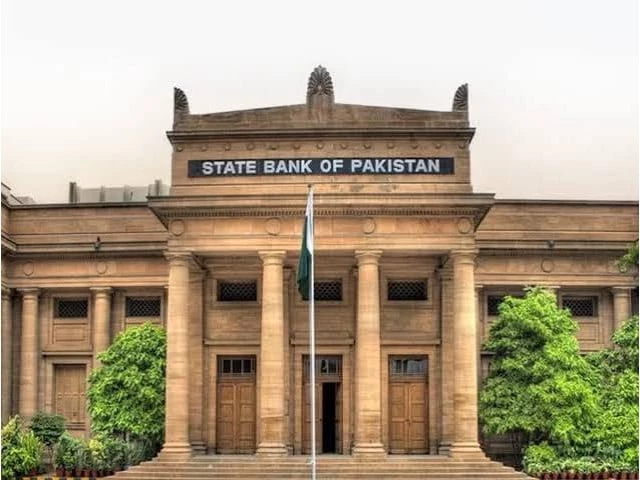
European investors have complained about unpredictable taxation policies and restrictions on profit repatriation. But Aurangzeb said there were no restrictions on repatriation of profits, and if there were individual cases, companies could reach out to the State Bank of Pakistan (SBP).
Aurangzeb said the government plans to float $250 million in Panda bonds by the middle of next month but does not have a plan to take any more foreign bilateral loans. The minister hoped that debt placements through Roshan Digital Accounts (RDA) would help build foreign exchange reserves that are planned to be increased to $18 billion by June this year. The RDA – the debt instrument used by overseas Pakistanis and foreign nationals to give loans – would cross the $260 million mark in April, said the minister.
European Union Ambassador to Pakistan Raimundas Karoblis said the European Union enjoys strong economic relations with Pakistan and it is the top export destination for Pakistan. The opening session also marked the launch of the EU-Pakistan Business Network, which brings together more than 300 EU companies active in Pakistan. The network aims to serve as a collective voice of EU businesses in the country, facilitating dialogue with policymakers and supporting new European companies exploring opportunities in Pakistan.
EIB returns to Pakistan
The European Investment Bank (EIB) has returned to Pakistan after a decade with €160 million in loans for housing and water projects. The bank announced a loan agreement for a €100 million loan to support the climate-resilient reconstruction of about 2.1 million homes in Sindh province following the 2022 floods. It has also given €60 million in financing to improve water quality in Karachi. These projects are part of Global Gateway, the European Union’s external investment strategy for sustainable development. It aims to strengthen resilience to floods and heat waves, with a strong focus on vulnerable groups and gender inclusion.
The €160 million loan agreements were announced on Tuesday on the sidelines of the high-level EU-Pakistan Business Forum. The announcement was made by Thouraya Triki, Director at the EIB, and Humair Karim, Federal Secretary at Economic Affairs.
The EIB is supporting the world’s largest reconstruction programme in Pakistan’s Sindh province, aimed at rebuilding approximately 2.1 million homes in rural Sindh damaged by the devastating 2022 floods. With an estimated total investment of almost $2 billion, this programme reaches 40% of rural households in Sindh and is also supported by the Sindh government, the World Bank, the Asian Development Bank and the Islamic Development Bank.
Furthermore, the EIB will also be supporting the Karachi Water and Sewerage Corporation to improve water quality in Karachi by financing the construction of two filtration plants in Gharo and Pipri. Through this investment in energy-efficient facilities, about 1 billion litres of clean drinking water per day will be provided to the metropolis.