ISLAMABAD:
The government on Tuesday delayed announcement of the new budget to next week after it could not timely sort out the issues of expenditure allocations and address some of the concerns of coalition partners
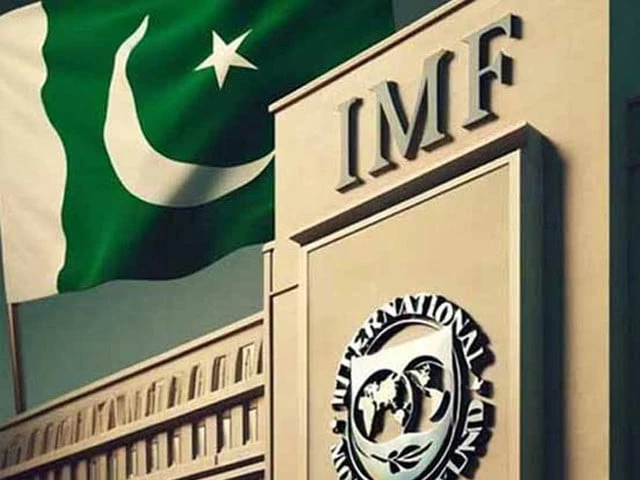
The finance ministry this week sought the consent of the International Monetary Fund (IMF) to make adjustments in major expenditure heads, just four days before the budget tentative date of June 5, according to the government sources.
The sources said the IMF was not very receptive to the government’s proposals but asked it to share the proposed adjustments in the expenses along with the rationale.
The federal government is looking for additional fiscal space of Rs1.7 trillion from four provinces, mainly from Punjab and Sindh, for new fiscal year through adjustments in National Finance Commission award and transferring some expenditure, according to the people privy to these discussions.
Due to the reopening of issues related to allocations for the Public Sector Development Programme (PSDP), power sector subsidies, and the treatment of social safety spending under the Benazir Income Support Programme (BISP), the government has postponed the scheduled meeting of the National Economic Council (NEC).
The NEC, which was scheduled to approve the new fiscal year’s national development budget for the Centre and four provinces, along with macroeconomic targets, was to be chaired by Prime Minister Shehbaz Sharif and attended by provincial chief ministers on Wednesday (today). The meeting is now likely to be held on Thursday (tomorrow) or Friday.
The sources said the budget announcement has now been moved to next week amid the government’s efforts to resolve outstanding issues with the IMF and the PPPits main coalition partner since 2022, whose support is critical for Shehbaz Sharif to remain in office.
The budget could be presented on June 8 or 10, depending on how quickly these outstanding issues are resolved.
The finance ministry did not comment on the reasons for the budget postponement. Among the outstanding issues are the size of the next fiscal year’s development budget and the inclusion of schemes recommended by coalition partners.
The PPP and the government were having regular meetings to sort out these issues, including the distribution of resources and expenditure allocations.
Planning Minister Ahsan Iqbal said on Monday that the government was allocating Rs87 billion for the schemes recommended by its coalition partners, including for the provincial-nature projects, what he called the “cost of the coalition government”. The PPP had sought higher allocations for the schemes that it wanted to execute, mostly in Sindh through federal funding.
For the next fiscal year, the government has proposed Rs1.126 trillion federal development budget, which the planning minister said was negative in real terms by Rs15 billion.
The sources said the prime minister had asked the finance ministry to create fiscal space for increasing the PSDP size by another Rs200 billion.
They said the finance ministry approached the IMF with a request to allow it to make adjustments in the proposed allocations for the power sector subsidies and the BISP. For the next fiscal year, the total estimated cost of the BISP disbursements and the administrative expenses was Rs838 billion.
Another Rs830 billion has been proposed for power sector subsidies, including Rs300 billion for settling off the cost of inefficiencies, theft and low recoveries of the electricity bills.
The government had the option to cut the power subsidies by Rs200 billion but this could impact either the settlement of the old debts or the subsidy amount for the low end consumers.
The sources said the government wanted that some adjustments may be allowed to create fiscal space for additional development spending and some other critical spending requirements.
They added that it was proposed to the IMF that any reduction against the agreed spending under the BISP for the next fiscal year may be adjusted in lieu of social safety net spending by the provinces.
The federal government also wanted the provinces to take on at least half of the responsibility for the BISP, but the provincial governments were unwilling to shoulder the expenditure.
Another outstanding issue is what would constitute the federal divisible pool that would be divided between the Centre and the four provinces.
The federal government wanted to exclude customs duties from the federal divisible pool on the grounds that there was no constitutional provision for it. However, some stakeholders were not in favour of excluding it from the NFC Award, which President Asif Ali Zardari would sign for the fiscal year 202627.
The NFC five-year award expired in 2015 and since the President of Pakistan is extending it every year until there is consensus among all the parties on a new award.
Pakistan has also committed with the IMF that over the period of five years it would reduce the overall simple average tariffs from 20.2% in 2025 to 9.7% in 2030. Under the condition, the government in the first year had cut the tariffs to 16.56% and now it is supposed to further reduce these tariffs to 13% from next month.
The sources said there were divergent views on the pace of trade liberalisation and the industry ministry was not in favour of a steeper reduction.
There was a group of independent economists, trade experts and foreign consultants who are urging the government to further lower the tariffs by 3.56% to 13% from next month, the sources added.
The government on Tuesday postponed the meeting of the Tariff Policy Board, which was supposed to approve these cuts.
According to the agreed plan with the IMF, the government is committed to abolish the 5% custom duty slab and abolish the 2% additional custom duty charged against 16% duty slab. It had committed to halve the 4% additional custom duty rate against the 20% slab and also reduce the additional duty by 2% against the highest import slab.
As per the plan, there has to be substantial reduction in the regulatory duties rates for the fiscal year 2026-27.
There have also been concerns about the impact of trade liberalisation on Pakistan’s external sector. At the time of planning the liberalisation, the World Bank and the commerce ministry had predicted 14% increase in exports and only 7% surge in imports.
However, contrary to these assumptions, exports plunged 6.2% and imports grew over 7% during the first 10 months of this fiscal year.
Source link