
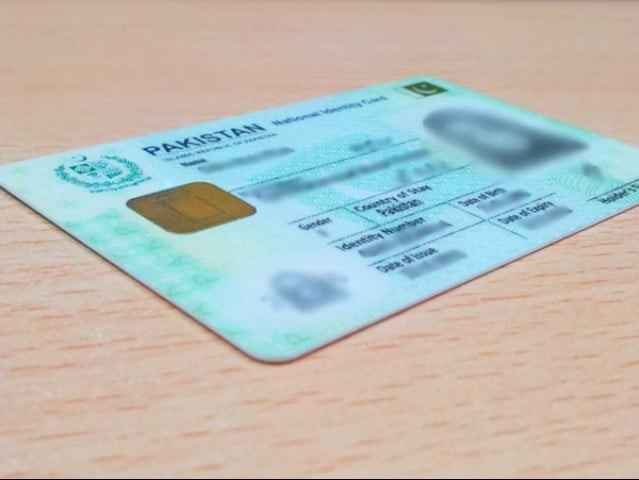
Residents face difficulties in obtaining jobs, admissions and government services due to obsolete CNICs and domiciles
KARACHI:
Several years after the creation of new districts in Karachi, thousands of residents are still struggling to update the district details on their official documents, creating difficulties in securing jobs, obtaining admissions to educational institutions and completing other government procedures.
Citizens say Karachi’s hectic lifestyle, coupled with difficulties at relevant government offices, has discouraged many people from making the necessary changes to their documents. Many argue that government departments should automatically update official records when new districts are created instead of requiring residents to visit multiple offices.
Over the past few years, Korangi was carved out of East District, while Keamari was created from West District. Malir had already been established as a separate district several years earlier.
Following the creation of the new districts, residents are required to obtain domiciles and Permanent Residence Certificates (PRCs) reflecting their new district. They must also have the new district name incorporated into the address recorded on their Computerised National Identity Cards (CNICs).
However, many residents have retained documents carrying the name of their former district, either because they were unaware of the need to update them or because they only sought changes when a specific need arose.
Citizens say the issue becomes particularly problematic when they apply for government jobs, educational admissions or other services for which district-based quotas and verification are involved. They argue that labourers and salaried employees often cannot afford to spend days visiting different government offices to have their records updated.
Recently, Imran Ahmed, a resident of Korangi District, encountered the problem while applying for a Grade-5 government job. Speaking to The Express Tribune, he said he had applied for a post as a peon. When he received his offer letter, he found that he had been posted to a school in East District.
According to Ahmed, the problem arose because his domicile and PRC still carried the name of East District, although he now lived in Korangi. Ahmed subsequently contacted the Korangi Deputy Commissioner’s Office and requested that the matter be resolved.
Similarly, Abdul Quddus, a resident of Hawks Bay in Keamari District, said he faced a similar problem when applying for a domicile for his daughter.
He said his own domicile had been issued under the former West District, while his daughter’s documents were submitted to the Deputy Commissioner’s Office in Keamari. The office sent the documents to the former West District DC Office for verification, resulting in delays.
Quddus said he had to visit offices in both districts several times before his daughter’s domicile could be processed.
Another resident, Muhammad Amin, of Budhni Goth in Keamari District, highlighted difficulties relating to medical college admissions.
According to Amin, before Keamari became a district, Keamari Town had been allocated 10 MBBS seats at Shaheed Benazir Bhutto Medical University. Following the creation of Keamari District, those seats were divided among three towns — Mauripur, Baldia and Moriro Mirbahar.
The cases highlight the complications that can arise when administrative boundaries change but citizens’ official records remain linked to their former districts.
Karachi now comprises seven districts — East, West, South, Central, Malir, Keamari and Korangi. As a result, the district mentioned on the CNICs, domiciles and PRCs of many residents no longer corresponds to their current district of residence.
On the other hand, Keamari Deputy Commissioner Abdul Sattar Hakro claimed that, generally, the creation of a new district did not cause problems for ordinary citizens.

