Home Blog Page 937

Punjab orders province-wide mental health screening for police personnel

0
Punjab orders province-wide mental health screening for police personnel


PUNJAB/
PAKISTAN:

Punjab Police has announced a mandatory mental and physical health screening programme for all ranks amid rising concerns over stress-related conditions within the force.

According to an official circular issued by the Deputy Inspector General (DIG) Establishment Punjab-I titled “Psychological Profiling for All Cadres,” police officers and frontline personnel are increasingly exposed to high-pressure environments, including long duty hours and frequent encounters with criminal elements.

The letter states that additional administrative, social, economic and political factors place further strain on officers, leaving them vulnerable to a range of mental and physical health problems.

It warns that continuous exposure to such conditions may increase the risk of schizophrenia, depression, bipolar disorder and other mental-health disorders. In response, the police department has announced a structured screening campaign that will cover all ranks, from constables to senior officers.

Under the new policy, screening will be mandatory across all districts and units. Senior officers will supervise assessments for Inspectors, Sub-Inspectors, Deputy Superintendents of Police, Superintendents of Police, DIGs and other higher cadres.

Unit heads have been instructed to conduct individual interviews with their personnel and document any signs of mental-health concern.

Cases requiring further examination will be referred to psychiatrists at district hospitals. District police heads have been directed to coordinate with the Medical Superintendents of District Headquarters Hospitals to ensure timely evaluation and clinical follow-up.

The circular stresses that all screening reports will be kept strictly confidential and used solely for professional development and organisational improvement. Comprehensive reports from across Punjab are required to be submitted to the Central Police Office by December 15.


Source link

Aleema Khan condemns violence against journalists by PTI workers

0
Aleema Khan condemns violence against journalists by PTI workers


On questions about properties in US, says a journalist’s job is to report with evidence

Imran Khan’s sister Aleema Khan speaks to media outside Adiala Jail in Rawalpindi. Photo: AFP


RAWALPINDI/ISLAMABAD/
PAKISTAN:

Aleema Khan strongly condemned the violence against journalists, speaking to the media near Adiala road, Dahgal Naka, Rawalpindi.

She accused certain elements of intentionally provoking and escalating the situation. “When someone is sent intentionally, that is not journalism,” she added, “It was done on purpose to incite people.”

Read: Journalist assaulted outside Adiala after Aleema query

Aleema Khan defended her business interests against allegations, challenging critics to provide evidence. “It is a journalist’s job; if they have proof, they should bring it forward,” she stated, “I am saying my property is from my rightful, lawfully-earned money.”

She dismissed the allegations that the egg-throwing incident was staged. “If I had an egg thrown at me on my own orders, then why did the police take those two women away to protect them?”

“If my sons had come,” she claimed, “they would also have been charged with terrorism. That is exactly why we came here alone today.”

“Whatever Naeem Panjutha did”, she added, “ask Naeem Panjutha”.

Read more: PTI workers not egg-cited to see Aleema Khan

Earlier on Monday, a journalist was assaulted outside Adiala Jail after he posed a question to Aleema Khan, sister of PTI founder Imran Khan, about her alleged properties in the United States.

Police have registered a case against Khan, PTI lawmaker Tanveer Aslam, Bushra Bibi’s focal person Naeem Panjutha and 40 unidentified workers for their alleged involvement.

According to the FIR lodged on the complaint of journalist Tayyab Baloch, the incident occurred following the hearing of the Toshakhana-II case.

Baloch stated that he was present outside the Adiala Jail gate with other media representatives when Aleema Khan began a media talk.

During the interaction, Panjutha allegedly shouted, “Teach him a lesson for questioning Aleema Khan”.

The complaint said that PTI MPA Tanveer Aslam, along with party workers identified as Azfar and Tuma, grabbed Baloch, threw him to the ground, and subjected him to severe violence.

Around 40 other workers, including Intesar Satti, also joined in, according to the FIR.


Source link

What would Haseena Moin’s Tanhaiyan look like today?

0
What would Haseena Moin’s Tanhaiyan look like today?


The women in her dramas were independent characters that found their strengths and rose to tackle their own issues

Ever since playwright Haseena Moin’s sudden demise, I have been thinking about everything that our nation gained through the world that she created for us on television. Her dramas taught us lifelong lessons on empowerment, strength, freedom of choice, romance, relationships, friendships and above all basic human integrity.

My thoughts immediately went to Tanhaiyaan that aired on PTV back in 1986, where Moin’s script was brought to life by late Shehzad Khalil. She had written dynamic, robust characters that actually grew with the drama and had depth.

The women in her dramas were independent characters that found their strengths and rose to tackle their own issues,  like the meek and shy Zara (played by Shehnaz Sheikh) who developed single minded determination to attain her goals after she goes bankrupt and loses are parents.

 Sanya (played by Marina Khan), Zara’s sister was a young, bubbly and confident girl who always spoke her mind and later also helps save her sisters business. Aani  (Badar Khalil) was their aunt, a single woman in her 30s, living financially independent and on her own terms.  Even the women playing more traditional roles like Sultana Zafar, who played Zara and Sanya’s housewife mother, were shown as supportive characters that weren’t subservient to anyone in the family. There is also a very interesting dynamic between the older members of the cast, where they have a relationship as well. Vida, played by Yasmin Ismail, actually leaves her fiancé when she realises he is in love with someone else and even the men are sensitive and relatable.

Seeing the kind of dramas and characters created today, I shudder to think what Tanhaiyan would look like if it was created in 2021. I am sure Sanya would be shown as a scheming  sister who would only be after Zain (Asif Raza Mir) who was her sister’s love interest, while Zara would probably just sit and cry after losing her parents, waiting for a knight in shining armour to save her.  Aani’s character would definitely be shown as one having loose morals, especially because she lived alone. While Vida would have nothing better to then focus her energy on Zain, instead of realising the relationship would be just as toxic for her if Zain did not love her.

Even the comic relief of the drama in the form of Barkat and Qabacha would consist of slapstick comedy tropes that would be tiresome to watch. The masala (spice) of the story would come from an over the top fight between the characters of Zain and Salman and the whole thing would be neatly wrapped with a sad OST peppered with solo shots of actors reliving their saddest memories.

 In fact most relationships would be toxic and the characters would be out to get each other at every turn without any real justification, which is the face of Pakistani dramas today. Black and white characters, with no development or even shades of personality; they are either all good or all bad.

It is for this very reason that Moin’s characters were relatable. They seemed like living breathing people as their character arcs were not only properly defined but also helped to push the narrative along. Tanhaiyan was a prime example of how people in real life also have flaws but yet they can too be on a journey of self-fulfilment. Her characters fought back, without really laying a hand on anybody and despite their limitations as people. Moin’s world was much more progressive than many dramas produced for TV today and the themes she tackled included women empowerment, gender equality and the right to marry out of choice.  I, unfortunately, do not see an iota of her forward and independent thinking that Moin showed in the 80s, today.

I, for one, will forever be indebted to Haseena Moin for helping me, an 80s kid, realise that I  too can be strong and that I too have a voice in society, something we are increasingly not helping the kids and especially women, realise today.


Source link

Paul wins all-American semi

0
Paul wins all-American semi


MIAMI:

No. 4 Tommy Paul rallied for his fourth consecutive win over fellow American and second-seeded Frances Tiafoe, 7-5, 4-6, 7-6 (7), on Saturday in the U.S. Men’s Clay Court Championship semifinals at Houston.
Paul clinched his first ever ATP clay-court final appearance in a grueling 2-hour, 45-minute match that was marred by rain throughout, including a 90-minute ‌delay during the second set. Paul thrived behind 14 aces and no double faults while converting two of five break-point opportunities in the pivotal deciding set.
It was back-and-forth in the final set with Tiafoe notching the first break and Paul breaking him right back in the next service. Then the reverse happened with Paul grabbing a break and Tiafoe nabbing it right back a service game later. In the deciding tiebreaker, Paul squandered two match points up 6-4 before advancing ⁠by winning two straight points to break a 7-7 tie.
In another semifinal between competitors from the same country, Argentina’s Roman Andres Burruchaga easily dispatched Thiago Agustin Tirante 6-1, 6-1 to set up a date with Paul. Burruchaga converted 5 of 8 break opportunities while never facing one. Tirante had 25 unforced errors to Burruchaga’s 10.

Grand Prix Hassan II
Qualifier Marco Trungelliti (ATP No. 117) of Argentina continued his Cinderella run by taking down top-seeded Italian Luciano Darderi 6-4, 7-6 (2) in Marrakech, Morocco.
Trungelliti clinched a spot in the final and is the oldest first-time finalist in ATP Tour history at 36. En route to the final, Trungelliti took down the fifth, third and first seeds. Trungelliti converted four of six break-point opportunities and capitalized on Darderi’s eight double faults to deny the ‌Italian a ⁠repeat championship in the event.

Spain’s Rafael Jodar will try to halt Trungelliti’s magical run after he took down Argentinian Camilo Ugo Carabelli in straight sets 6-2, 6-1 in just 63 minutes. Jodar was never broken and held a 23-8 advantage in winners. This would also be the first title for Jodar, who at 19 years old, made his tour debut earlier this year at the Australian Open and is competing in ⁠his first tour-level clay tournament.

Tiriac Open
Qualifier Daniel Merida Aguilar of Spain came back from a set down to upset Hungarian third seed Fabian Marozsan 6-7 (4), 6-3, 6-1 in a semifinal match in Bucharest, Romania.
After dropping the first set, Merida Agular knocked home four of his six break-point attempts ⁠over the final two sets, finishing with 35 winners. He defended his serve well throughout as he saved 17 of the 18 break points he faced to overcome his 39 unforced errors and reach his first tour-level final.


Source link

Will back govton mini-budget, says Bilawal

0
Will back govton mini-budget, says Bilawal


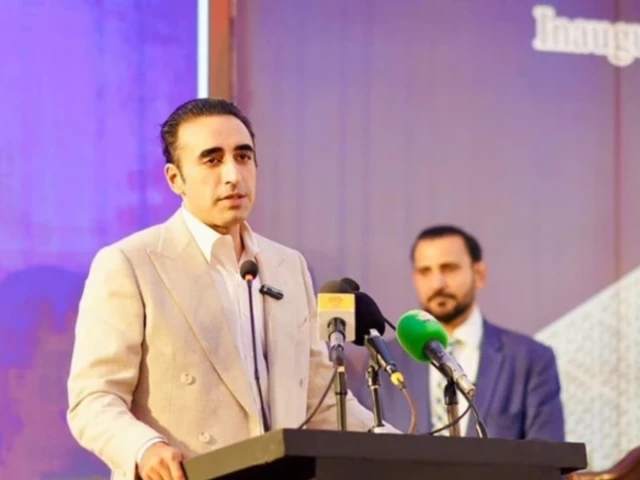
Pakistan Peoples Party Chairman Bilawal Bhutto-Zardari speaks at the inauguration of the newly constructed, outpatient department (OPD) block at the National Institute of Cardiovascular Diseases (NICVD). Photo: Express


HYDERABAD:

While acknowledging that every Pakistani is bearing the burden of the ongoing war in the Gulf, PPP Chairman Bilawal Bhutto Zardari has said his party will support the PML-N led federal government if it decides to introduce a mini-budget amid a brewing global economic crisis.

Addressing a ceremony held in Larkana on the death anniversary of former prime minister Zulfikar Ali Bhutto on Saturday, Bilawal termed the war against Iran illegal and strongly condemned the loss of lives, including the martyrdom of Iranian leadership figures and the killing of innocent schoolgirls.

He said certain forces thrive on hatred and division and are actively pursuing such agendas, warning that the Iran war has already spread its effects beyond the region and carries the danger of expanding further across the world.

The PPP chief said war is not a solution to any problem and expressed hope that hostilities would end soon and peace would be restored.

“The burden of the war between Iran, the United States and Israel is being carried by every Pakistani,” he remarked, adding that those attacking Iran, Palestine, Lebanon and other countries cannot cast an evil eye on Pakistan.

Highlighting the domestic situation, Bilawal said the country is facing historic inflation and an economic crisis but emphasised that provincial governments, like the federation, are contributing by cutting funds to provide public relief.

Bilawal said that in view of rising fuel prices, the PPP’s Sindh government has decided to financially support both public and private transport services so that fares are not increased.

He added that in coordination with the federal government, measures are also being taken to provide relief to transporters affected by the increase in diesel prices.

The PPP chief said all provinces would contribute from their own resources to a federal fund aimed at supporting transporters and preventing fare hikes. However, he acknowledged that given the scale of the crisis, such measures may not be sufficient, as the public is already facing severe hardships.

Bilawal emphasised that both federal and provincial governments would take steps according to their available resources to provide maximum relief to the poor.

He said the Benazir Income Support Programme (BISP) is a transparent mechanism already delivering financial assistance across all four provinces and should be utilised more effectively.

He urged the federal government to expand the programme and increase its budget to support the public. “If the federal government brings a mini-budget for this purpose, we will support it,” he said, signalling PPP’s readiness to back difficult economic decisions in the national interest.

He urged small farmers and motorcycle owners to register themselves, noting that it is unclear how long the current situation will persist. He warned that if the crisis continues, the federation and provinces may need to jointly develop a broader relief plan for the public.

“The Sindh government has developed a plan to financially assist small farmers through a Kissan Card, which will be launched soon. The provincial government aims to extend relief to motorcycle owners as well. The citizens must ensure that their vehicles are registered in their own names.

“Relief will only be provided to the person in whose name the motorcycle is registered,” he said, adding that the transfer fee for vehicle ownership has been waived to facilitate this process.

The PPP chief also thanked Khyber-Pakhtunkhwa Chief Minister Sohail Afridi and the PTI for their cooperation during difficult times, stating that national consensus in such circumstances is a positive development and that politics should be avoided in favour of national unity.

He said that leaders across provinces, including in Punjab, Balochistan and Sindh, are taking steps to provide relief, and stressed that collective efforts are necessary to overcome the current challenges.

Bilawal said unity is the country’s greatest strength. “If there is unity in Pakistan, no force in the world can overpower or break us. Our nation will face this test with courage, and God willing, the victory will be of the people and of peace,” he added.

He expressed gratitude to his grandfather, Zulfikar Ali Bhutto, for equipping the country with the nuclear bomb. “The Zionist powers which are attacking Iran, Palestine, Lebanon and Syria, if they are not doing the same to Pakistan, it is because of Bhutto’s given atomic bomb.”

He reiterated that his grandfather knew well that he would have to pay the price of giving a nuclear bomb to his country with his life but he still took the leap and secured the atomic power.


Source link

SECP clears first Shariah credit guarantee

0
SECP clears first Shariah credit guarantee


Punjab links transport permits to motor insurance via digital system to strengthen compliance


ISLAMABAD:

The Securities and Exchange Commission of Pakistan (SECP) has approved the country’s first Shariah-compliant credit risk-sharing product, enabling Islamic financial institutions to expand financing to underserved sectors such as micro, small and medium enterprises (MSMEs) and agriculture.

According to an official statement issued on Saturday, the product was developed by the National Credit Guarantee Company Limited (NCGCL). It reduces credit risk through a risk-sharing mechanism while ensuring compliance with Shariah principles. Under this structure, participating institutions contribute to a pooled fund on a donation (Tabarru) basis, managed by NCGCL as an agent (Wakeel) under a Wakalah arrangement. Losses from eligible defaults are covered from this pool, ensuring genuine risk sharing without guaranteed returns.

The SECP’s Shariah Advisory Committee reviewed and approved the structure, noting that it aligns with key Shariah principles. The initiative is expected to increase access to financing for MSMEs, agriculture and other priority sectors.

Earlier this week, the SECP, in collaboration with the government of Punjab, the Central Depository Company (CDC) and the Insurance Association of Pakistan, marked the go-live of a major digital integration to enforce motor third-party insurance in the province.

Under this initiative, the government of Punjab has made it mandatory for all public transport vehicles to obtain third-party motor insurance. All public transport route permits are now linked with this requirement, ensuring compliance before issuance and renewal.

Punjab has also digitised its vehicle route permit regime, which is now integrated with CDC’s motor insurance repository for real-time verification of insurance policies, enhancing transparency and enforcement.

Speaking at the ceremony, SECP Chairman Dr Kabir Sidhu stated that the initiative reflects a shift towards digital enforcement and highlights insurance as a critical tool for financial protection. He noted that while the repository contains data of about one million insured vehicles, this remains low compared with nearly 30 million vehicles on the roads.


Source link

Everybody’s talking about Italy after World Cup flop

0
Everybody’s talking about Italy after World Cup flop


LONDON:

Italy’s latest World Cup failure has triggered a national inquest, with Saturday’s Serie A press conferences inevitably dominated by questions about where it all went wrong ​and what needs to be done.
Italy missed a third straight World Cup after a playoff loss to Bosnia on Tuesday, ‌prompting both manager Gennaro Gattuso and federation chief Gabriele Gravina to step down. Genoa manager Daniele De Rossi knows what it takes not only to reach a World Cup, but to win one, having been part of Italy’s triumphant 2006 squad.
Ahead of his side’s match at Juventus on Monday, a question about whether he would ​accept the Italy job was not quite what he expected.
“I thought you wanted a programme about the rebirth of Italian ​football,” De Rossi said.
“I had mentally prepared myself not to answer, because I’ve heard so many things in ⁠these last few days. I think there’s really been a lot of talking.
“I think more or less everyone is talking, former players, ​former coaches, butchers and grocers, journalists. Everyone is talking about rebirth, about the magic recipe to bring Italian football back, I worry ​about Genoa staying up and I think my opinion isn’t all that important.”

SACKED SPALLETTI SPEAKS

Juventus coach Luciano Spalletti was Italy manager until a 3-0 loss to Norway in the opening World Cup qualifier in June led to his dismissal.
“I recognise and I know how much love and passion they put into doing ​their jobs well,” Spalletti said.
“From my point of view, there’s sadness for what happened. In a moment like this, it’s important to reflect ​properly — at a time when everyone is offering every kind of advice — to think with a cool head and plan in the right and sensible ‌way.”
Spalletti believes ⁠that Italy can still produce players of the calibre that defined its past success.
“I’m convinced that among our mothers there are still ones like the mothers of (Roberto) Baggio, (Francesco) Totti or (Alessandro) Del Piero,” he said.
“We need to know how to make use of what these mothers give us, the talents they put at our disposal. And if we’re not capable of doing that, then it needs to be imposed ​on us.”


Source link

When access decides ability

0
When access decides ability


PUBLISHED
December 14, 2025


KARACHI:

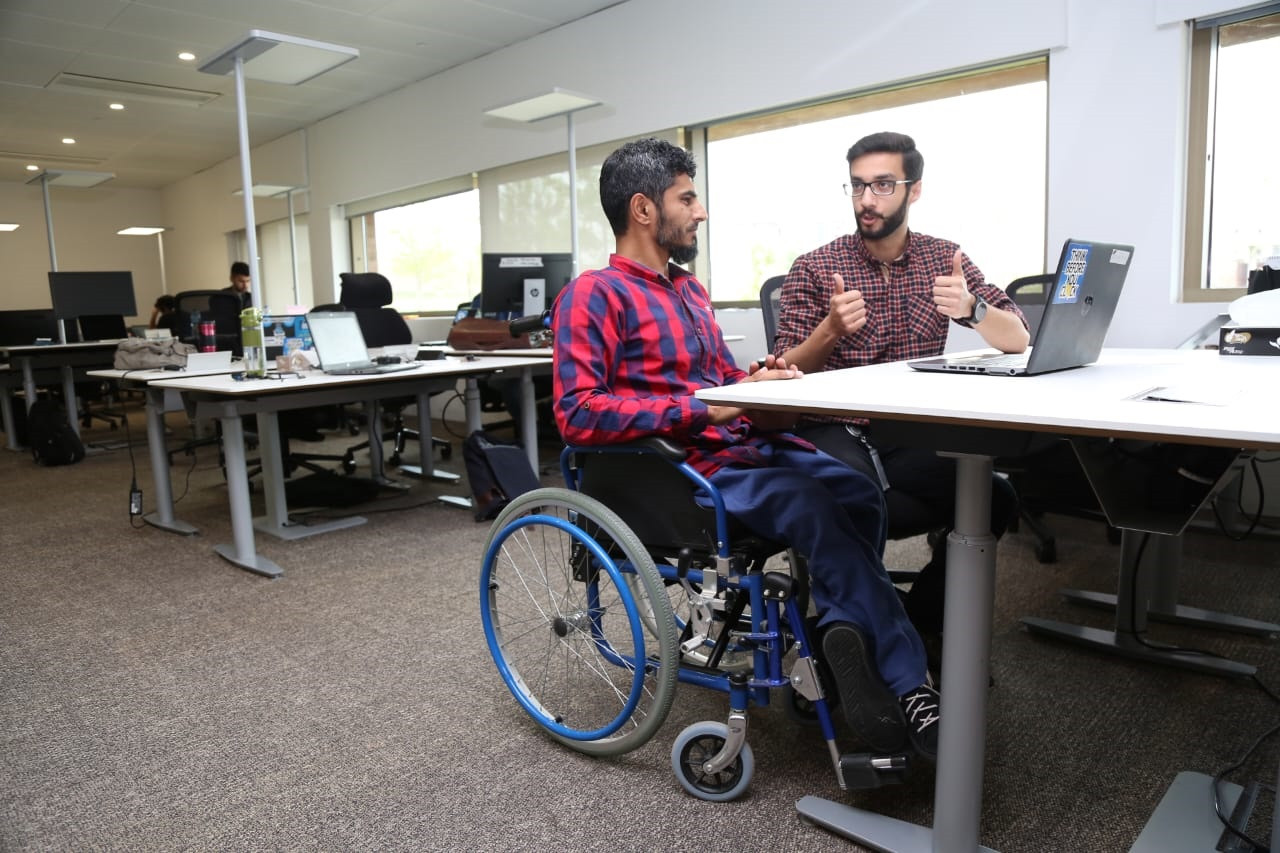
Disability in Pakistan is rarely invisible. It appears in classrooms where ramps are missing, in buses that cannot be boarded, in job interviews that quietly end after a single glance. Yet it is also rarely discussed in any sustained way. For most people, it remains something to be acknowledged briefly, often with sympathy, and then moved past. What is missing from the national conversation is not awareness, but attention to how deeply everyday systems are stacked against persons with disabilities, long before questions of talent or ambition even arise.

Access to schools is uncertain, public transport is unreliable, and expectations are set low from the start. Children are steered towards “special” spaces, not because they lack ability, but because mainstream ones are unwilling to adapt. By the time they reach working age, many persons with disabilities have already navigated years of exclusion. Employment, is often framed as charity, rather than contribution. The loss is not only personal, but economic and collective, and people who could otherwise be shaping classrooms, offices, factories, and businesses across the country, are sidelined.

Disability is not a niche issue. It cuts across class, geography, gender, and profession. It shapes childhoods, limits education pathways, and narrows employment options long before individuals enter the workforce. By the time many persons with disabilities reach working age, their barriers are not because of lack of ability, but because of a system that was never built to accommodate differences.

Against this backdrop, recent conversations around inclusion have, slowly but noticeably, begun to shift from charity to structure and from empathy to systems. For instance, the launch of the second edition of the Overseas Investors Chamber of Commerce and Industry’s (OICCI) Diversity and Inclusion Handbook, developed in partnership with the NOWPDP. The discussions it sparked in the corporate event were deeply human, aimed at confronting gaps instead of drifting off to celebrate progress.

Rather than positioning inclusion as a moral obligation alone, the conversation framed it as a question of redesign. What happens when workplaces are built with accessibility in mind? What changes when hiring processes account for different abilities? And what is lost when millions are excluded from meaningful participation in the economy?

“Corporate Pakistan must move from empathy to structural action,” says OICCI Secretary General M. Abdul Aleem, as he captured the shift. “Persons with disabilities are not looking for favours, they deserve equity, opportunity, and accessible systems. When companies invest in inclusion, productivity rises, retention improves, and workplaces become more innovative.” His remarks moved the discussion away from goodwill and toward accountability. Inclusion, he suggested, is not about compensation, it is about correcting systems that have excluded capable people for decades.

Yet the strongest case for inclusion did not come from policy arguments or business metrics, but from lived experience.

The story of Abdul Qadeer, Co-Founder and COO of Deaf Tawk, reflected the quiet resilience many persons with disabilities develop early in life. “I am the first in my family who suffered from this eye disease, which made my eyesight very poor when I was around 6 or 7 years old,” he says. “My parents were very sad as they didn’t know what happened, as no one had previously suffered from this eye disease.”

There was no treatment available then, and as Qadeer points out, there still isn’t. But the medical diagnosis was only one part of the challenge. “In Pakistan there are a lot of barriers that persons with disabilities have to face and they also have to deal with society’s behaviour towards them. They don’t have good opportunities for education,” he explains.
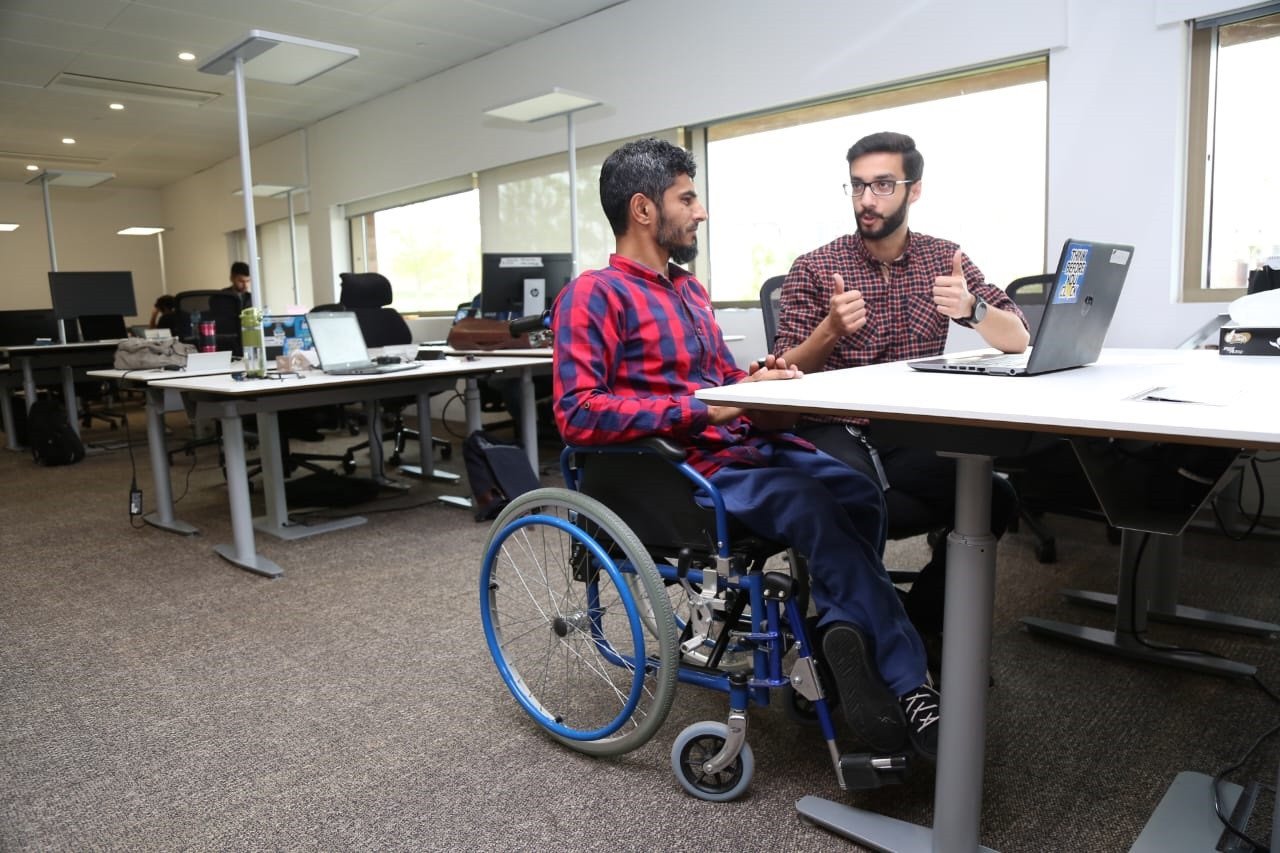
Despite these obstacles, Qadeer adapted. “When I started my education, there wasn’t much technology for the blind, but I understood how I could take help from technology,” he says.

The learning curve was steep, resources limited, and support systems scarce, yet persistence led to achievement. His success was earned in spite of the system, not because of it. “Alhamdulillah I received a gold medal in my master’s degree,” shares Qadeer, acknowledging the role of innovation. “Technology makes life easy for people with disabilities. A lot of blind people are now getting good education, and many work at a high levels in the corporate sector,”

Farhat Rasheed, Director at Dalda Foods and Westbury Group of Companies, discussed how exclusion often begins long before employment. “I strongly believe that all the differently-abled have some unique qualities,” she says. “Even I had difficulties in getting admission in schools without resources or finance. The mindset in Pakistan is that special children should go to special schools, and no one is ready to see their talent. Segregation is often mistaken for support. All they need is basic necessities, wheelchair access, a little support, guidance and some extra time. If these children are not educated, how will they contribute to society in the future?”

Even academic excellence did not guarantee Rasheed equal opportunity. “I got a gold medal in my degree and was also a high GPA holder, but where my friends had 30 or 40 options to apply, I only had a couple,” she explains. “It was a stark reminder that achievement does not erase bias. For many persons with disabilities, success exists alongside restriction, not freedom.”

The corporate sector, often criticised for its slow response to inclusion, has begun to recognise that exclusion is not just unjust, it is inefficient. Some organisations have moved beyond symbolic gestures and experimented with structured programmes that integrate persons with disabilities into mainstream roles.

Faysal Bank’s Qabil programme is one such example. Habiba Salman, EVP and Head of Learning and DEI, explained that the initiative began before inclusion became a regulatory conversation. “We launched our programme in 2021, with just a pilot group of 10 people in the call centre,” she shares. “What followed challenged long-held assumptions. It was such a huge business case, because in four years, there has not been a single complaint by any customer for those 10 sales officers, who have shown high levels of productivity.”

The results reframed inclusion not as a risk, but as an advantage. “We launched this programme to give them training in the mainstream employment sector so they can get trained and find opportunities — some with us, some outside,” she said while adding that in this model, inclusion was not confined to corporate social responsibility, but embedded into talent development.

“If you want people with disabilities to be part of the workforce, you have to have accessible workplaces,” says Sana Rauf, Talent Acquisition and EVP Manager at Nestlé Pakistan. “We have been having regular audits and from the findings we make sure that we work on the areas of improvement, so all our offices are accessible.”

These interventions point to a broader shift: inclusion is not a one-time initiative, but a continuous process of evaluation and redesign.

Entrepreneurship is also an area where persons with disabilities remain underrepresented. Ali Tareen, Founder and CEO of Khaas Foods Kitchen, outlined the gaps that prevent PWD-led businesses from scaling. “Regarding the challenges of entrepreneurs with disabilities, we need three approaches,” he explains. “First, capacity building of persons with disabilities. We have to equip institutes and people to produce more entrepreneurs. Second, we need to make the system easier for them through reform. We need to move towards financial access or equity-free models. And finally, through visibility. By promoting their success stories of how they can excel and helps organisations gain awareness.”

Inclusion cannot succeed in isolation. It requires alignment across education, finance, infrastructure, and culture.

PepsiCo Pakistan offered a view of what systemic inclusion can look like when embedded across an organisation. “Our focus has been to shift disability inclusion from isolated initiatives into structured and sustainable system design,” explains Sarah Hassan, Senior Director HR. “Through programmes such as Roshan Kal, Beyond Side, and Kaabil, and partnerships with organisations like ConnectHear and NOWPDP, the company has attempted to integrate inclusion into its operational fabric. When inclusion is embedded, the outcome is stronger not just for the individual or the community but for the businesses overall. We are approaching inclusion in a way that is both ambitious and operationally grounded.”

Now if we come back to the OICCI Diversity and Inclusion Handbook, it was clear that the document was responding to a much larger problem than corporate policy alone. The handbook draws on data, case studies, and organisational experience, but its relevance lies in how closely it reflects realities shared. It urges companies to look beyond hiring targets and ask more difficult questions, such as, are workplaces accessible in practice? Are managers trained to support diverse teams? Are career paths designed with flexibility, or with assumptions about what productivity looks like?

What emerged most strongly was that inclusion cannot function as a standalone initiative. It is shaped by the education system that precedes employment, the transport that enables mobility, the technology that makes work possible, and the attitudes that define who is considered capable. When any one of these fails, the burden shifts back onto the individual. And when several fail at once, talent is quietly filtered out, not through policy, but through design.

One side of Pakistan’s reality is defined by barriers that remain firmly in place. On the other side are individuals who continue to adapt, learn, and perform, often with little structural support. Closing that distance will not happen through statements or handbooks alone. It will require a willingness to redesign systems so that access is built in rather than added later. Only then can ability, rather than assumption, begin to shape how opportunity is distributed.

Source link

L’Oreal deepens its scented empire

0
L’Oreal deepens its scented empire


Paris

The fashion and beauty industries are poised for a shake-up after luxury group Kering agreed to sell its beauty business to French cosmetics giant L’Oréal for €4 billion ($4.66 billion) – the biggest acquisition in L’Oréal’s history.

This also marks a strategic retreat by Kering, which is seeking to cut debt and refocus on its core fashion labels. The sale includes the prestigious perfume house Creed and long-term fragrance and beauty licences for Kering’s fashion brands, including Bottega Veneta and Balenciaga.

It will also give L’Oréal rights to the Gucci fragrance line once Kering’s current licensing deal with Coty ends in 2028. For L’Oréal, which already handles Yves Saint Laurent perfumes, the acquisition deepens its hold over luxury fragrance, a segment now outpacing other beauty categories in growth.

For Kering, owner of Gucci, Saint Laurent and Balenciaga, the sale is both a concession and a correction. The company launched its beauty division only last year under former CEO François-Henri Pinault, following the €3.5 billion purchase of Creed.

But despite the investment, the business failed to take off, reporting a €60 million operating loss in the first half of this year. With Gucci’s sales plunging 25% amid slowing Chinese demand, the new chief executive, Luca de Meo, moved quickly to streamline operations and reduce Kering’s €9.5 billion debt.

Analysts have called the sale “bitter but necessary medicine.” It marks the first major move by De Meo since taking charge in September, signalling a decisive shift away from the beauty ambitions of his predecessor.

For L’Oréal, the timing could not be better. The group’s luxury division has been expanding rapidly, driven by strong demand for high-end perfumes. Experts say L’Oréal’s scale, marketing reach, and beauty expertise could finally give brands like Balenciaga and Bottega Veneta the visibility they lacked in cosmetics.

As Kering retrenches to stabilise its finances, L’Oréal emerges stronger – a rare winner in a luxury market facing uneven recovery. The deal underscores how the worlds of fashion and beauty are once again converging, but this time, L’Oréal clearly holds the mirror.


Source link

Iran denies snubbing Islamabad talks

0
Iran denies snubbing Islamabad talks


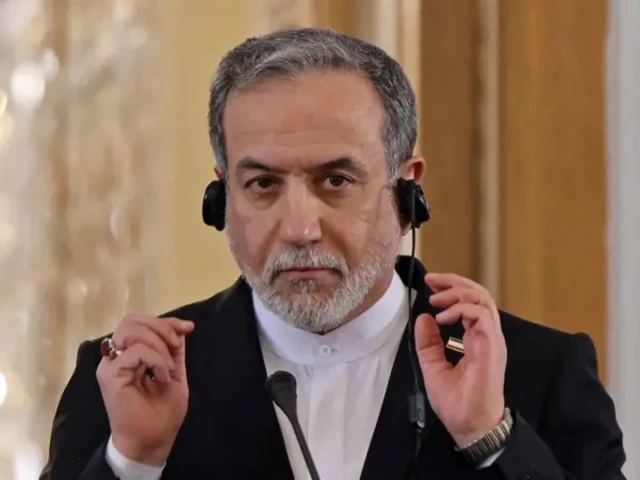
Iranian Foreign Minister Abbas Araghchi attends a press conference in Tehran on January 18, 2026. PHOTO: AFP

Iran’s Foreign Minister Abbas Araghchi on Saturday said that Tehran’s leadership “never refused to go to Islamabad” for possible peace talks that Pakistan has offered to host to bring the ongoing US-Israeli war on the Islamic republic to an end.

“Iran’s position is being misrepresented by US media,” Araghchi wrote on X.

“We are deeply grateful to Pakistan for its efforts and have never refused to go to Islamabad. What we care about are the terms of a conclusive and lasting END to the illegal war that is imposed on us,” he emphasised.

He also shared a video showing Iranians waving Pakistan’s flags in an apparent show of appreciation for Pakistan and its people. The Iranian official ended his post with “Pakistan Zindabad” written in Urdu.

Araghchi’s statement comes a day after the Wall Street Journal (WSJ), citing unnamed mediators, reported that the “current round of efforts by regional countries led by Pakistan to reach a ceasefire” between the United States and Iran had reached a “dead end”.

Deputy Prime Minister and Foreign Minister Ishaq Dar promptly appreciated Araghchi’s “clarification”.

“Truly appreciate your clarification, my dear brother,” Dar said on X in response to Araghchi’s post.

Foreign Office spokesperson Tahir Andrabi termed Araghchi’s statement a “timely reminder” that “speculation helps no one”.

“Stick to official statements and verified media readouts for clear and accurate information,” he said.

The clarification from Iran also follows media reports noting that Tehran had yet to formally respond to proposals for dialogue despite back-channel exchanges in recent days.

Pakistan has positioned itself as a facilitator in the peace process, leveraging its ties with the United States, its working relationship with Iran, and its strategic partnership with China.

Prime Minister Shehbaz Sharif had initially offered on March 24 that Pakistan stood “ready and honoured” to host “meaningful and conclusive talks” between the United States and Iran.

Last week, Islamabad hosted a quadrilateral meeting of foreign ministers and reiterated its offer.

On March 31, Pakistan and China also issued a five-point initiative for restoring peace in the Middle East, calling for an immediate cessation of hostilities.

On Friday, an Iranian official in Tehran also denied reports that Iran had refused to participate in dialogue in Islamabad.

Rather, he pointed to a different set of constraints. The official said the terms conveyed by Washington were unacceptable.

“The conditions, or the 15-point proposal, put forward by the United States are too difficult to accept,” the official said, describing the situation as “highly complex”.

He noted that Iran’s immediate focus was on the war and not negotiations. Moreover, he cited deep mistrust of US intentions.

“Recent US deployments to the region do not align with its stated intentions of pursuing talks, and therefore Iran has zero confidence in the US,” he said.

Recalling the targeting of two Iranian leaders pursuing an initiative for de-escalation, the official said, “There are serious concerns that anyone participating in negotiations could also be targeted.”

Nevertheless, the official praised Pakistan for its efforts, saying “Pakistani leaders were undoubtedly doing their best for cessation of hostilities”.


Source link