





ISLAMABAD:
Pakistan has informed Tajikistan that enhanced cooperation with China will remain central to strengthening regional connectivity amid plans to develop an integrated commercial corridor to connect with Central Asia.
Pakistan has recently opened six land routes to access Central Asian states through Iran. The move seems to be enabling Iran to carry its 3,000 containers stuck on Pakistani ports due to the US-Iran war. But it is an attempt by Pakistan to find out an alternative route after Afghan Taliban blocked the trade route from Pakistan to Central Asia. The opening of land routes is also going to offer an opportunity to operationalise the Gwadar Port. During the recent Middle East war, Gwadar offered an alternative route for Iran, Central Asian states and Russia, when the Strait of Hormuz was blocked.
According to a statement, Federal Minister for Commerce Jam Kamal Khan on Tuesday held a meeting with Tajikistan Ambassador Sharifzoda Yusuf Toir to discuss measures for enhancing bilateral trade, strengthening transit connectivity, and deepening institutional cooperation between Pakistan and Tajikistan.
The minister emphasised that Pakistan was committed to facilitating regional trade through improved logistics, diversified transit routes, and closer coordination with partner countries. He noted that timely completion of internal procedures under transit frameworks, including arrangements related to the Quadrilateral Traffic in Transit Agreement (QTTA), was essential to operationalise existing mechanisms and move forward on future cooperation.
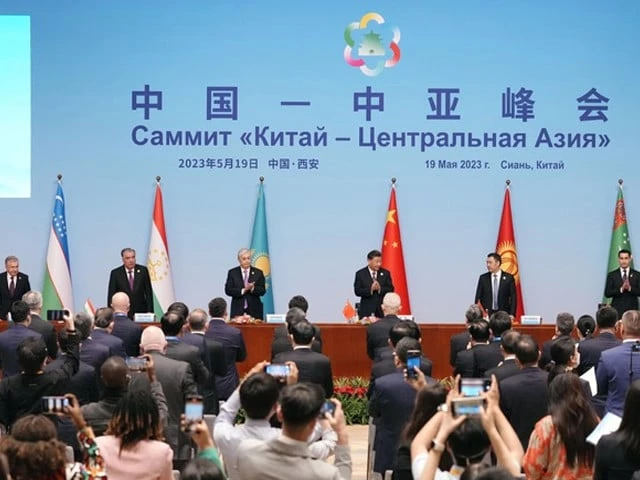
The minister underlined the importance of developing an integrated commercial corridor, stating that establishment of logistics hubs, offloading facilities, and multimodal transport systems would help create an efficient logistics chain linking Pakistan with Central Asia. He added that enhanced cooperation with China would remain central to strengthening regional connectivity.
Jam Kamal stressed that reliance on a single route was not viable and reiterated the need to keep multiple corridors operational to ensure trade continuity and resilience. He observed that cost and efficiency considerations must guide the selection of transit routes.
Ambassador Sharifzoda Yusuf underscored the importance of reliable and cost-effective transit routes and appreciated Pakistan’s efforts to enhance regional connectivity. He outlined Tajikistan’s potential to export surplus energy to Pakistan and pointed to opportunities for cooperation in aluminium trade and industrial supply chains.