



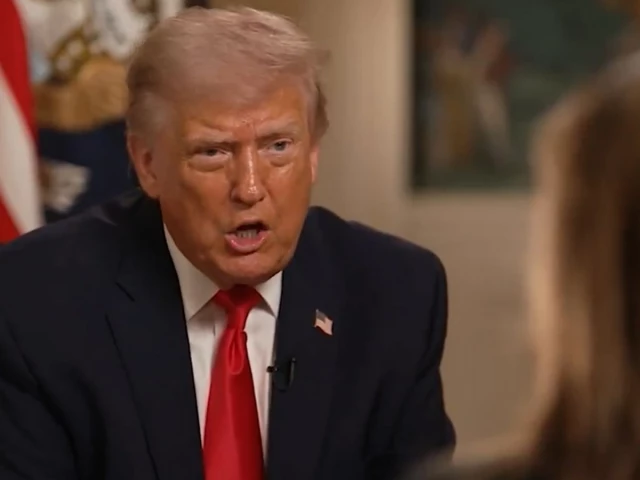
US President Donald Trump. SCREENGRAB
The Strait of Hormuz has always been more than a narrow waterway. It is a lever that, when pulled, does not simply interrupt the flow of oil but rearranges the geography of power itself.
The ongoing aggression against Iran by the US–Israel axis, and the slow choking of this chokepoint since late February, strips away the polite fiction of a “temporary shock” as the crisis cuts and reallocates in the same motion.
The war carries its own triggers, no doubt, but it is also rooted in a longer arc of neo-colonial management of West Asia and a dollar order that feeds off the region’s vulnerability. In moments like this, the system does not sit idle as it moves in, cashes in and calls it an adjustment, while the Global South, structurally handicapped to metabolise the crises, is left to foot the bill.
Within weeks of the conflict’s outbreak, global energy flows were violently rerouted. Roughly a fifth of the world’s oil and gas, once passing through Hormuz, was abruptly constrained. Prices surged, Brent briefly breaching $115 per barrel, while shipping insurance premiums ballooned nearly tenfold.
It disappeared from one corridor and reappeared elsewhere, priced higher, securitised more tightly and increasingly underwritten by a different geopolitical centre. That centre, unmistakably, appears to be the United States.
American crude and liquefied natural gas exports surged in tandem with the crisis. Weekly oil shipments climbed to around 12.7 million barrels per day by mid-April, while LNG exports, already at record highs, continued their upward trajectory. It went beyond a simple response to scarcity.
The system was already set up to capture it. The space opened by Hormuz did not stay empty for long as it was swiftly and profitably taken over by those positioned to exploit it.
Read: Trump administration begins $166b tariff refunds after Supreme Court blow
The architecture of US energy policy, spanning financial instruments, military logistics and diplomatic signalling, aligns seamlessly with the opportunities produced by disruption.
War-risk insurance schemes, naval escorts and export facilitation measures not only created the crisis, but also ensured that its economic aftershocks would be absorbed asymmetrically. In this asymmetry lies the deeper logic of the moment: crisis accumulation.
The anatomy of a windfall
The empirical record is stark. US crude exports, hovering around 3.9 million barrels per day in January, expanded sharply as the conflict intensified. By April, combined exports of crude and refined products had surged far beyond pre-war norms. LNG followed a similar trajectory, with January exports already up roughly 30% year-on-year and poised to climb further amid elevated global prices.
Simultaneously, the cost of moving oil transformed into a barrier of its own. War-risk insurance premiums in the Gulf leapt from approximately 0.25% of vessel value to as high as 3%.
Freight routes lengthened as ships detoured around Africa, adding thousands of dollars per container and compounding delays. Shipping itself became a form of rationing, restricting supply not only through physical risk but through financial deterrence.
Energy Information Administration data show crude exports at about 3.9 mbpd in January, rising toward roughly 6 mbpd by April, while combined crude and refined products peaked near 12.7 mbpd by mid-April, which is well above pre-war levels. The jump tracked a price rally, with Brent climbing from the $70 to around $115 by early April and WTI crossing $100.
LNG followed the same curve. January exports hit a record ~539 bcf (up ~30% year-on-year), with April likely higher as prices surged past $50/MMBtu. Flows increasingly shifted toward US suppliers as Europe and parts of Asia moved away from Iranian and Russian gas.
Read more: Pentagon assesses clearing Hormuz mines could take 6 months: report
Transport costs reinforced the shift. War-risk insurance in the Gulf jumped roughly tenfold (from ~0.25% to as high as 3%), while rerouted shipping around Africa added thousands of dollars per container and pushed tanker rates sharply upward. Longer routes and higher premiums effectively rationed supply and raised global costs.
Washington’s policy response amplified these dynamics. Backed by Donald Trump, US agencies rolled out insurance and security support, including a $20 billion reinsurance facility, to keep energy moving through the region. The result functioned as a de facto export boost in which risk was socialised, margins were preserved and US barrels became easier to move just as competitors were squeezed.
The timing is telling. Output remained relatively steady, yet exports jumped, pointing to rerouted flows and crisis-driven advantage rather than organic growth.
In such conditions, proximity to secure infrastructure and state-backed guarantees becomes decisive. US exporters, shielded by naval protection and supported by reinsurance mechanisms worth tens of billions of dollars, acquired a comparative advantage that was as political as it was economic. Energy flowed along corridors made viable by power.
Policy
The dynamics at play are subtler and more revealing. The contemporary global oil regime is structured in such a way that disruption in one region generates rents elsewhere. The United States, as both a leading producer and a financial-military guarantor of trade routes, is uniquely positioned to capture these rents.
Measures such as maritime reinsurance, naval escorts through contested waters and calibrated sanction regimes collectively lower the transaction costs for US-aligned energy flows while raising them for others. The result is not an explicit strategy to prolong conflict, but an incentive structure in which prolonged disruption remains materially advantageous.
This is the essence of crisis accumulation in which scarcity, once produced, is monetised. The blockade of Hormuz, whether partial or fluctuating, functions as a mechanism that redistributes value upward and outward, from import-dependent
The sequence of events reveals how quickly this transformation unfolded. The war’s outbreak on February 28 triggered immediate disruptions to commercial shipping. By early March, global carriers had begun rerouting away from Hormuz, while insurance costs surged dramatically. Within days, US policy responses, including reinsurance schemes and naval deployments, were already in motion.
Also read: ‘Clock is ticking’: Trump says Iran deal will happen only when ‘appropriate’ for US
By mid-April, the situation had hardened into a paradoxical equilibrium: limited transit under heavy militarisation, Iranian leverage over passage and continued US enforcement of a broader blockade framework. Traffic through the strait collapsed from roughly 140 ships per day to just a handful.
However, global markets did not halt but adapted, shifting demand toward alternative suppliers, primarily the United States.
Crises tend to open space for reconfiguration rather than simply disrupt. The Israeli case brings that logic into focus. When the market-led “peace” of the Oslo process lost traction, accumulation moved onto a different terrain, with conflict itself turning productive. Security technologies, surveillance systems, and fortified enclaves evolved alongside instability and came to define its economic structure.
Development unfolded through destruction, reshaping dispossession into zones of extraction and control, while the language of “security” continued to veil the circulation of value.
Viewed through the present energy crisis, the pattern sharpens. The disruption of Hormuz has reshaped global markets under pressure. Scarcity has produced rents that have largely accrued to those already positioned to capture them. David Harvey describes this dynamic as “accumulation by dispossession” at a systemic scale, less about enclosing land, more about enclosing circulation.
The chokepoint narrows access, drives up prices, and redirects value across space, from import-dependent peripheries absorbing inflationary shocks to exporters and financial intermediaries consolidating gains.
Who pays the price
If the gains are concentrated, so too are the losses. Import-dependent economies have borne the brunt of the shock. Pakistan, reliant on imported fuel for the overwhelming majority of its needs, faced sharp price hikes, as petrol and diesel rose by roughly 50% within weeks. Inflationary pressures intensified, cascading through food and transport sectors.
India, similarly dependent, experienced supply anxieties and market volatility despite attempts to diversify imports. Across Africa and parts of Asia, the effects have been even more severe, triggering fuel shortages, rising electricity costs and constrained industrial activity.
Even Europe, with comparatively lower direct exposure to Hormuz, saw energy prices reverse recent declines, feeding into broader inflation.
These are the systemic counterparts to the gains elsewhere. Where scarcity produces profit in one location, it imposes austerity in another.
The logic of prolongation
As the US flashes mixed signals on finding a permanent deal with Tehran amid efforts by Islamabad to establish peace, many observers have noted that the US president does not seem very excited by the idea of a solution to a self-generated problem that has already affected his numbers.
A rapid de-escalation would restore suppressed supply, reduce prices and erode the extraordinary margins currently enjoyed by alternative exporters. Shipping costs would normalise, insurance premiums would fall and the urgency driving energy diversification would dissipate. In short, the exceptional conditions underpinning current gains would disappear.
By contrast, a protracted standoff, even at a low-intensity level, sustains these advantages. It maintains scarcity without complete collapse, ensuring that substitution remains both necessary and profitable.
Beyond Hormuz
Similarly, the Hormuz crisis also reveals a broader feature of the global political economy, that is, war and disruption are not external to markets but are constitutive of them.
It would be a little too naive to infer that the redirection of energy flows as a result of this conflict was an anomaly. It is a continuation of a historical pattern in which chokepoints, blockades and conflicts serve as moments of reconfiguration.
The language of “stabilising markets” and “securing trade routes” coexists with a material reality in which stability is selectively produced and instability selectively exploited. The winners and losers are not determined by chance but by position within this architecture.
In this sense, the current “gas war” is less about Iran or Israel alone than about the enduring logic of a system in which crisis becomes a mode of accumulation.