


.
He believes in American power as a force for good. He also believes President Donald Trump is squandering this power by stumbling into a war of choice against Iran.
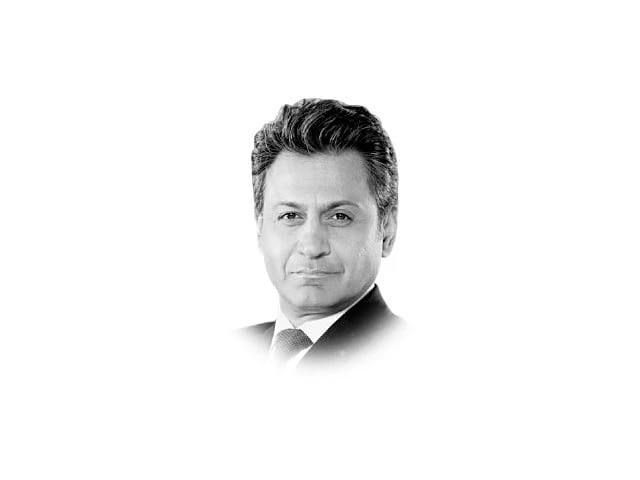
Like all influential analysts, acclaimed author and journalist Fareed Zakaria looks at events through his own framework. I have followed his writings and media appearances for more than a quarter of a century, and admired his powers of persuasion in describing forces that shape global affairs. Many of his framings I do not agree with, but there is no doubt the broad sweep of his analysis remains stimulating.
This week he joined me on my show on Express 247 channel to discuss the US-Iran war and what this conflict means for a world order in transition. Zakaria remains very critical of the war and its primary perpetrators Trump and Israeli leader Benjamin Nethanyahu. His criticism is borne not of any support for Iran but for the fact that war hurts America at a time when the world needs American leadership more than ever.
Looking at the world from Washington (or New York, in his case) produces such framing of the global order. From Islamabad, the view is a bit different.
But first, let’s do a deep dive into his narrative. In his latest book, Age of Revolutions, Zakaria says revolutions throughout history have led to disruption, which lead to anxiety among those who are not its beneficiaries, which in turn lead to a backlash and ultimately a reordering of the system. He then argues the defining feature of our era is not that this historical process continues to unfold, but the speed and scale at which it is doing so.
This connects to his foundational thesis that the post-1945 world order, despite its various weaknesses, has been good for the world. He believes this US-led global system, based on institutions, alliances and international rules, has provided the world relative stability and security under a benevolent hegemon. He still calls this is the best option because the alternatives are far worse. But he acknowledges that this system is now weakening as the world witnesses the “rise of the rest” led by China. The hegemony of the main hegemon is finally coming up against its own limitations. The war on Iran is merely the latest manifestation of this reality. His primary grouse with Trump therefore is that through his reckless exercise of power, he is weakening the pillars upon which this order has stood for decades.
Zakaria’s benevolent view of the ‘old order’ does not find too many takers in the Global South. It took the destructive politics of someone like Trump to force a traditional American ally like the Canadian prime minister to grudgingly acknowledge what most outside of the West had endured for decades: the rules-based order was ‘rule-based’ and ‘order’ for those who made the rules and enforced the order. Those on the receiving end won’t be shedding too many tears as the system wobbles under the pressure of multi-polarity.
Reality is of course never black and white. The north-south divide is hard to delineate neatly when identifying net winners and losers of the old order. And yet, the West-oriented framing of the world – ingrained organically in the old order – ensured that counter-perspectives were never able to properly mainstream themselves within a larger discourse. The world looked at the world from only one side.
Zakaria holds on to this framework but is not oblivious to the reality that the framework itself is weakening with the fragmentation of the global order. The rise of China, and the early hints of the global order it may structure, is now a direct challenge to the present system. The emergence of middle powers in the present context – Pakistan, Turkey, Egypt, Saudi Arabia to name a few – reflects the emerging geo-political reality that the days of a single hegemon running the affairs of the world are behind us.
From our side of the world, these churn of events promise the prospects of new beginnings. From Zakaria’s side of the world, they generate anxiety about an uncertain era where no one is really in control. For the powerful, there is nothing more fearful than the loss of power.
The US-Iran war is, among other aspects, also a battle of perspectives. Speaking with Fareed Zakaria this week, and absorbing his persuasive arguments during the show, I was thinking how countries like Pakistan have an opportunity to navigate these uncertain times for their own advantage. We benefited from the old order – let there be no mistake about that – but we also experienced the pain of expendability. For those who want to learn, lessons are aplenty. But an era is drawing to a close and the transformation to a new one shaping up through convulsions. Influential thinkers like Fareed Zakaria – products of the order that has shaped our lives for at least three generations – will naturally paint the nature of this change from their particular worldview, which was often the only view that prevailed. But the reality of global change is birthing competing frameworks that do not just analyse the world differently, they impact it in ways that often run counter to the interests of the old order.
Which is why – despite differing worldviews – it was so enriching to have a conversation with Fareed Zakaria.