Brent fell $11.12 to $88.27; WTI dropped $11.40 to $83.29 amid sharp declines in oil prices
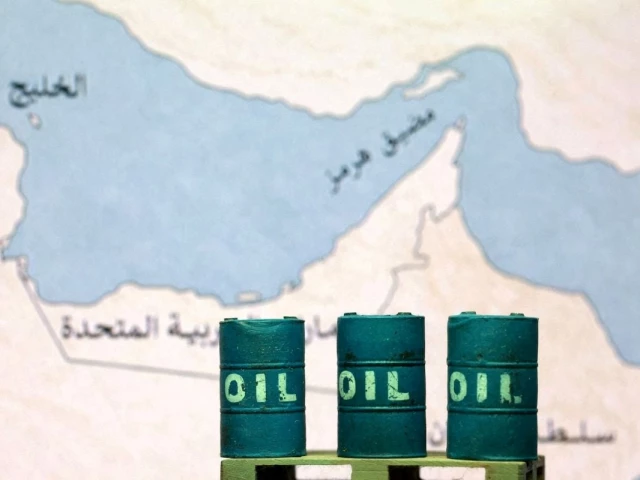
A map showing the Strait of Hormuz, also known as Madiq Hurmuz, and 3D printed oil barrels are seen in this illustration taken March 26, 2026. PHOTO: REUTERS
Oil prices plunged by about 11% on Friday, extending earlier losses, after Iran’s foreign minister said that passage for all commercial vessels through the Strait of Hormuz was open for the remaining ceasefire period.
Brent crude futures were $10.59, or 10.7%, lower at $88.80 a barrel at 1340 GMT, after falling to a session low of $87.71. US West Texas Intermediate crude futures were down $10.80, or 11.4%, at $83.89 a barrel, after touching $83. Both contracts were trading at their lowest since March 11.
“Comments from Iran’s foreign minister indicate a de-escalation as long as the ceasefire is in place, now we need to see also if the number of tankers crossing the Strait increases substantially,” UBS analyst Giovanni Staunovo said.
Read More: Iran FM announces Hormuz’s opening for all commercial vessels till ceasefire’s remaining duration
Prices were already down earlier in the session as possible further talks between the US and Iran at the weekend in Pakistan and a 10-day ceasefire between Lebanon and Israel raised investors’ hopes that the war in the Middle East could be nearing an end.
Addressing a sticking point in talks, United States President Donald Trump said Tehran had offered not to possess nuclear weapons for more than 20 years.
“We’re going to see what happens. But I think we’re very close to making a deal with Iran,” Trump told reporters outside the White House on Thursday.
A US official told Reuters shortly after the announcement that the strait was open that a military blockade of Iran involving more than 10,000 personnel remains in effect.
While the opening up of the strait was a step in the right direction, the European market would remain tight for a while, analyst Ole Hvalbye at SEB Research said, since it takes roughly 21 days for ships to move from the Gulf to Rotterdam, the main crude port in the region.
Source link