







The secretary general will lead the general secretariat of the alliance being established in Riyadh: FO
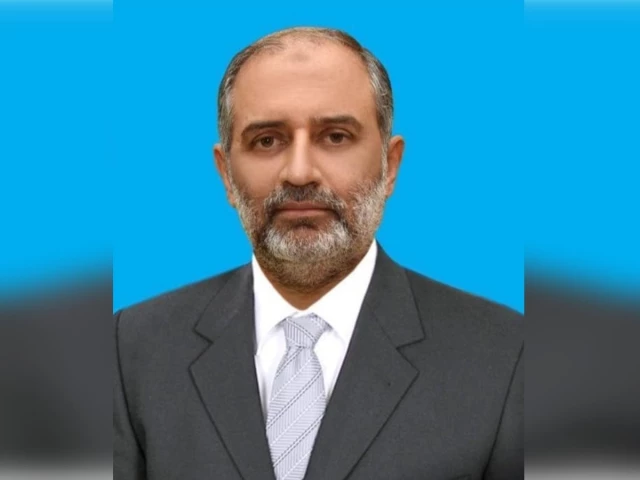
Lt Gen (retd) Nauman Mahmood. Photo: File
The government on Wednesday appointed Lieutenant General Nauman Mahmood, Hilal-e-Imtiaz (Military), as the first Secretary General of the Makkah Joint Defence Agreement (MJDA), according to the Ministry of Foreign Affairs.
In a statement, the Foreign Office said Lt Gen Mahmood would lead the general secretariat of the alliance, which is being established in Riyadh.
The appointment marks the formal establishment of the MJDA’s secretariat and its administrative leadership, the statement added.
The government had earlier announced the MJDA as a framework for enhanced defence cooperation among the participating countries.
The appointment came less than a month after Pakistan, Saudi Arabia and Turkiye agreed in Istanbul to establish a permanent secretariat for their joint defence pact in Riyadh, with Pakistan set to provide its first secretary general.
The decision was taken at the inaugural meeting of the Strategic Political and Defence Committee, held under the Makkah Joint Defence Agreement, which brought together the foreign and defence ministers and military chiefs of the three countries in Istanbul on August 31.
Under the arrangement agreed in Istanbul, the secretary general would head the alliance’s General Secretariat, based in the Saudi capital and tasked with overseeing implementation of the agreement, coordinating joint activities among the three militaries and supporting expanded defence-industrial cooperation. Pakistan was designated to hold the post for an initial three-year term.
Read: Riyadh to host Makkah alliance secretariat
In August, Pakistan and Saudi Arabia signed a landmark “Strategic Mutual Defence Agreement”, declaring that “any aggression against either country shall be considered an aggression against both”. On August 7, Pakistan, Saudi Arabia and Turkiye formalised their longstanding strategic relationship through the newly signed “Makkah Joint Defence Agreement”, a trilateral security framework that its proponents describe as a defensive arrangement aimed at strengthening collective deterrence, enhancing military cooperation and promoting regional stability.
Significance of the Makkah Joint Defence Agreement
The MJDA was the latest step in longstanding military and strategic cooperation between Pakistan, Saudi Arabia and Turkiye. Signed in Makkah, the pact established a framework for collective deterrence and stipulated that an armed attack on any one of the three countries would be considered an attack on all three, while providing for wider cooperation across defence.
The agreement followed nearly a year of negotiations and came amid heightened instability across the Middle East. Turkiye and Pakistan had sought closer regional security cooperation, while Saudi Arabia had faced growing security concerns as conflicts spread across the region, threatening its territory, energy infrastructure and ambitious economic development plans.
Read More: Pakistan, Saudi Arabia, Turkiye sign joint defence pact in Makkah
For Pakistan and Saudi Arabia, the trilateral pact is built on their Strategic Mutual Defence Agreement signed in September 2025. That agreement stated that “any aggression against either country shall be considered an aggression against both” and committed the two sides to strengthening defence cooperation and joint deterrence.
The three countries already had extensive military links. Pakistan had provided training and technical assistance to Saudi forces for decades, while Islamabad and Ankara had maintained close defence ties through military training, naval cooperation and defence equipment. In 2023, Saudi Arabia agreed to purchase Turkish drones in what Ankara described as its largest defence export contract.
Pakistan had also expanded its military and security cooperation with the kingdom, deploying about 8,000 troops, fighter jets, drones and an air-defence system to Saudi Arabia, according to Reuters. Pakistan deploys troops to Saudi air base under defence pact. Islamabad had also been pursuing wider security and economic ties in the Gulf, including negotiations with Kuwait on an expanded cooperation pact linked to energy and investment. Pakistan-Kuwait agree to boost cooperation across key sectors
The signing in Makkah, Islam’s holiest city, added symbolic weight to an agreement that brought together three countries with significant military and strategic capabilities. It also came as Pakistan sought to avoid becoming directly involved in the Iran conflict, instead pursuing diplomatic efforts to mediate, while strengthening its broader regional security partnerships.