





Use of drone technology, timely response by the police plays a crucial role in monitoring the terrorists’ movements
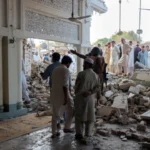
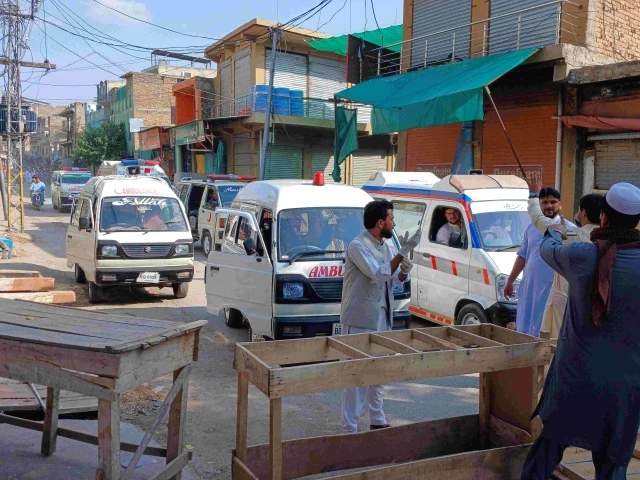
Ambulances are seen at the site of an explosion near the police headquarters in Kohat in Pakistan’s Khyber Pakhtunkhwa province on September 18, 2026. Photo: AFP
PESHAWAR:
Significant revelations emerged on Sunday from the initial investigation into the terrorist attack on the Kohat Police Lines. According to the investigation team, the attackers did not limit themselves to a mere suicide bombing and had planned to enter the Police Lines and maintain a siege of the compound for several hours.
On Friday, at least 21 people, including 15 police officials, were martyred when an explosives-laden vehicle detonated near a mosque in Kohat Police Lines, followed by terrorists storming the compound and attacking police facilities.
Sources indicate that the terrorists brought hand grenades, sniper rifles, and other weaponry and explosives with them. After entering various sections of the Police Lines during the attack, the terrorists opened fire and used hand grenades. The FIR registered by the police also documented the use of gunfire and hand grenades during the assault.
Read: CTD registers terror case over deadly Kohat Police Lines attack
Investigative officials stated that the attack began when an explosives-laden, rickshaw-style vehicle was rammed near the Police Lines, causing a massive blast. Immediately following the explosion, armed terrorists entered the Police Lines and advanced toward key buildings. According to the police, seven armed terrorists, including a sniper, entered the compound after the initial attack.
According to the investigation team, the terrorists intended to scatter the police force following the initial explosions and gunfire, aiming to remain inside the compound for as long as possible. However, police personnel maintained their resistance despite sustaining injuries and facing heavy fire, thereby preventing the attackers from advancing according to their plan.
Speaking to The Express Tribune, a senior police officer stated that the use of drone technology and the timely response by police and other forces played a crucial role in monitoring the terrorists’ movements and conducting the operation. He noted that the forces quickly brought the situation under control and prevented the terrorists from spreading further.
Officials reported a prolonged standoff after the terrorists entered the Police Lines buildings. A joint clearance operation involving the police, Counter-Terrorism Department (CTD), Elite Force, and other security forces lasted approximately 20 to 21 hours. By the end of the operation, eight terrorists had been killed.
Read More: Kohat Police Lines blast death toll rises to 23 as clearance operation concludes
The initial attack resulted in the deaths of 21 people, including 15 police personnel, and left over 100 others injured. Additional casualties were reported during the subsequent clearance operation, bringing the total death toll to 23, according to the latest official figures.
Police officials state that a comprehensive investigation into the attack was underway, with all aspects, including terrorist facilitators, the planning of the attack, the supply of weapons and explosives, and potential links, being examined.
Earlier today, a case was registered with the Counter-Terrorism Department (CTD) police station over the suicide attack on the old Police Lines in Kohat, police said.
The FIR was registered on the complaint of the Station House Officer (SHO) of City Police Station Kohat against unidentified terrorists. The case includes charges related to terrorism, murder, attempted murder and other offences.
Ittihadul Mujahideen Pakistan (IMP), led by Afghanistan-based Hafiz Gul Bahadur, claimed responsibility for the deadly bombing and rampage involving multiple attackers. Islamabad has repeatedly asked the Taliban regime to deny the use of Afghan soil for terrorist attacks inside Pakistan. However, the de facto rulers in Kabul have been reluctant to take action against terrorist groups operating from their territory.