







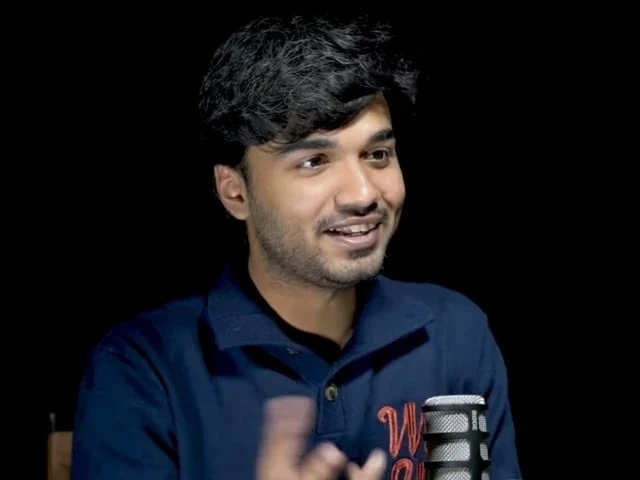
Mir Raza Ali, owner of the popular dessert shop Wafflix, whose body was found in Gulistan-e-Jauhar after he was allegedly kidnapped from PECHS. — SCREENGRAB/ Youtube
KARACHI:
Police Surgeon Dr Summaiya Syed Tariq on Monday told a judicial commission investigating the murder of Mir Raza that she had faced threats, surveillance and pressure over her post-mortem findings, alleging that she was asked not to mention that the evidence was inconsistent with suicide in the report.
Mir Raza, 25, was allegedly found dead in the bushes near a wedding hall in Gulistan-e-Johar on July 29. The case had initially been surrounded by uncertainty over whether he had been murdered or died by suicide. The court ordered a second post-mortem exam of the victim after the first report failed to determine the circumstances surrounding his death. The findings of the second post-mortem consolidated his family’s longstanding claim that he had been murdered. The police probe is under constant scrutiny by the public because of earlier lapses that were even admitted by the Sindh Police chief.
While speaking at the hearing of the commission convened to scrutinise probe into the young entrepreneur’s murder case held at the Sindh High Court (SHC) in Karachi, Dr Summaiya said, “Deputy Inspector General (DIG) Crime and Investigation Amir Farooqi asked me to skip the part that postmortem findings were inconsistent with suicide in the report to ensure reprieve during investigation.”
She further told the commission that she was stalked for two days and received threats.
Dr Summaiya said that the case had “put her career and job at risk” and that her personal information, including her home address and husband’s name, had been circulated on social media, and her family was being implicated in crimes.
She said she had lodged a complaint with the National Cyber Crime Investigation Agency (NCCIA) against those allegedly involved in a social media smear campaign against her.
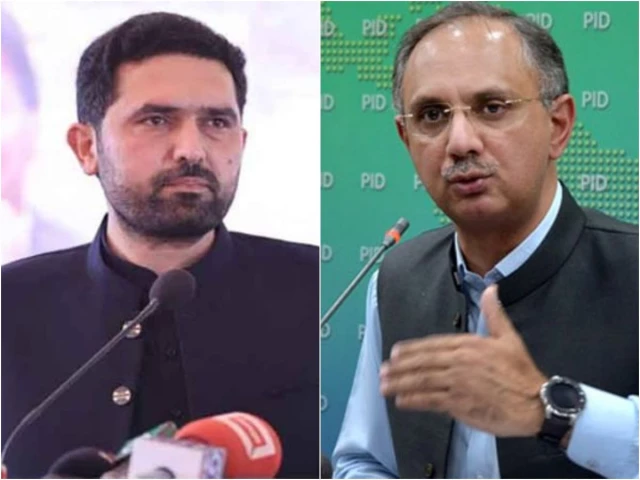
Read: Govt denies interference in Mir Raza probe
Dr Summaiya said she had approached DIG Farooqi and Senior Superintendent of Police (SSP) Samiullah Soomro regarding her valid security concerns to no avail.
In response, Justice Omar Sial offered her police or rangers security, which the police surgeon declined to accept. Nevertheless, Justice Sial directed the additional law secretary to ensure her safety and asked him to bring the matter to the attention of the Sindh chief minister and interior minister.
“This situation is not at all acceptable,” the judge stressed.
Dr Summaiya also alleged that Central Investigation Agency (CIA) Inspector Muhammad Ali sought the case record from her. Justice Sial summoned the officer to appear before him at the next hearing scheduled for tomorrow.
She defended the findings of the medical board constituted in connection with the death. She said the board had been constituted on the basis of the experience and expertise of its members and that the “most competent” specialists had been included in the team.
She said 263 photographs had been taken during the second post-mortem.
Dr Summaiya further said: “I was verbally told by the Sindh health department deputy secretary to withdraw from the board, but I told him off, pointing out that my name was included in the judicial magistrate’s order.”
She said the composition of the medical board had subsequently been changed, with all members except her being replaced, adding that on the day of the exhumation, Additional IG Azad Khan sent an order from the health services director general allowing members of the previous team to be included in the medical board.
“The health secretary later restored the original medical board after the family of the victim objected to the change,” she added.
Also Read: Home minister apologises to Mir Raza probe commission
The doctor highlighted that she had recommended exhumation of the body in an August 3 letter after expressing concerns to the SSP East regarding “false negatives emerging during autopsy due to sampling delay”. She said she reiterated her demand for a second post-mortem exam during a meeting with police on August 5.
Later, she said, she informed the health secretary and other officials as soon as she received the court order for the commencement of a second post-mortem exam.
Justice Sial enquired if the Sindh Medicolegal Act 2023 was in force, to which Dr Summaiya said it was, though its rules were yet to be notified.
Advocate Jibran Nasir pointed out that the SHC had directed the authorities in 2024 to notify the rules, but the order was not enforced.
The medical board findings
A significant portion of the proceedings focused on the presence of an anaesthetic in Mir Raza’s corpse. The police surgeon claimed that Dr Usama had misguided the commission about the half-life of the anaesthetic given to the victim and also the time of his death.
“He had wrongly claimed that the victim had died 20-22 hours before the first post-mortem exam.”
Explaining the impact of local anaesthesia on a person, she said, it could cause loss of sensation and its effects could last between two and nine hours. She highlighted that if a substantial quantity of local anaesthetic was injected directly into the veins in different parts of the body, it would take effect rapidly and prove fatal.
“The presence of the said anaesthetic in the heart,” the doctor said, indicated that the substance was injected into the bloodstream.
Justice Sial asked the doctor if anaesthesia could have been administered through a spray instead.
The doctor ruled out oral administration of the numbing agent, citing that traces of the medicine would have been absent in the blood during the post-mortem exam. She stressed that the available evidence established that anaesthesia was present in Raza’s body when he was shot, but it could not determine the quantity of it.
The commission noted that there had been incidents in the city in which anaesthesia had allegedly been sprayed on people’s faces, causing them to lose consciousness for a considerable period.
It observed that anaesthetic should not be readily available without a prescription and said it would also seek recommendations from the doctor beyond the particular case.
Suicide theory debunked
The commission questioned Dr Summaiya about the purpose of the exhumation and the medical board’s terms of reference. She said the board was tasked to examine the questions raised after the first post-mortem exam.
The commission noted that the board’s findings clearly showed that the available evidence was “not consistent with suicide”.
Dr Summaiya, in her testimony, said that the board’s findings were based on the evidence available to it.
“This is a test case for me for which I have put my entire career at stake,” she said, adding that she would maintain the same spirit if confronted with a similar case in future.
Mishandling evidence
The commission also grilled Ferozabad Station House Officer (SHO) Adil Afzal over the collection and preservation of CCTV footage and other evidence from the crime scene.
“Why did you seek incomplete footage from the guest house?” Justice Sial asked.
“There were 52 cameras in total, and you only got hold of footage from six cameras,” he asked the cop, saying the officer ignored key evidence.
Read more: Mir Raza death not a suicide, SHC told
Responding to the judge’s observation, the police officer said he acted in coordination with other police officials and denied deliberately compromising the investigation.
The commission alleged that the failure to preserve the footage amounted to destruction or compromise of evidence. It also questioned him about the whereabouts of the guest house’s digital video recorder (DVR). The family of the victim had claimed that the cops had shown them the DVR when they handed over the victim’s slippers to the heirs.
“Where is the documentation concerning the recovery and handover of Mir Raza’s slippers?” the commission demanded answers from SHO Afzal, which were met with silence.
The commission also asked about the documentation related to the confiscation of the victim’s smartwatch. SHO Afzal said the watch had been taken from the family for forensic examination and a memo had been prepared to document the takeover.
Pointing out discrepancies in the memo, the legal counsel representing the victim’s family said, “Instead of recording members of Raza’s family as witnesses to the recovery of the smartwatch, the memo registered a cop as a witness.”
The commission, seconding objections raised by Nasir, reminded the SHO that he had testified before it that only two cops had visited the victim’s family to retrieve the smartwatch and yet other cops had been registered as witnesses to the smartwatch handover.
“Even ASI Faisal Rahim, who made the memo, was absent during the handover.”
Justice Sial also interrogated Afzal as to why the victim’s family was asked to give their passports to the police?
The police officer responded that the request emanated from CTD’s technical department but admitted that he did not have the relevant letter to prove it.
The proceedings also brought to light conflicting accounts regarding CCTV footage and the alleged disposal of Mir Raza’s mobile phone. SHO Afzal admitted that he got the CCTV footage featuring the victim from Ahmed Bhardey, the partner of Mir Raza, and that he had shown the footage to the victim’s family.
Raza’s mother, however, alleged that the officer had shown the family footage of her son walking alone and had described the incident as a suicide. Afzal denied making such a statement, saying it would not have been possible for him to declare the case a suicide at such an early stage.
Counsel representing Raza’s family also conducted a media briefing after the commission’s hearing.
Jibran Nasir said the condition of the body raised concerns about the circumstances around the victim’s death and claimed that evidence hinted at the possibility of “chemical burns and gunshot residue”. He said four dermatologists had also described the marks on the body as chemical burns.
He further alleged that important evidence, including the smartwatch and CCTV footage, had not been preserved in accordance with rules and that the manner in which the evidence had been handled raised questions about the merit of the investigation.
Speaking to the media, he said the CCTV footage had allegedly been recorded from one mobile phone onto another instead of being properly preserved and sealed.
According to Advocate Nasir, SHO Adil Afzal had confessed before the court that CCTV footage and the DVR had not been sealed.
He also pointed to what he described as a contradiction between the police’s earlier account of where Mir Raza’s mobile phone had allegedly been thrown and the statement given by Afzal before the commission.
“Every passing day, new irregularities in the investigation are emerging before the commission.”
The legal counsel called for scrutiny of the role of police officers involved in the earlier investigation, while stressing that no individual should be treated as a criminal merely on the basis of an ongoing investigation.
Once again, Nasir reiterated his demand for a joint investigation team (JIT), stressing that it could strengthen the probe.
“If a JIT had been formed, its results would have been visible by now.”