Dutch Foreign Minister Tom Berendsen said 128 countries agreed to the deal after talks led by the Netherlands
Dutch Foreign Minister Tom Berendsen announced the agreement, by 128 countries, on Saturday. The Netherlands has been overseeing the talks. PHOTO: Tom Berendsen X
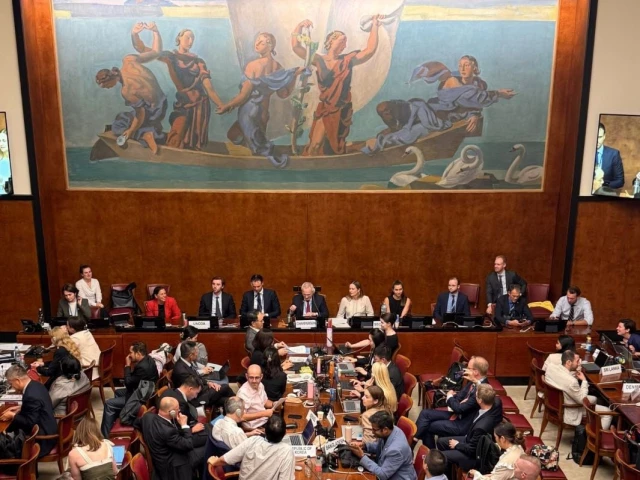
Nearly 130 countries on Saturday agreed on a text defining lethal autonomous weapons systems (LAWS) — “killer robots” to their critics — a first step towards talks on a possible international treaty to regulate them.
The text agreed upon has not yet been made public — but campaign groups following the talks have already criticised leading countries for dragging their feet on the issue.
Dutch Foreign Minister Tom Berendsen announced the agreement, by 128 countries, on Saturday. The Netherlands has been overseeing the talks.
Positive news from Geneva: 128 states have reached consensus in the GGE LAWS. As military technology is evolving rapidly, this marks an important step in the regulation of lethal autonomous weapon systems that the Netherlands, in its capacity as Chair, helped shape. pic.twitter.com/Tpnkha1StL
— Tom Berendsen (@ministerBZ) September 5, 2026
Countries are already developing and using weapons capable of selecting targets and using force against them without human intervention.
But the International Committee of the Red Cross (ICRC) warned in a statement that “the unconstrained development and use of autonomous weapon systems pose serious legal, ethical and humanitarian challenges”.
The ICRC and several campaigning groups have called for international legally binding rules to restrict and regulate their use.
Read More: UN adopts new map showing Africa bigger, US smaller
Nicole van Rooijen, executive director of Stop Killer Robots, an international alliance of campaign groups, accused the United States, Russia and their allies of trying to weaken the agreed text.
Lex International, a Geneva-based philanthropic group funding work on key policy issues, also criticised some nations’ positions.
“The United States, Russia, India and Israel are amongst the key opponents of negotiations,” it said.
“The governments of Brazil, Ireland, and Norway are leading efforts to get such negotiations started in November,” it added.
UN member states will decide at November talks of the Convention on Certain Conventional Weapons whether to move towards an international treaty regulating such weapons.