Aurangzeb terms issuance positive development
Says transaction reflects investors’ confidence
Calls it part of
ISLAMABAD:
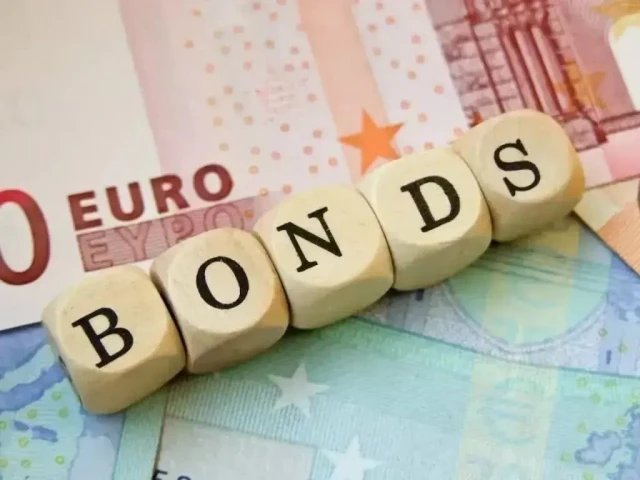
Ahead of debt repayment to Saudi Arabia, the government on Thursday raised $3 billion from global capital markets at up to 7.9% face value interest rates.
Pakistan is scheduled to return the $3 billion debt to Saudi Arabia, which it had obtained in April this year for three months to pay back the debt of the United Arab Emirates. The kingdom has already given a three-month extension, which is ending next month.
A finance ministry official told The Express Tribune that the new debt has been raised to repay the Saudi debt.
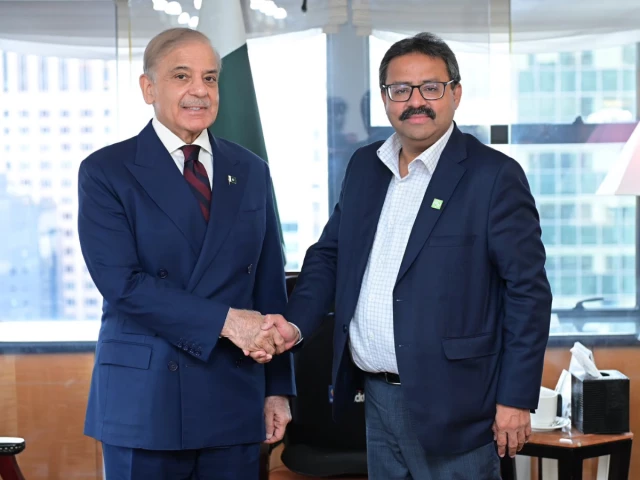
Finance Minister Muhammad Aurangzeb termed Pakistan’s successful issuance of a $3 billion dual-tranche Eurobond a “positive development”, saying the record transaction reflected renewed confidence of international investors in the country’s economy and future direction.
Addressing the “High-Level Dialogues on Taxation for Fiscal Sustainability”, organized by the Asian Development Bank (ADB) in collaboration with the Government of Pakistan, he said the transaction was the “single largest” in Pakistan’s history and reflected the external validation received from international rating agencies.
“Let me start by talking about a positive development which has happened overnight where Pakistan as a sovereign has printed a $3 billion bond,” the minister said.
The minister said the pricing received for the two Eurobond tranches, carrying maturities of 5.5 years and 10 years, was also encouraging.
He stressed that the transaction was not an ad-hoc borrowing exercise but part of the government’s broader debt-management strategy.
“This is not an ad-hoc trade,” Aurangzeb said, explaining that the government was pursuing on the external financing side the same approach adopted domestically to reduce rollover risks, increase maturities and undertake liability-management operations.
“This is very much part of our three-year medium-term GMTN strategy,” he said.
He said the Eurobond was the first component of the strategy, while the government was also looking at Sukuk, rupee-denominated dollar-settled bonds and Panda bonds, for which Pakistan had already undertaken an inaugural issue.
The strategy, he said, was aimed at repaying expensive short-term debt, extending maturities and reducing rollover risks.
“It’s all about repaying short-term expensive debt, extending our maturities, reducing our rollover risk, so it’s very much part of the deliberate strategy,” he added.
The Ministry of Finance announced that “Pakistan has successfully issued $3 billion through a landmark dual-tranche Eurobond transaction, the largest-ever international bond issuance by Pakistan in a single transaction”.
The finance ministry said that the debt transaction attracted nearly $6 billion in orders – almost twice the amount issued – from a broad and diversified base of institutional investors across global markets and continents.
The interest rate that the government paid on the $3 billion debt is higher than the rates that Pakistan paid in 2021 against five and 10 years Eurobonds, showed a comparison of both the transactions.
The key reasons behind relatively low interest rates on the debt raised in 2021 was that the US Treasury rates were very low ranging from 1% on five-year bonds to 1.64% on 10-year bonds.
The current US Treasury rates are 4.55% to 4.8% for these tenor bonds that spiked the total cost to around 8%.
The finance ministry stated that it raised $1.75 billion debt through five and half years Eurobond at a coupon rate of 7.5% the interest rates based on the face value of the debt.
But the PTI government had raised $1.3 billion for five years at a 6% coupon interest rate. Shehbaz Sharif’s government paid 1.5% higher cost with six month more maturity due to higher US treasury rates.
The face value interest rate on five-year PML-N’s Eurobond was also 3% higher than the comparative US Treasury bond. During PTI’s time, it was 5% higher than the comparative US rates.
The actual interest rate on the PML-N’s five-year transaction was 7.75%.
The finance ministry further said that it also raised $1.25 billion debt through 10-year Eurobond at 7.9% face value interest rate. The PML-N’s 10-year bond face value rate was also 0.525% more than the PTI’s 10-year bond of 2021. The PTI had raised $1.4 billion at a 7.375% coupon rate. But the PTI paid about 5.7% more than the US treasury rates compared to 3% by the PML-N government.
The actual interest rate on PML-N’s 10-year debt is 8.25%, based on its current market value, said an official of the finance ministry on condition of anonymity.
The finance ministry’s debt management office remains without a permanent director general debt after the last head resigned in January this year.
A senior official of the finance ministry said that the transaction advisors had advised to immediately raise the debt due to expected upward movement in interest rates in the US and European markets. The Joint Book runners for the transactions are Citi, Deutsche Bank, Emirates NBD, MUFG and Standard Chartered.
The Economic Survey of Pakistan 2021-22 showed that the largest ever transaction had been carried out by the PTI government on April 8, 2021 when it raised $3.5 billion debt through Eurobonds for five, 10 and 30 years’ periods.
But a spokesman of the finance ministry said that in 2021, Pakistan initially issued $2.5 billion in April and subsequently re-opened the same bonds for an additional $1 billion in July, comprising $300 million of the 2026 bonds, $400 million of the 2031 bonds and $300 million of the 2051 bonds.
Accordingly, the $3.5 billion cumulative amount represented two separate offerings rather than a single $3.5 billion transaction, he added.
The September 2026 $3 billion dual-tranche transaction represents Pakistan’s largest-ever single international bond offering, according to the spokesman.
The finance ministry said that the successful transaction marks a major milestone in Pakistan’s renewed and increasingly diversified access to international capital markets, demonstrating strong investor confidence and Pakistan’s ability to access global funding markets at significant scale, according to the press release.
The competitive pricing across both maturities, together with strong demand extending to the 10-year tenor, demonstrates Pakistan’s ability to mobilize sizable longer-term financing as international investors reassess the country’s improving macroeconomic and credit fundamentals, it added.
The $3 billion debt is less than half of the $7.1 billion trade deficit that Pakistan booked for July-August period of this fiscal year. The government has also remained unable to attract the foreign direct investment.
The country currently owes $8 billion to the kingdom out of $5 billion have already been rolled over till December 2028. Due to the rollover of $5 billion debt Pakistan’s gross external financing requirements have come down to $21.5 billion for this fiscal year.
Pakistan had repaid a $1.3 billion Chinese commercial loan in July, which pulled down foreign exchange reserves to $17 billion. Governor State Bank of Pakistan Jameel Ahmad had hoped in July that China would refinance the $1.3 billion by early August.
The finance ministry spokesman said that “the proceeds of the $3 billion Eurobond will be utilized as part of the Government’s overall external financing and budgetary requirements. The proceeds may also provide flexibility to replace short-term debt, as appropriate, as part of the Government’s broader liability-management strategy”.
To another question the spokesman said the interest rates comparisons with earlier issuances must also account for the materially different global interest-rate environment: around Pakistan’s 2021 issuance, the 5-year US Treasury was around 1%, compared with around 4.5% today.
Source link