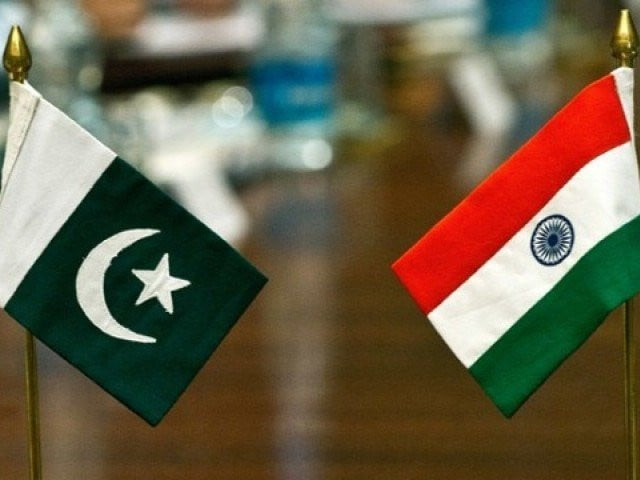
PCA rejects unilateral suspension of water-sharing treaty, Delhi restrained from specified Ratle construction
ISLAMABAD:
In a significant diplomatic and legal victory for Pakistan, the Permanent Court of Arbitration (PCA) at The Hague on Monday rejected India’s unilateral move to place the Indus Waters Treaty (IWT) of 1960 in “abeyance”, ruling that the agreement remains fully in force.
The PCA delivered its Award on Treaty Status alongside a binding Order on Interim Measures, unanimously ruling that the treaty remains valid and ordering India to halt certain construction activities at the disputed Ratle Hydroelectric Plant and uphold its obligations under the IWT.
In May this year, the PCA had upheld its earlier award and backed the continued validity of the IWT, ruling that India could not unilaterally suspend the agreement. The ruling came as India floated a tender to build hydropower projects on the Chenab River, raising concerns in Pakistan over its water supply.
In the fresh ruling, the court directed India to hold back construction at a hydroelectric plant in Indian Illegally Occupied Jammu and Kashmir (IIOJK). It also directed India to honour its water-sharing treaty with Pakistan, which New Delhi had suspended in April last year following tensions with Islamabad.
India and Pakistan have managed the Indus river system between them for more than six decades under the IWT, which was signed on September 19, 1960. However, India announced in April last year that it was putting the treaty in abeyance following the Pahalgam attack.
Since then, Pakistan has repeatedly warned India of consequences if attempts were made to deprive the country of its due share of water. At present, India is also not sharing water data with Pakistan that it is required to provide under the IWT.
The Hague-based court firmly reasserted the fundamental principle of pacta sunt servanda, meaning agreements must be kept, emphasising that India could not bypass its binding commitments. It said the IWT remained fully in force and that India had no valid basis to end or suspend it.
The tribunal concluded that India had no legal grounds under treaty law or customary international law, including claims of sovereignty, allegations of cross-border terrorism or fundamental changes in circumstances, to unilaterally suspend or terminate the treaty.
The PCA unanimously issued a binding Order on Interim Measures restraining Indian construction at the disputed Ratle Hydroelectric Plant (RHEP). It barred India from concreting the RHEP dam wall and power intake structure above specified levels.
“India must observe its obligations under the Treaty, including those relating to the design and operation of its hydro-electric projects on the Western Rivers,” the court said.
It added that India could not build the dam wall and power intake structure at the Ratle Hydroelectric Plant above specified levels until 90 days after the neutral expert’s decision.
Pakistan welcomed the decision, with the Information Ministry saying in a statement that India’s move to put the treaty in “abeyance” had not been allowed under the treaty or international law.
“The government of Pakistan would now be giving careful consideration to the details of the award and decide how these may best assist in finding a pathway back to the parties’ engagement under the treaty in a manner that reflects the binding legal obligations of both sides under the treaty,” the statement said.
The ministry added that the court had barred India from concreting the RHEP dam wall and power intake structure beyond specified levels until 90 days after the neutral expert’s final decision, which is expected around July 2027.
It said the court had also ordered India to continue reporting on the construction schedule until shortly after that decision. The government noted that it had seen the court’s press release announcing the award on the treaty’s status and the interim measures, although the full text had not yet been published.
India’s Foreign Ministry, however, rejected the PCA order outright and insisted that its 2025 decision to hold the treaty in abeyance stood.
“This so-called Court of Arbitration has no jurisdiction whatsoever to pronounce on India’s sovereign decisions now or in the future. The pronouncement will have no effect on India’s actions in connection with the projects undertaken by India,” it said.
Experts said the latest ruling meant India was not only losing its standing in international arbitration forums, but that its reluctance to follow international forums had also put its position at stake in the international community.
They added that if India prolonged its suspension of the IWT, which had remained functional even during the worst tensions between the two countries, it would push Pakistan towards a war. They said Pakistan could take up the matter at the United Nations.
“Pakistan should build diplomatic pressure on India to honour the Indus Waters Treaty,” Jamaat Ali Shah, Pakistan’s former Indus water commissioner, told The Express Tribune. He said taking up the matter at the United Nations could take time.
“India has plans to build a hydropower plant over the Chenab to halt Pakistan’s water. If water supply is reduced at Marala point, there will be water issues for Punjab’s agriculture,” he warned. “If India continues dishonouring court decisions, it would be pushing Pakistan towards a war.”
According to Shah, India could face pressure from the World Bank and the Asian Development Bank (ADB) if it sought funding for these hydropower projects, although Delhi was building dams from its own resources.
He added that India received a major portion of funding for welfare projects from different countries, which could build pressure on Delhi by suspending that funding.
Source link