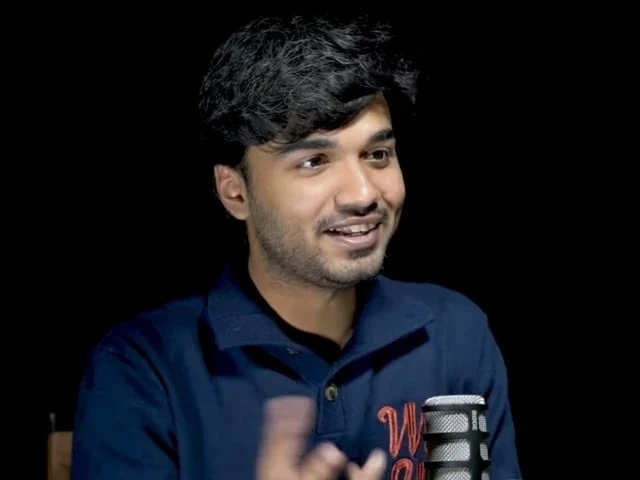
Government opposes plea, while the family calls for expanded terms of reference for judicial commission
Mir Raza Ali, owner of the popular dessert shop Wafflix, whose body was found in Gulistan-e-Jauhar after he was allegedly kidnapped from PECHS. — SCREENGRAB/ Youtube
KARACHI:
The investigating officer (IO) probing the death of Mir Raza told the Sindh High Court (SHC) on Monday that investigators were clear that the case was one of murder and not suicide, as the court reserved its verdict on a petition seeking the formation of a joint investigation team (JIT).
DSP Siraj Lashari, the investigating officer, told a two-member constitutional bench headed by Justice Adnan Karim Memon that the investigation was being conducted on the basis of digital evidence and that investigators were treating the case as a murder. “We are clear that it was a murder,” Lashari told the court, adding that the final post-mortem report and a forensic report from Punjab were still awaited.
He said the investigation had been restarted on August 13 “from zero” and that investigators had recovered a bullet casing, although the weapon had not been found.
Lashari said the post-mortem examination had ruled out the possibility of suicide. He added that investigators had also obtained CCTV footage showing where Mir Raza had gone for the last time.
The remarks came during a hearing of a petition filed by Mir Raza’s family seeking an independent JIT to investigate his death.
The family appeared before the bench through lawyer Jibran Nasir. Sindh Advocate General (AG) Jawad Dero, Prosecutor General (PG) Syed Ghulam Shabbir Shah, Police Surgeon Dr Summiya Syed, IO DSP Lashari and other officials also appeared before the court.
Read: Mir Raza Ali murder: Judicial commission announces Rs100,000 reward for information
Nasir argued that the request for a JIT had been made because the investigating authorities had failed to properly probe the case and no suspect had been arrested so far. He said the lack of arrests had also left questions about the motive and whether the case involved an abduction.
He alleged that the case had been compromised at a senior level and said police had continued to treat the death as a suicide until August 6. He also alleged that evidence had been destroyed and that CCTV footage from cameras within 200 metres of the site had not been properly preserved.
Nasir said the police officers accused of mishandling evidence remained posted in their positions, questioning how the same officials could be expected to assist an investigation into the alleged lapses.
Government opposes JIT
AG Dero opposed the formation of a JIT, arguing that such teams were constituted under federal law and were generally provided for in cases registered under the Anti-Terrorism Act.
“There is no provision for a JIT in the Code of Criminal Procedure,” AG Dero said, adding that the provincial government had established a judicial commission to determine the facts of the case.
He said the commission was an independent forum headed by a judge appointed by the chief justice and that the concerns raised by the petitioner had been incorporated into its terms of reference.
Dero said the government could consider forming a JIT if it became necessary and added that anti-terrorism provisions could be added to the case if recommended by the judicial commission.
PG Shah said the JIT request was premature because the investigation had not yet concluded.
He said the case had been registered within 24 hours and the body recovered, adding that the investigation team would submit its report and the prosecution would review it.
Shah also rejected the impression that the provincial government was involved in the death, saying such an impression was being created despite the ongoing investigation.
He said protests and road blockades had continued despite the registration of the case and maintained that the investigation team should first be allowed to complete its work.
Court questions need for separate probe
During the hearing, the bench questioned the distinction between a judicial commission and a JIT.
AG Dero told the court that a JIT had a different function, while the judicial commission was primarily concerned with fact-finding and could assist the investigation.
Justice Adnan Karim Memon asked who would examine allegations of negligence by police officials and the alleged destruction of evidence.
Advocate Nasir maintained that the judicial commission could not substitute for an independent investigation, arguing that the family had originally requested a JIT rather than a judicial commission.
The court also questioned whether ordering a JIT would violate any law and observed that the High Court had to remain within the scope of its jurisdiction under Article 199 of the Constitution.
Deputy Attorney General, representing the federal government, told the court that the matter did not concern the federal government and was a provincial issue, adding that the court could pass any order it deemed appropriate.
Read more: Karachi police book around 100 protesters seeking justice for Mir Raza
The investigating officer told the court that the investigation had been kept open until September 7 and that a report would be submitted by then. “We will bring whatever comes out of the investigation before the public, whether anyone likes it or not,” he said.
The petitioner’s counsel asked the court to keep the application pending until September 7, but the bench said it would issue an order on the application on Monday.
The SHC subsequently reserved its decision on the petition seeking the formation of a JIT.
Nasir seeks stronger judicial commission
Speaking to the media after the hearing alongside Mir Raza’s family, Advocate Nasir said the family did not object to the judicial commission but wanted its terms of reference expanded to make it more effective.
He said the government had acknowledged before the court that the commission was intended for fact-finding rather than investigation, while opposing the formation of a JIT.
Nasir said the family had initially sought a JIT and maintained that the court had identified reasons that warranted such a probe. He added that the family believed a JIT should be formed, particularly because no suspects had been arrested.
He said the family had been advised to approach a justice of the peace but questioned whether such a forum could issue directions to federal institutions based outside the relevant district.
Nasir also welcomed the IO’s statement before the court that the case was being treated as murder, saying it was preferable to the earlier uncertainty over whether the death was a suicide.
He said the family’s immediate effort would be to seek additional terms of reference for the judicial commission rather than oppose its formation.
Nasir added that if the SHC did not agree with the family’s position, they would consider approaching the Federal Constitutional Court.
Government reiterates opposition
Speaking informally to the media after the hearing, PG Shah said the court had also observed that the JIT application was premature and that investigators should first be allowed to complete their work.
He said the prosecution would examine the investigation report once it was submitted and determine the next course of action.
AG Dero reiterated that ordinary criminal cases did not provide for the formation of a JIT under the law and that such teams were constituted under the federal legal framework, particularly in cases involving anti-terrorism provisions.
He said the judicial commission had been established by the Sindh government to determine the facts of the case and could recommend the addition of anti-terrorism provisions if warranted.
Source link