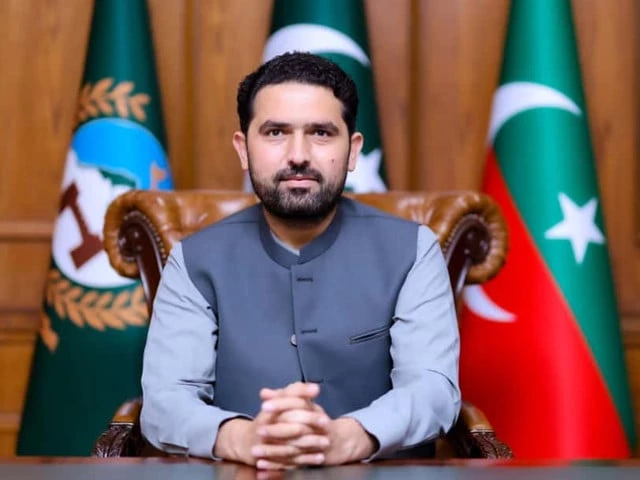
Khyber-Pakhtunkhwa Chief Minister Muhammad Sohail Afridi has said that "closed-door decisions" and flawed security policies have left the province bloodied, despite 22 major military operations and nearly 14,000 intelligence-based operations being conducted over the years.
Addressing the groundbreaking ceremony of the Jameel Chowk Underpass on Thursday, the chief minister said the province continued to face unrest despite extensive security operations. He claimed that police personnel were increasingly questioning why they were sacrificing their lives and under which policy they were being asked to do so.
Afridi said the government was accelerating development projects under the Peshawar Revitalisation Plan and had already achieved its 90-day targets for previously launched schemes. He said the Jameel Chowk Underpass, initially scheduled for completion in 90 days, would be completed within 60 days.
He said projects worth around Rs200 billion were being undertaken in Peshawar under the revitalisation plan and vowed that the development drive would continue across the province. He also praised the Local Government Department for monitoring projects and ensuring their timely completion.
On the provincial economy, Afridi said the K-P government had increased its development budget for 2026-27 despite financial and administrative challenges. He claimed that while the federal government had fallen short of its revenue target by around Rs1,213 billion in 2025-26, K-P had exceeded its own target of Rs129 billion by collecting more than Rs150 billion.
The chief minister said the province had set a revenue target of Rs180 billion for 2026-27 and expressed confidence that collections would reach Rs200 billion.
Turning to national politics, Afridi sharply criticised the federal government and alleged that governments lacking a genuine public mandate were responsible for policies that had worsened economic and social conditions. He compared Pakistan's current growth rate of around three per cent with the 6.1 per cent GDP growth recorded during former prime minister Imran Khan's government.
He also criticised the treatment of political workers and women associated with the Pakistan Tehreek-e-Insaf, calling for respect for women regardless of political differences. He further questioned the implementation of court orders concerning Imran Khan's medical treatment, saying non-compliance undermined the authority of the judiciary.
Afridi warned that growing public frustration, particularly among young people and the middle class, could become difficult to control if grievances remained unaddressed. He urged state institutions and political leaders to understand the public mood and avoid policies that, he said, were deepening alienation.
Source link