
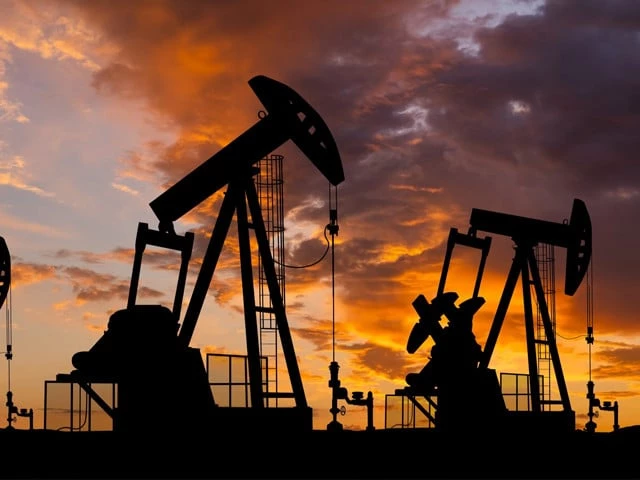
Gasoline hovers around $4 a gallon as higher fuel prices feed into household budgets
Nearly six months into the US war with Iran, its most visible impact for ordinary Americans is increasingly being felt far from the battlefield at gas stations, airports and in household budgets.
The national average retail price for regular gasoline stood at $4.006 per gallon as of August 10, according to the US Energy Information Administration (EIA), keeping fuel around the politically sensitive $4 threshold.
The increase is particularly striking compared with expectations before the conflict. In January, the EIA forecast that US gasoline prices would fall 6% in 2026. Its latest outlook instead projects an average price of $3.78 per gallon for the year, compared with $3.10 in 2025.
Government inflation data also reflects the scale of the energy shock. Although gasoline prices eased in July, they remained 24.6% higher than a year earlier, while overall energy prices were up 14.7%, according to the Bureau of Labour Statistics (BLS).
Read: US could not verify Israeli warnings of Iran plots against Trump, sources say
Annual consumer inflation stood at 3.4% in July, compared with 2.4% in January, before the war began.
The impact varies considerably across the country. In the Washington metropolitan area, gasoline was 24.8% more expensive than a year earlier, while Dallas-Fort Worth recorded an increase of 19.8%.
Beyond the gas station
The consequences are also filtering into other areas of household spending.
Higher crude oil prices increase costs for trucking, shipping and manufacturing, meaning the impact does not end when motorists leave the pump. Food and other goods can eventually become more expensive as businesses face higher transportation and production costs.
Tariffs, supply constraints and other economic factors are also contributing to current inflation, however, making it misleading to attribute every price increase to the war.
Air travel provides another visible example. The BLS airline fare index was 25.5% higher in July than a year earlier.
Read more: Hormuz shipping traffic capped amid competing claims from US and Iran
Meanwhile, the Gulf Coast spot price for jet fuel averaged $3.40 per gallon in July, nearly 68% higher than in January. Aircraft shortages, strong travel demand, capacity constraints and reduced competition are also influencing fares.
For US households, this means the Iran conflict is increasingly functioning as an economic issue rather than solely a foreign policy one.
That shift helps explain why Vice President JD Vance explicitly placed energy prices at the top of Washington’s objectives in the conflict during a Fox News interview on Thursday.
“That’s goal number one, keep oil and gas cheap for Americans all over our country,” Vance said, adding that ensuring Iran never obtains a nuclear weapon was “goal number two”.
Gas prices emerge as political vulnerability
Public opinion suggests the administration has reason to be concerned.
A Pew Research Centre survey conducted March 23-29 found that 69% of Americans were worried the Iran war would result in higher gasoline and fuel prices, making energy costs the public’s biggest concern related to the conflict.
Concern crossed party lines, including 79% of Democrats and 59% of Republicans.
More recent polling points to a broader political problem. An Ipsos survey conducted in July found that 58% of Americans disapproved of US military strikes against Iran, compared with 37% who approved.
A separate Ipsos poll conducted from July 29 to August 3 found that Democrats held an eight-point advantage over Republicans as the party more trusted to handle the cost of living. The two parties had been nearly tied on the issue in January.
Also Read: Norway hails Pakistan’s US-Iran mediation as ‘service to world’
The Strait of Hormuz is central to the connection between the battlefield and American household finances.
In 2024, about 20 million barrels of oil passed through the waterway each day, representing more than one-quarter of global seaborne oil trade and the equivalent of roughly one-fifth of global petroleum consumption.
Continued restrictions on shipping have kept a geopolitical risk premium embedded in crude prices. Brent crude was trading near $88 a barrel Friday, while US West Texas Intermediate was around $82.
Although the US imported relatively little of its oil directly through Hormuz before the war, crude is traded on a global market. Disruption to Gulf supplies therefore affects international benchmark prices and, ultimately, what American refiners and motorists pay.
That leaves US consumers exposed to developments thousands of miles away. An Iranian decision on Hormuz, an attack on a tanker or another escalation between Washington and Tehran can quickly move global oil markets.
For the Trump administration, the political calculation is therefore becoming increasingly domestic. After months in which Iran’s nuclear program dominated Washington’s stated rationale for the conflict, the prices displayed outside American gas stations have emerged as one of the clearest measures by which voters experience the war themselves.

