MULTAN:
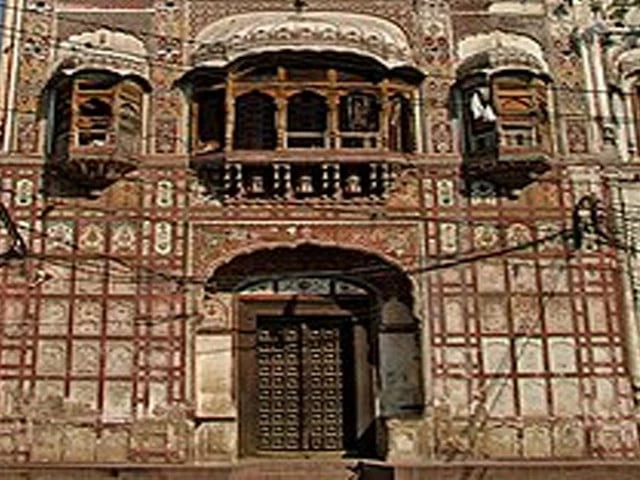
Hidden behind the narrow streets and bustling bazaars of Multan’s Walled City are centuries-old havelis that continue to preserve the city’s rich architectural, cultural and social heritage.
Built mainly during the late Mughal, Sikh and British periods, these grand residences are more than historic homes. They stand as enduring symbols of Multan’s prosperous merchant class, exceptional craftsmanship and evolving architectural traditions.
Walled City guide Aamir Bashir, who has spent years documenting the city’s heritage buildings, said each haveli tells a unique story through its design and craftsmanship.
“Every haveli has its own architectural language,” he said. “Together, they reflect the lives of the merchants, landlords and influential families who shaped Multan’s economy and culture.”
Assistant Director of the Walled City Authority Umair Ghazanfar said the historic residences deserve the same recognition and protection as Multan’s famous shrines and monuments.
Among the city’s most iconic landmarks are the Red Havelis of brothers Malik Jela Ram and Malik Nathu Ram. Rising six storeys high, the striking red-brick buildings dominate the skyline of the old city and are regarded as some of the tallest surviving historic residential structures in Multan.
Other architectural gems include the colonial-era Khanna Mansion, the five-storey Haveli of Malik Jasu Ram, and the elegant Karam Narain Bagai Haveli, known for its finely carved wooden doors, intricate stonework and natural ventilation system designed to withstand Multan’s scorching summers.
The Burj Lal Haveli, famous for its 127 doors and windows, and the partially preserved Somnath Kapoor Haveli, noted for its rare Italian-inspired architecture, further highlight the diversity of the city’s architectural heritage.
Other notable residences include the Jaswant Rai Kapoor Haveli, renowned for its elaborate timber carvings; the five-storey Mohan Lal Haveli, admired for its spacious design and ornate interiors; and the Gulshan Rai Haveli, built in 1935, which blends traditional craftsmanship with early modern construction techniques.
The Dhanpat Rai Haveli, with its massive wooden entrance doors and rooftop baradari, and Uttam Parkash’s Dhanni Palace, often described as the “Taj Mahal of Multan” because of its romantic history and Mughal-inspired design, remain among the city’s most admired heritage buildings.
On the outskirts of Multan, the Bakkhu Ram Haveli, once known as the “Sheran Wali Haveli”, was regarded as one of the region’s largest residences and featured a temple and an internal well.
Source link