ISLAMABAD:
Pakistan has emerged as the top beneficiary of the European Union’s GSP+ trade scheme, recording €7.5 billion in exports to the EU in 2024 under preferential tariffs, according to the 5th GSP Report released on Thursday, which evaluates the implementation of 27 international core conventions in beneficiary countries.
The report adds that Pakistan also achieved an impressive utilisation rate of over 95%, highlighting its effective use of the trade advantages offered under the programme.
The GSP+ arrangement, which grants developing countries reduced or zero tariffs in exchange for progress on human rights, labour standards, environmental protection and good governance, has played a significant role in boosting Pakistan’s export sector. The country outperformed other GSP+ members, with the Philippines and Sri Lanka trailing behind in export value.
However, the European Union expressed “grave concerns” over deterioration in implementation of human rights conventions, particularly in areas of freedom of expression and media, extrajudicial killings and peaceful assembly, urging Pakistan to repeal or amend laws, including Pakistan Electronic Crimes Act.
In its GSP+ monitoring report, the club of 27 nations asked Pakistan that “to ensure further GSP+ eligibility and compliance with international commitments”, it has to reverse negative developments that took place from 2023 to 2025.
“Grave concerns remain as significant systemic challenges persisted in the implementation of human rights conventions, with a deterioration of the situation relating in particular to enforced disappearances, minority rights, freedom of media and freedom of expression and peaceful assembly,” stated the report released on Thursday.
It added that impunity for human rights violations continues to be of major concern.
The EU said that Pakistan needed to take robust steps to reverse negative trends in relation to enforced disappearances and violations of freedom of expression. “In this regard, laws on blasphemy, cybercrime (such as PECA), defamation, counterterrorism and sedition should be amended or repealed”.
The EU said that in view of the revised GSP rules as of 2027, key priorities for future engagement include ensuring accountability for human rights violations; increased efforts against torture; in-prison and capital punishment reforms; reversing negative developments in relation to enforced disappearances and violations of freedom of expression.
It has also asked Pakistan to effectively address violence against women; securing children’s access to education; ending child marriage; effectively implementing the newly established action plans of provinces and territories to eliminate child labour; stepping up the enforcement of existing laws against forced labour; restraining discrimination of minorities; strengthening the independence, impartiality, and operational capacity of anti-corruption bodies at federal and provincial levels.
The report noted that during the 2023-2025 monitoring period, Pakistan has been facing compliance issues with its GSP+ obligations. “It has regressed in a number of areas while positive change was limited”.
Pakistan has benefited from the EU’s Special Incentive Arrangement for Sustainable Development and Good Governance, known as GSP+ since 2014, remaining its largest beneficiary with €7.5 billion in GSP+ eligible exports to the EU in 2024. EU imports from Pakistan in 2022–2024 remained high, peaking at €9.4 billion in 2022, and then falling to €8.3 billion in 2024, reflecting a broader slowdown in EU demand.
Pakistan remained the largest GSP+ beneficiary, and the EU its main export market, accounting for 28% of its total exports, with textiles and clothing making up roughly 70–76 % of the country’s exports to the EU in 2024.
The report further noted that significant concerns remained, generally impacting the rule of law and civil society space. Enforced disappearances and extrajudicial killings increased, without accountability for perpetrators.
The EU monitoring mission wrote that freedom of expression deteriorated due to further amendments to cybercrime, anti-terrorism and blasphemy laws, allowing for vague provisions to be used against dissidents, human rights defenders, journalists, minorities and ordinary citizens.
“This includes criminal and administrative procedures that may result in imprisonment, financial confiscation or denial to travel abroad.”
It also said that recent constitutional amendments have been criticised for further undermining judicial independence. This compounded with issues like obstacles to fair trial and access to justice.
Political Rights
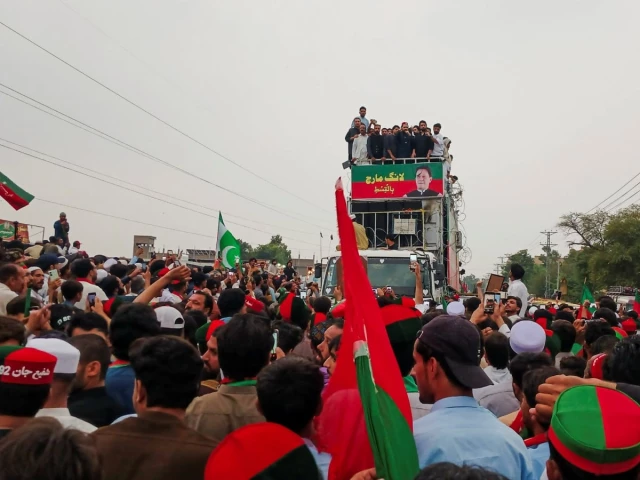
The report stated that political rights are negatively affected among others by abusive judicial proceedings, and detention of opposition supporters and leaders, including of a former Prime Minister, with concerns in terms of fair trial and detention conditions, including in relation to access to lawyers, visitors and medical assistance.
The UE said that during the 2023-25 reporting period, limitations to the freedom of expression and access to information remained serious and persistent.
Despite the adoption of the Protection of Journalists and Media Professionals Act, Pakistan’s media freedom deteriorated further with the working environment for journalists growing increasingly hostile and dangerous, including cases of reported intimidation, administrative and judicial harassment and violence against journalists covering sensitive topics.
“Targeted litigation (strategic lawsuits against public participation”, is sometimes employed to prevent journalists and lawyers from doing their work. Legislation such as the Pakistan Electronic Crimes Act (PECA) and the criminal defamation, blasphemy, sedition and counter-terrorism laws, contain vague concepts of hate speech, defamation, terrorism and false news, it added.
The EU said that without effective safeguards against abuse, the enforcement of these laws has a significant chilling effect on dissidents, journalists, human rights defenders and individuals belonging to ethnic or religious minorities. Internet connectivity was also frequently restricted, especially around the 2024 elections and in Balochistan, as well as before and during protests, according to the report.
Progress
The report has also noticed progress in some areas but said that the progress was “limited” compared to deterioration.
Notable progress included legislation to create a National Commission for Minorities, a reduction in the scope of the death penalty, the continuation of the de facto moratorium on executions, and the adoption of implementing rules of the Anti-Torture Act, it added.
The death penalty was abolished for railway sabotage, narcotics crimes, harbouring hijackers and stripping a woman in public. Other legislative advances include a Domestic Violence Bill for Islamabad. A first marital rape conviction was an important milestone.
The National Commission for Human Rights (NCHR) has become, together with the ministries of Law and Justice as well as Human Rights, a key actor in Pakistan’s efforts to respect, protect and fulfill human rights obligations. Labour rights saw progress with the ratification of ILO Protocol of 2014 to the Forced Labour Convention, 1930 and expanded monitoring mechanisms, but overall enforcement remains weak.
New action plans to address child labour have been adopted, but child labour rates are only slowly decreasing. In general, most progress is of legislative and administrative nature and needs to be translated into real improvements on the ground, according to the EU.
Pakistan’s fragile political structure, including the complex federal set-up and imbalances between provinces, as well as the role of the military in politics and the economy, created a significant challenge to the country’s development, as did escalating security concerns stemming from domestic militancy, terrorism as well as conflict with neighbouring countries.
The monitoring mission noted that Pakistan’s political landscape during the 2023-2025 monitoring cycle was shaped by persistent complaints about the integrity of the 2024 electoral process, harsh measures against opposition party leaders and supporters, and further increased military influence.
Source link