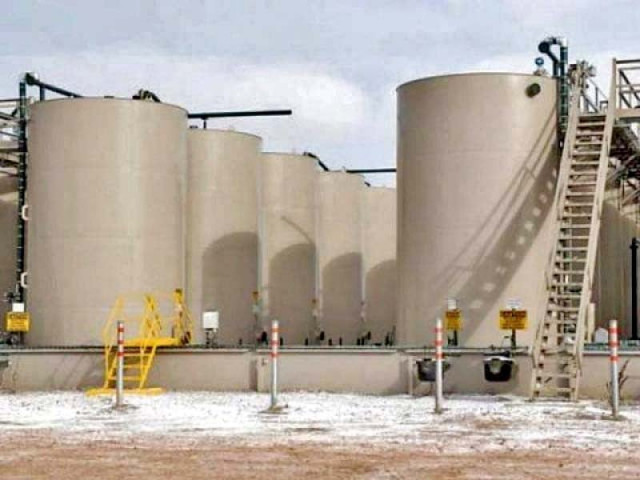
OMCs set up infrastructure facilities like oil storages with capacity of 0.58 million tons for petrol and 0.88 million tons for high-speed diesel at various depots by the end of FY21. photo: file
ISLAMABAD:
Pakistan’s fuel supply chain is again showing signs of stress as policy delays, the closure of the Strait of Hormuz and low stocks have sparked fears of an oil shortage in the country.
Industry officials warn that a combination of critically low petrol stocks, delayed imports, rising international oil prices and unresolved financial issues could push the country towards another supply crisis.
The warning comes at a time when motor gasoline (petrol) inventories have dropped to around 379,442 tonnes, including the local refinery production, which are enough for only 14 days of consumption based on current demand trends. Industry data shows that petrol sales during the first 13 days of July averaged 25,000 tonnes per day, almost 16% higher than projection and 26% above the same period of last year.
The spike in consumption is being linked to expectations of another hike in petroleum prices, prompting both consumers and dealers to ramp up purchases. Industry officials fear that if this trend continues, the available stocks could come under further pressure before fresh cargoes arrive.
While international developments, particularly tensions around the Strait of Hormuz and Bab el-Mandeb, have pushed up global oil prices and freight costs, the petroleum-sector representatives argue that domestic policy issues have compounded the challenge.
At the centre of the industry’s concerns is the government’s failure to release around Rs66.7 billion in outstanding price differential claims (PDCs) owed to oil marketing companies (OMCs). Sector representatives say these pending payments have significantly weakened the financial position of companies at a time when they need liquidity to secure costly imports.
According to industry estimates, the blocked amount can finance nearly 250,000 tonnes of petrol, equivalent to almost five import cargoes, which could substantially strengthen the country’s fuel reserves.
Industry officials emphasise that OMCs have, for years, absorbed financial shocks to ensure uninterrupted fuel supplies despite currency depreciation, volatile international prices and rising financing costs. They argue that it is becoming increasingly difficult to continue supporting the supply chain while large receivables remain unpaid.
The supply outlook has also been impacted by disruptions in planned imports. While cargoes carrying around 153,000 tonnes of petrol are expected over the coming days, one planned 37,000-tonne cargo import did not materialise after failing to secure approval last month, while another scheduled import consignment involving four OMCs has reportedly been cancelled.
Adding to concerns are delays in customs clearance under the WeBOC system, which “are slowing the release of imported fuel from ports”. Officials warn that in a market operating on thin inventories, even administrative delays can affect timely supplies to upcountry markets.
Although high-speed diesel stocks stay at relatively comfortable levels at around 500,000 tonnes, supported by local refinery production, industry players caution that panic buying or dealer hoarding could also place pressure on diesel supplies if uncertainty intensifies.
They believe Pakistan still has an opportunity to avoid another fuel crisis, provided immediate policy interventions are made. They are urging the government and the Oil and Gas Regulatory Authority (Ogra) to facilitate the release of pending PDC payments, expedite customs clearance and ensure uninterrupted movement of imported cargoes.
Failure to act could trigger the familiar cycle of panic buying, hoarding and dry-outs at filling stations that has accompanied previous fuel shortages. With petrol demand already running well above expectations and inventories at their lowest levels in years, the coming days could prove critical for maintaining stability in the country’s fuel supply chain.
The Oil Companies Advisory Council (OCAC) on Wednesday also cautioned the federal government about the emerging petrol crisis. In a letter to Petroleum Minister Ali Pervaiz Malik, the council pointed to imminent petrol shortage across Pakistan as the country’s immediately saleable inventory had become exceptionally tight.
Currently, only about 15 days of stocks (370,000 tonnes) are available and critical incoming cargoes face customs clearance bottlenecks through the WeBOC system. “The supply strain is further worsened by the previous rejection of a planned import cargo in June and a sharp increase in consumer demand triggered by anticipated global price hikes,” it said.
Compounding these operational issues, the OMCs are facing a liquidity crisis due to delay in settling the outstanding PDC of Rs66.7 billion.
Source link