India-UK trade pact takes effect, cutting tariffs and boosting services trade

Trade pact cuts tariffs on thousands of goods and expands market access for services firms and professionals
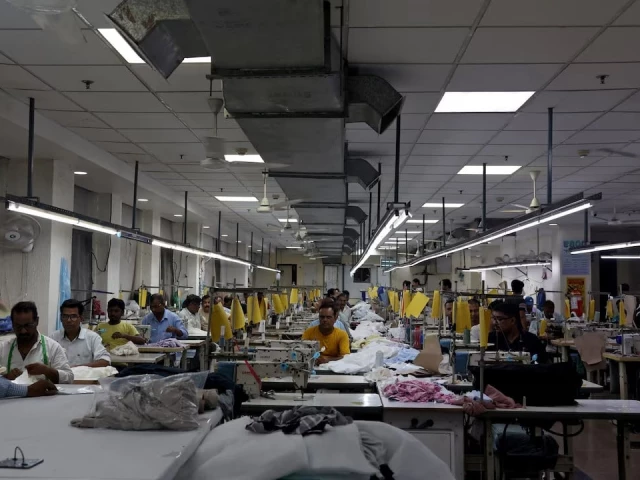
Garment workers stitch clothes at a textile factory in Noida, India, July 31, 2025—REUTERS
India and Britain’s trade pact took effect on Wednesday, cutting tariffs on thousands of goods and expanding market access for services firms and professionals in both countries.
The India-UK Comprehensive Economic and Trade Agreement gives Indian exporters duty-free access to most British tariff lines, benefitting sectors such as textiles, leather, footwear, marine products, gems and jewellery, and processed foods.
Britain, meanwhile, gains greater access to one of the world’s fastest-growing major economies through phased tariff cuts and quotas for sectors such as automobiles and silver, as well as openings in procurement, financial services, education, insurance and professional services.
Prime Minister Narendra Modi said in a post on X that the trade pact and accompanying social security agreement would deepen economic ties and give “fresh momentum” to India’s farmers, entrepreneurs and small businesses.
This is a significant moment in the India-United Kingdom partnership!
With the coming into force of the Comprehensive Economic and Trade Agreement and the Agreement on Social Security, our economic linkages are going to get even deeper. Together, these agreements translate our… https://t.co/6yZR0IUfCP
— Narendra Modi (@narendramodi) July 15, 2026
India exported $13.44 billion of goods to Britain and imported $11.68 billion in the 2025/26 fiscal year. Bilateral services trade totalled $35.44 billion in 2024, with India running a services surplus of nearly $7.9 billion, according to Indian trade ministry data.
Britain will immediately remove duties on 96.8% of tariff lines, covering 97.7% of trade by value. India will eliminate duties at once on 64.1% of tariff lines and gradually phase them out on a further 21%, while excluding sensitive products.
Indian officials expect gains in sectors where British tariffs had ranged from 4% to 20%. Duties on marine exports, textiles, leather, footwear, gems and jewellery will be eliminated, boosting the competitiveness of Indian exports.
Engineering exporters also expect to benefit. Britain is among India’s top five engineering export markets, with shipments rising to $4.7 billion in 2025/26. Exports climbed 34.4% year-on-year to $972.5 million in the first two months of 2026/27, according to the Engineering Export Promotion Council (EEPC) of India.
EEPC Chairman Pankaj Chadha said the agreement would improve market access for products including electrical machinery, auto components and steel, helping engineering exports to Britain exceed $7.5 billion by 2029/30.
Britain is set to benefit from India’s gradual opening of its automobile and alcoholic beverages markets. Passenger vehicle imports will be subject to a phased quota system, allowing 37,000 fully built vehicles a year to enter at preferential tariff rates.
The services package expands market access across 137 sub-sectors, including IT, business services, telecoms, finance and education, and eases temporary entry rules for business visitors, transferees, investors, service suppliers and independent professionals.
A linked Double Contribution Convention will exempt eligible Indian professionals and employers from paying into Britain’s National Insurance system for stays of up to five years, benefiting about 75,000 workers and 900 employers.
The pact also opens Britain’s government procurement market, estimated at £90 billion ($121 billion), to Indian suppliers, while India offers reciprocal opportunities worth around $114 billion.
Source link