Pakistan restricts import of goods from countries using forced, compulsory labour
ISLAMABAD:
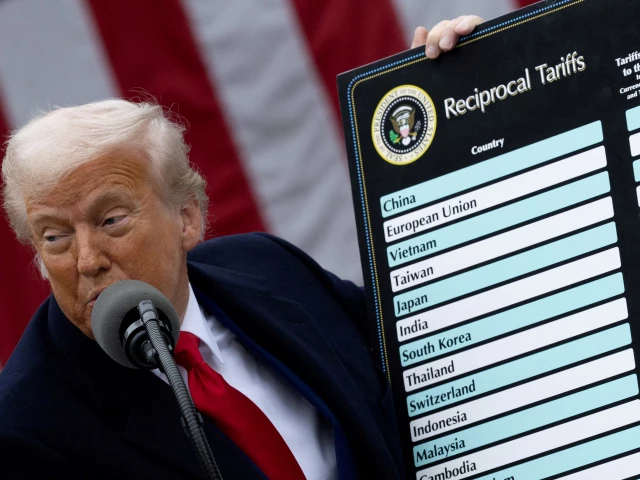
The government has again amended the Import Policy Order to restrict the use of forced or compulsory labour in the manufacturing of goods in a bid to avoid potential tariff hike by the Trump administration.
Pakistan is one of 60 economies that have faced investigations by Washington after the US Supreme Court withdrew the reciprocal tariffs.
Earlier, the US Trade Representative had initiated an investigation under Section 301 of the Trade Act 1974 regarding acts, policies and practices of 60 economies, including Pakistan, because of failure to prohibit the import of goods produced by forced labour.
Pakistan’s government approved an amendment to the policy order to ban the import of goods from those countries that were not following restrictions on forced labour in the manufacturing of goods.
Now, the government has again amended the Import Policy Order and decided to put curbs on the import of goods from nations that were not only using forced labour but compulsory labour.
The Economic Coordination Committee (ECC), in its recent meeting, approved a clause for the Import Policy Order, which stipulated that “Forced Labour for purposes of this order means forced or compulsory labour as defined in paragraph 1 of Article 2 of the Forced Labour Convention, 1930 (No 29)”.
The Ministry of Commerce briefed the economic decision-making body that the Import and Export Control Act, 1950 (XXXIX of 1950) “empowers the federal government to prohibit, restrict or otherwise control the import and export of goods of any specified description. Such prohibitions and restrictions are regulated through the Import and Export Policy Orders in vogue”.
The commerce ministry apprised the ECC that earlier the Ministry of Overseas Pakistanis and Human Resource Development approached it and emphasised the need to establish an explicit legal framework to prohibit the import of goods that were mined, produced or manufactured, wholly or partly, through forced labour in any country. Accordingly, the matter was addressed through the insertion of a prohibitory clause in the Import Policy Order 2022, after approval of the federal cabinet.
The Ministry of Commerce further said that in that context the Ministry of Overseas Pakistanis now conveyed that, while the aforesaid legal provision had established the required legal framework, there was a need for providing a clear definition of the forced labour and an effective implementation procedure.
The Ministry of Overseas Pakistanis proposed further amendments to the Import Policy Order 2022 to incorporate a comprehensive definition and a robust enforcement mechanism that would strengthen Pakistan’s commitments under the International Labour Organisation (ILO) conventions.
In a meeting held between the Ministry of Overseas Pakistanis and the Ministry of Commerce, it was agreed that the definition of forced labour should be sufficient to make the order ibid self-contained for the prohibition of imports from countries using forced labour.
Keeping in view the comments of the Ministry of Law, the commerce ministry solicited the consideration and approval of the ECC to insert the following additional clause in Para 2 (definitions) of the Import Policy Order.
The amendment to Clause 2 (Definitions) was “(O) ‘Forced Labour’ for purposes of this Order means forced or compulsory labour as defined in paragraph 1 of Article 2 of the Forced Labour Convention, 1930 (No 29)”.
During discussions, the ECC while underscoring the importance of a compact and standardised definition of forced labour appreciated the work done by the ministries of commerce, law and overseas Pakistanis.
The committee considered a summary submitted by the Ministry of Commerce titled “Amendments in Import Policy Order (IPO), 2022 in pursuance to Pakistan’s Commitments under International Labour Organisation (ILO) Conventions” and approved the proposal.
India to ban goods made by forced labour
Meanwhile, Reuters reported, India has prohibited the import of goods produced using forced labour, the trade ministry said on Tuesday, in a move that could help avert new tariffs from a probe by the US.
The Asian nation is one of the several countries facing proposed new US trade tariffs of up to 12.5% over allegations they failed to prohibit import of goods produced with forced labour. The ministry’s notification, dated Monday, said it empowers “the central government to prohibit, by notification, the import of goods produced or manufactured, wholly or in part, through the use of forced labour”.
Source link