High-tech and green exports drive growth as imports jump, though global risks loom
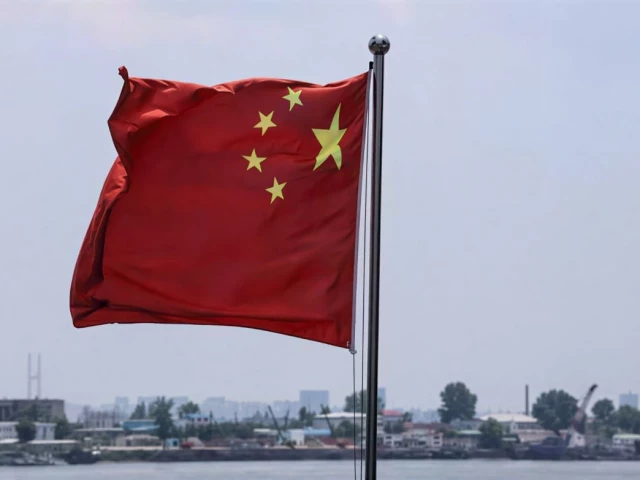
China is also seeking to expand domestic semiconductor manufacturing capacity and reduce the industry’s reliance on advanced Nvidia chips that are subject to US export controls. PHOTO: REUTERS
BEIJING:
China’s foreign trade posted strong growth in the first half of 2026, expanding 16.9% year-on-year to reach 25.47 trillion yuan (around $3.75 trillion), according to official data, underscoring the resilience of the world’s largest goods trading nation amid global uncertainties.
The latest figures, released by the General Administration of Customs (GAC), mark the first time China’s trade volume has exceeded 25 trillion yuan in the January-June period, highlighting sustained momentum in both exports and imports.
Exports rose 13.4% to 14.73 trillion yuan, extending a growth streak to 11 consecutive quarters, while imports surged at a faster pace of 22.1% to 10.74 trillion yuan, contributing to what officials described as a more balanced trade structure.
Analysts attribute the robust performance to strong global demand for high-tech and green products, as well as China’s ongoing industrial upgrading. Exports of electronic components and computer-related products recorded double-digit growth, supported by rising demand for computing power, data centers and digital infrastructure.
Green and low-carbon products also played a key role. Exports of lithium batteries and wind turbines increased by 37.6% and 35.6% respectively, while shipments of electric vehicles (EVs), electric locomotives and motorcycles posted significant gains, reflecting global demand tied to energy transition efforts.
These sectors, along with photovoltaic products, form part of China’s so-called “new trio” of exports, which signal a shift toward higher-value manufacturing. Emerging industries such as robotics, artificial intelligence and innovative pharmaceuticals are also being discussed as potential new drivers of trade growth.
Trade diversification further supported expansion. Commerce with Belt and Road Initiative partner countries reached 12.97 trillion yuan, accounting for more than half of China’s total trade and growing 14.8% year-on-year. Trade with Latin America and Africa rose 16.2% and 19.6% respectively, while exchanges with the European Union increased by 10.2%.
Imports also reflected steady domestic demand and supply chain integration. Purchases of mechanical and electrical products jumped 28%, while imports of bulk commodities such as energy resources and metal ores rose modestly. Agricultural imports recorded an 8.6% increase.
Economists say that China’s large domestic market continues to create opportunities for global partners, with imports rising from over 150 countries and regions during the period.
Despite the strong performance, officials and analysts cautioned that challenges remain for the second half of the year. Rising trade barriers, geopolitical tensions and persistent global inflation could weigh on external demand and supply chains.
Moreover, uncertainties surrounding tariff policies and the sustainability of the global artificial intelligence investment boom could affect export momentum in the coming months, analysts said.
Nonetheless, experts expect China’s foreign trade to maintain steady growth in the near term, supported by continued demand for high-tech products and automobiles, as well as the country’s efforts to optimise trade structure and enhance competitiveness.
Overall, the first-half data highlights China’s ability to sustain trade expansion despite a complex external environment, though policymakers are likely to remain cautious as risks persist in the global economic landscape.
Source link